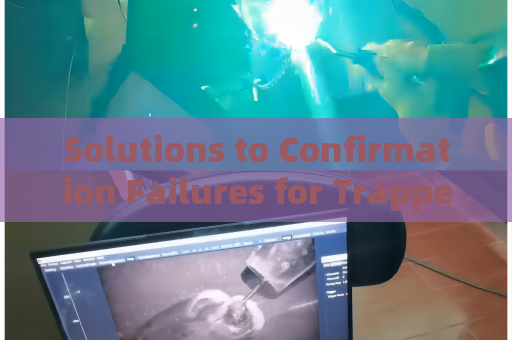
Solutions to Confirmation Failures for Trapped Victims in Smoke-Filled Burning Vehicles with Smoke Penetration Imaging In smoke-filled burning vehicles, rapid confirmation of trapped victims remains a critical challenge for emergency responders. Dense smoke, intense flames, and heat waves obscure visibility through windshields and side windows. Conventional optical tools, such as flashlights or standard cameras, fail to penetrate the soot-coated glass and the roiling smoke layer outside the vehicle. Thermal imaging cameras, while useful for detecting heat signatures, cannot see through glass—they only capture the surface temperature of the window itself, not the occupants inside. This leads to prolonged reconnaissance, delayed extrication, and increased risk to both victims and rescuers. The core problem is a confirmation failure: responders cannot visually verify whether a person is trapped behind the smoked-out glass, forcing time-consuming tactile searches or dangerous forced entries. A penetration imager offers a direct solution to this confirmation failure. This advanced optical imaging instrument leverages laser range-gated imaging technology, consisting of a high-repetition-rate pulsed laser, an image-intensified gated camera (with MCP image intensifier, high-voltage module, and timing module), a beam expander, and an imaging lens. As an active imaging system, it provides high-contrast imagery and can effectively penetrate optical media such as automotive glass, train windows, aircraft portholes, and glass curtain walls. Importantly, it operates without interference from fire, fog, haze, rain, or snow—all of which degrade conventional optics. The system overcomes backward scattering from smoke particles outside the vehicle, delivering a clear view of the interior through the glass, even when the window is heavily stained or partially obscured by flames. In actual fireground operations, responders deploy the penetration imager from a safe standoff distance, aiming it at the vehicle’s windows. The unit acquires real-time images of the cabin, revealing the shape and position of trapped occupants. Because the imager selects only the return signal from the target distance—using precise gating to reject light scattered by smoke and flames—the resulting image shows a person slumped in a seat or lying on the floor, undetected by thermal cameras. This capability transforms a blind search into a targeted one. Rescuers no longer need to guess whether the vehicle is occupied; they can confirm the presence, location, and even motion of victims, enabling them to prioritize breaking the correct window and time the rescue precisely. Further, the penetration imager excels in scenarios where smoke density fluctuates or where the vehicle’s interior is partially filled with smoke. While thick smoke inside the cabin does reduce overall contrast, the system’s high-contrast imaging and ability to suppress backscatter still yield recognizable human silhouettes and limb movements. The glass itself, though covered with soot or cracked by heat, remains an optical medium that the laser pulse can pass through. This avoids the need for responders to physically wipe or break the window to see inside—a process that wastes precious seconds and can aggravate conditions for victims. By integrating this device into standard search protocols, fire departments and police tactical teams can dramatically reduce confirmation failures, speed up victim extraction, and enhance scene safety for all personnel.




