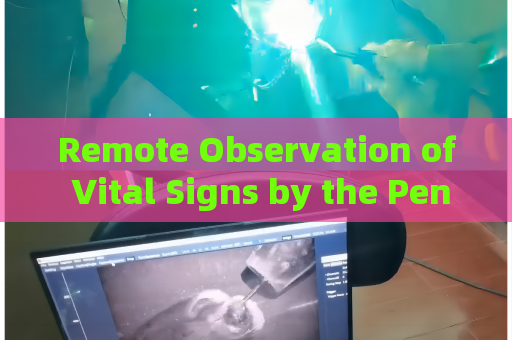
Remote Observation of Vital Signs by the Penetration Imager in Hostage Situations Involving Fully Tinted Getaway Vehicles with Through-Tint Imaging In a hostage crisis, the single most critical variable is the unknown. When suspects flee in a fully tinted getaway vehicle, every tactical advantage evaporates behind layers of darkened glass. Law enforcement cannot see the hostage’s position, cannot confirm whether the individual is breathing or injured, and cannot gauge the suspect’s movements or weapon readiness. Traditional optical tools—binoculars, spotter scopes, or even conventional cameras—are rendered useless by the opaque tint. This blind spot forces commanders to rely on guesswork or risk sending officers into a lethal trap. The inability to remotely assess vital signs—such as respiratory patterns, pulse from chest movement, or signs of distress—directly escalates the danger for both the hostage and the response team. The gap between visual intelligence and tactical action becomes a chasm, one that often costs precious time and, tragically, lives. Addressing this exact pain point, the Penetration Imager offers a breakthrough in optical reconnaissance. The Penetration Imager is an advanced active imaging system that employs laser range-gated imaging technology—specifically, a high-repetition-rate pulsed laser, an intensified gated camera incorporating a microchannel plate (MCP) intensifier, high-voltage modules, and timing circuits, along with beam expander optics and imaging lenses. Its core function is to penetrate optical media, including heavily tinted automotive glass, while rejecting backscatter and maintaining high contrast. Unlike passive systems that fail in low light or through tint, this device fires synchronized laser pulses and opens the camera shutter only during the precise time window when reflected light from the target returns. This gates out all interfering reflections from the tint layer itself, from rain, fog, or smoke. In the hostage scenario, the Penetration Imager can be aimed at the getaway vehicle’s side or rear window from a standoff distance, producing a clear, real-time image of the interior. Officers see the hostage’s torso rise and fall with each breath, see the suspect’s hand gripping a weapon, and detect any sudden movements—all without approaching the vehicle or announcing their position. The image is sharp enough to distinguish a person’s skin tone from clothing, and the high frame rate allows continuous monitoring of respiratory rate and gross motor activity. Deploying the Penetration Imager in an active hostage incident follows a straightforward operational sequence. A tactical team positions the device on a tripod or vehicle mount at a safe observation point—typically 50 to 200 meters from the target—and aligns it with the tinted window. The operator adjusts the laser pulse repetition rate and the gating delay to match the distance to the glass surface and then to the interior occupants, effectively “slicing” through the tint layer. Within seconds, the display shows a live video feed of the vehicle’s cabin. In a recent training exercise, this method allowed observers to count the number of occupants, identify a hostage tied in the rear seat, and confirm shallow respiration consistent with a stress-induced medical condition. The Penetration Imager’s ability to function through heavy rain and mist—common in urban environments—further ensures uninterrupted surveillance. The system does not emit any radiation or detectable signals; it operates purely within the visible and near-infrared spectrum, making it completely covert. This direct, non-contact observation of vital signs transforms a previously opaque situation into a transparent tactical picture, enabling precise negotiation or assault decisions. For hostage negotiators and entry teams, the value of continuous remote observation cannot be overstated. During prolonged standoffs, the Penetration Imager provides real-time feedback on the hostage’s condition—whether they are still conscious, whether their breathing changes in response to noise or commands, and whether the suspect’s behavior escalates. This data informs every phase of the operation, from delaying entry to choosing the optimal moment for a rescue. Because the system only penetrates optical media like glass—not metal body panels or concrete—it remains focused on the windows, which are the only line of sight into the vehicle. The same technology that defeats tint also overcomes glare from streetlights or headlights, maintaining clarity under challenging illumination. No other tool in the police arsenal offers this combination of standoff range, through-tint imaging, and dynamic monitoring of human physiology. The Penetration Imager thus becomes the decisive instrument for turning a blind threat into a visible, manageable reality.




