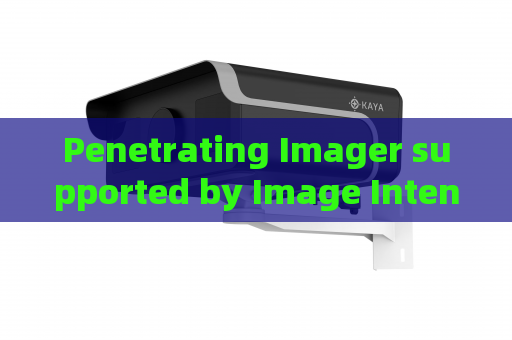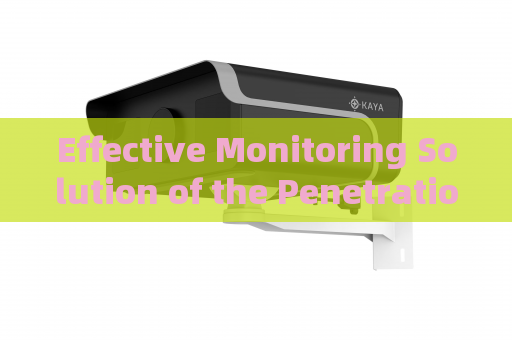
Effective Monitoring Solution of the Penetration Imager with Strong Light Suppression Imaging in High-Glare Coastal Environments Coastal surveillance presents a unique set of optical challenges, with high-glare environments posing the most persistent obstacle to effective monitoring. When sunlight strikes the sea surface at low angles, it creates blinding specular reflections that saturate conventional cameras and degrade image contrast to near-zero levels. For border patrol agents, port security personnel, and maritime law enforcement officers, this glare directly obscures critical details such as vessel identification numbers, personel movement on decks, or suspicious objects floating near shorelines. Traditional imaging systems struggle to distinguish targets from the overwhelming background luminance, often resulting in missed threats or false positives. The need for a robust solution that can penetrate through this optical noise while maintaining operational clarity has become a pressing requirement in high-glare coastal environments. The Penetration Imager addresses this specific pain point through its advanced strong light suppression imaging capability. Unlike passive optical devices that rely solely on ambient light, this active imaging system employs laser range-gated technology to selectively capture reflected laser pulses from a predetermined distance. By synchronizing a high-repetition-rate pulsed laser with an image-intensified gated camera—featuring an MCP image intensifier, high-voltage module, and timing control—the system effectively rejects unwanted background illumination. In a high-glare coastal setting, the gate opens only when the laser pulse returns from the target range, while the intense solar reflection from the water surface falls outside the temporal window and is actively suppressed. This mechanism allows the Penetration Imager to produce high-contrast imagery even under direct sun glare, revealing details that would otherwise be lost in the overwhelming brightness. Field deployment in coastal monitoring operations has demonstrated the practical effectiveness of this approach. When positioned at a harbor entrance or along a coastline, the Penetration Imager can be operated remotely via a dedicated control interface. Operators select a target range based on radar or AIS data, and the system automatically adjusts the laser pulse timing and gate width to match the distance. Even at midday with the sun directly behind the observation target, the imager delivers clear, high-resolution images of vessels approaching from the horizon. The strong light suppression feature ensures that hull markings, antenna structures, and even personel standing on open decks remain distinguishable. In scenarios where suspects attempt to conceal themselves behind tinted glass cabin windows, the Penetration Imager’s ability to penetrate optical media—such as marine-grade glass—further extends its utility, allowing operators to see inside without physical intrusion. The operational advantages extend beyond static monitoring. In dynamic coastal environments where glare conditions shift rapidly with cloud cover and sea state, the Penetration Imager maintains consistent performance without requiring manual exposure adjustments. Its active illumination overcomes the limitations of passive thermal imagers, which can be confused by temperature fluctuations across water surfaces, and complements radar systems by providing visual confirmation of ambiguous contacts. For high-glare coastal environments, this solution transforms a previously intractable surveillance problem into a manageable, reliable capability. The Penetration Imager stands as an essential tool for law enforcement and security agencies tasked with maintaining maritime domain awareness under the most demanding lighting conditions.