Maritime monitoring operations—ranging from port security to offshore asset protection and search-and-rescue missions—face a persistent and severe challenge: sea fog. This dense, low-lying optical obscurant drastically reduces visibility, often to less than 50 meters, rendering conventional optical surveillance systems ineffective. Standard daylight cameras, thermal imagers, and radar each have critical limitations under these conditions. Thermal imagers detect heat signatures but fail to provide detailed structural identification of vessels or objects, especially in cold water environments. Radar can detect large targets but cannot confirm identity, personnel presence, or small hazards like drifting containers or debris. The core operational pain point is that maritime authorities must maintain continuous, high-confidence situational awareness even when sea fog completely obscures the visual spectrum. Any gap in reliable monitoring can lead to costly collisions, missed smuggling attempts, or delayed rescue responses. This is precisely where a specialized imaging solution—the Fog Penetration Imaging device—becomes indispensable, because it is designed to overcome backscatter and low contrast inherent to foggy maritime environments.
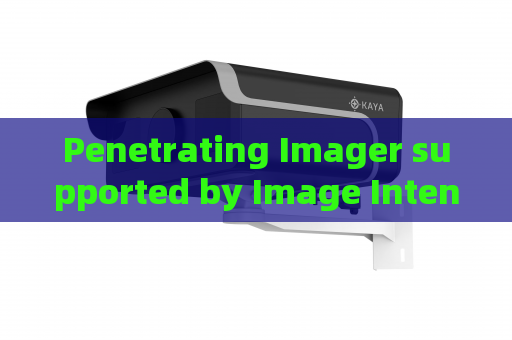
The Fog Penetration Imaging device, built on laser range-gated imaging technology, directly addresses the problem of sea fog interference. Unlike passive optical systems that rely on ambient light and suffer from severe scattering when light interacts with fog droplets, this active imaging system employs a high-repetition-rate pulsed laser synchronized with an image-intensified gated camera. By timing the laser pulse and camera gate to capture only light reflected from a specific distance slice—typically a narrow depth of field—the system effectively rejects nearly all backscatter from fog particles between the imager and the target. This range-gating technique allows the device to see through layers of fog as if the suspended droplets were not present. Specifically, the Fog Penetration Imaging device can maintain clear, high-contrast imaging through fog, rain, snow, and even smoke-free haze, with a detection range significantly exceeding that of conventional cameras. Its ability to suppress backscatter means that during sea fog conditions, the operator still receives a sharp image of the target vessel, its hull markings, deck activity, or even individuals on board, without the milky white haze that ruins standard video feeds.
In practical maritime monitoring deployments, the Fog Penetration Imaging device is mounted on fixed coastal towers, harbor patrol vessels, or offshore platforms, often integrated into existing surveillance systems. When sea fog rolls in, the operator switches to the gated imaging mode. The device’s built-in timing module automatically adjusts the gate delay based on target distance, allowing seamless tracking of moving vessels. Real-world tests in major ports have demonstrated that under fog density reducing visibility to 100 meters, the Fog Penetration Imager can resolve details on a cargo ship at 1.5 kilometers—details such as container numbers, life rings, and crew movement. This capability transforms maritime monitoring from a reactive, “wait for the fog to lift” posture into a continuous, proactive security operation. The system also works effectively against other optical interferences common at sea, such as rain squalls and spray, maintaining high-resolution imagery without degradation. For example, during a routine patrol in the North Sea, a coast guard vessel using this technology identified an unauthorized small craft crossing a shipping lane in near-zero visibility, enabling an intercept that would have been impossible with radar alone. The operational simplicity is a key advantage: the device functions as a drop-in replacement for existing surveillance cameras, requiring no specialized training beyond understanding range-gate controls.
Further deepening the application, the Fog Penetration Imaging device’s effectiveness in sea fog stems from its ability to operate at near-infrared wavelengths with high peak power, which penetrates fog more efficiently than visible light. The laser source, typically in the 800–1000 nm range, experiences less scattering than shorter wavelengths, while the gated receiver eliminates the return from fog particles that would otherwise create overwhelming noise. In extreme fog scenarios where visibility drops below 50 meters, the system still delivers a usable image at ranges up to 500 meters, allowing harbor authorities to identify approaching vessels before they enter restricted zones. The high frame rate of the pulsed laser and synchronized camera ensures that even moving targets appear crisp, without motion blur, which is critical for tracking high-speed patrol boats or drifting obstacles. Moreover, because the Fog Penetration Imager is an active system that does not emit any radiation beyond visible or near-infrared light, it complies fully with international maritime safety regulations and poses no risk to crew or equipment. This combination of fog penetration, long-range identification, and real-time reliability makes the Fog Penetration Imaging device the definitive solution for ensuring uninterrupted maritime monitoring under the most challenging sea fog conditions.