Covert detection of illegal vessel activities presents a persistent challenge for maritime law enforcement and border security agencies. Illicit operations such as smuggling, human trafficking, and unregulated fishing often occur under the cover of darkness, dense fog, rain, or sea spray, severely degrading the effectiveness of conventional optical surveillance systems. Standard daytime cameras and thermal imagers struggle to deliver actionable intelligence when atmospheric obscurants scatter visible light or when targets deliberately conceal activities behind tinted glass or reflective surfaces. Radar systems, while useful for tracking, cannot reveal critical details inside a vessel’s cabin or identify individuals, cargo, or suspicious modifications. The inability to conduct clandestine observation of crew movements, contraband transfers, or weapon handling in real time leaves a dangerous gap in enforcement capability. This pain point demands a technology that can pierce through environmental interference and transparent barriers without revealing its own presence, enabling covert imaging from safe standoff distances. The penetrating imager emerges as the solution specifically engineered for such complex maritime reconnaissance.
Built upon laser range‑gated imaging technology, the penetrating imager is an active optical system that overcomes the fundamental limitations of passive sensors. Its core components—a high‑repetition‑rate pulsed laser, an image‑intensified gated camera with an MCP intensifier, a high‑voltage module, a timing control unit, a beam expander, and an imaging lens—work in concert to deliver high‑contrast imagery at long ranges even in adverse weather. The system gates the camera’s exposure to receive only photons reflected from a narrow, preselected depth slice, effectively eliminating backscatter from fog, rain, snow, or haze. More critically for vessel surveillance, the penetrating imager can see through optical media such as marine‑grade window glass, cabin portholes, and bridge windscreens, capturing crisp details of interior activity without any physical breach or detectable emission. This capability directly addresses the requirement to observe persons, documents, or cargo inside a moving or stationary vessel from distances exceeding several hundred meters, all while maintaining full covertness under a near‑invisible laser illumination.
In actual field operations, the penetrating imager is typically mounted on fixed coastal observation posts, maritime patrol aircraft, or unmanned surface vehicles tasked with monitoring suspected illegal vessel movements. When a target vessel enters a designated surveillance zone, the operator activates the system and adjusts the range gate to the precise distance of the glass‑enclosed compartment. Within seconds, the live feed reveals the interior layout, number and behavior of occupants, and any contraband stowed near the windows—information that would be impossible to obtain with traditional optics from a safe distance. The image remains clear even under heavy sea spray or during squalls, as the gating mechanism rejects all light that does not originate from the target depth layer. This real‑time intelligence allows command centers to make informed decisions about interception, boarding, or continuous tracking without raising the vessel’s suspicion. Additionally, the penetrating imager’s high resolution enables forensic‑grade recording for later evidentiary use, ensuring that covert detection transitions seamlessly into legal prosecution.
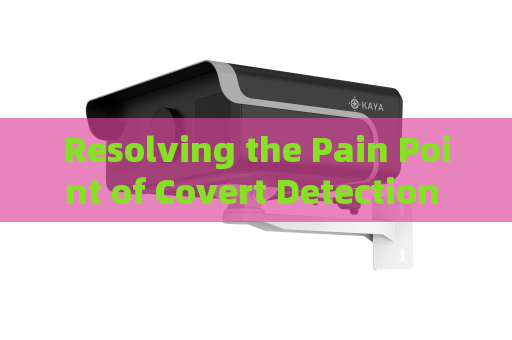
A deeper tactical nuance lies in the penetrating imager’s ability to operate across multiple spectral bands within the visible and near‑infrared range, allowing it to adapt to changing ambient lighting and target countermeasures. Some illegal vessels employ dark‑tinted privacy glass or apply anti‑surveillance films that block standard visible light while remaining transparent to specific laser wavelengths. The system’s pulsed laser can be tuned or configured with appropriate filters to defeat such coatings, maintaining reliable penetration regardless of the glass treatment. Furthermore, the gated imaging technique inherently suppresses glare from the vessel’s own external lights or reflections off the water surface, preserving a clean, high‑contrast silhouette of the interior scene. This level of technical refinement makes the penetrating imager an indispensable asset for coast guards, customs agencies, and naval patrols that must resolve the covert detection pain point without compromise. Each deployment reinforces the principle that effective maritime law enforcement requires eyes that see through the veil of weather and glass, and only a laser‑range‑gated imaging system delivers that capability in a truly covert, field‑proven package.




