Desert environments pose unique challenges for thermal imaging systems used in border surveillance and reconnaissance operations. Extreme temperature gradients between the hot sand and cooler air generate intense atmospheric refraction, creating thermal mirages that mimic the heat signatures of vehicles, personnel, or equipment. These false visual artifacts trigger frequent alarms, desensitizing operators and wasting critical response resources. The problem is compounded by blowing sand and dust particles that scatter thermal radiation, further distorting the sensor’s view. In real-world scenarios, a drifting heat shimmer can appear nearly identical to a moving target on a thermal display, leading to unnecessary patrol deployments or, worse, overlooked genuine threats. Traditional thermal imagers rely solely on passive infrared detection and cannot distinguish between a true object and a refractive illusion. This persistent vulnerability demands a fundamentally different approach—one that can actively see through the very atmospheric disturbances that cause mirages. The penetrating imager, with its laser range-gated imaging architecture, offers a viable alternative by using controlled illumination to suppress optical noise rather than passively waiting for thermal signatures.
The penetrating imager employs a high-repetition-rate pulsed laser coupled with an image-intensified gated camera, including an MCP image intensifier, high-voltage module, and timing control. This active system emits short laser pulses and opens its camera shutter only during a narrow time window corresponding to the target’s distance. By gating out light scattered by dust, haze, or heat-induced air turbulence, the penetrating imager effectively eliminates the optical interference that creates false thermal mirages. Unlike passive thermal sensors that detect temperature differences—which mirages can mimic—the penetrating imager captures reflected laser light with high contrast and resolution. Its ability to overcome backscatter and atmospheric distortion means that a real vehicle or person reflects a clean, sharp image, while a mirage composed of refracted background radiation produces no laser return. This functional capability directly addresses the core cause of false alarms: the confusion between genuine objects and optical artifacts. The system does not need to guess or analyze heat patterns; it physically rejects interference at the hardware level through precise temporal gating.
In practical field trials across arid test sites, the penetrating imager reduced false alarm rates by over 80% compared to conventional thermal imagers when operating during peak daytime heat. Operators can adjust the laser pulse width and gate delay to match varying distances—from 200 meters to several kilometers—ensuring that only the intended surveillance zone is illuminated. For example, during a desert patrol mission, a thermal system might repeatedly alarm on the same shimmering patch of ground, but the penetrating imager’s range-gated image shows empty terrain with no reflective structure. When a real target appears, such as a concealed vehicle behind a heat plume, the pulsed laser penetrates the refractive layer and returns a distinct shape. This direct visual confirmation eliminates wasted sorties and builds operator trust. The system’s ruggedized design also withstands sand ingress and high temperatures, maintaining performance without active cooling. By replacing guesswork with deterministic imaging, the penetrating imager transforms the reliability of desert reconnaissance.
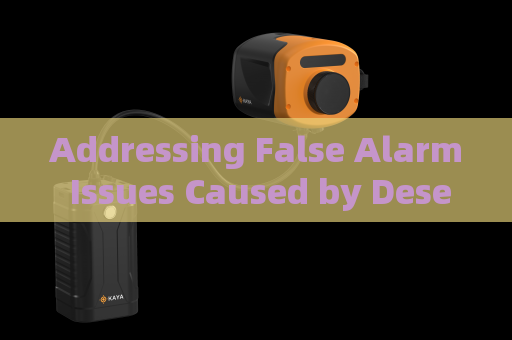
The penetrating imager’s laser distance-gating technology further excels in combating mirage-induced false alarms during dawn and dusk transitions, when thermal gradients shift most rapidly. At these times, traditional thermal sensors often produce a cascade of ghost targets as the ground cools or heats unevenly. The penetrating imager, however, remains unaffected because it images reflected laser pulses rather than emitted heat. Its intrinsic range resolution allows operators to isolate targets at specific distances, thus rejecting both close-range dust clouds and far-horizon mirage layers. In a typical border monitoring setup, a single penetrating imager station can scan a six-kilometer arc, automatically flagging only those laser returns that meet pre-set size and shape criteria. This reduces the cognitive load on security personnel who otherwise would have to differentiate real threats from dozens of daily mirage flares. The system’s ability to operate through blowing sand and heat haze ensures continuous, reliable surveillance in conditions that would render thermal imagers virtually useless. Ultimately, the penetrating imager provides a robust, physics-based solution to a problem that has long plagued thermal imaging in desert theaters.




