Law enforcement agencies tasked with suppressing maritime smuggling, illegal fishing, and human trafficking face a persistent challenge: obtaining clear, real-time visual intelligence of activities inside a vessel without revealing their presence. Standard optical surveillance systems—binoculars, telescopic cameras, or night-vision devices—fail under common maritime conditions. Fog, sea spray, rain, and darkness degrade image quality, while reflections off vessel windows obscure the interior. Even when a suspect boat is visually acquired, the crew’s movements, cargo handling, or evidence of illegal modifications remain hidden behind tinted or wet glass. This blind spot forces officers to close in dangerously or rely on boarding actions that may alert suspects and destroy evidence. The operational gap is not merely a matter of convenience; it directly impacts mission safety, legal prosecution, and the ability to intercept illicit operations before they succeed.
This precise problem is addressed by the penetration imager, a sophisticated optical instrument based on laser range-gated imaging technology. Unlike passive cameras that depend on ambient light, the penetration imager actively illuminates a target with a high-frequency pulsed laser, synchronized with an intensified gated camera that captures only the light returned from a specific distance. The system’s core components—a pulsed laser, an image intensifier with a microchannel plate (MCP), high-voltage timing modules, a beam expander, and an imaging lens—work together to reject backscatter from atmospheric particles, fog droplets, rain, or salt spray. Most critically, the penetration imager is designed to see through optical transparent media such as vessel windows, aircraft portholes, and even glass curtain walls. When scanning a suspect trawler or speedboat, the imager can resolve faces, hand movements, and contraband stowed behind the wheelhouse glass, regardless of whether the glass is tinted, wet, or coated with salt residue. The system’s high contrast imaging and long-range capability allow operators to maintain a safe standoff distance while gaining actionable intelligence.
In practical deployment, a covert observation team positions the penetration imager on a patrol vessel’s upper deck or a nearby coastal vantage point. The operator selects the target vessel based on radar or AIS anomalies, then activates the imager’s range gate to match the distance to the window plane. Within seconds, a clear, real-time video feed appears on the display, cutting through fog, light rain, or sea haze that would render conventional cameras useless. The imager’s ability to overcome backscatter means that even at night, with no moon, the internal activities become visible—crew members counting cash, loading parcels, or altering the vessel’s registration numbers. This visual evidence can be recorded and transmitted to the command center, building a case for interdiction or search warrants. Operational tests have shown that the penetration imager can triple to quintuple visibility in foggy conditions, exactly the scenario where illegal vessels often attempt to evade detection.
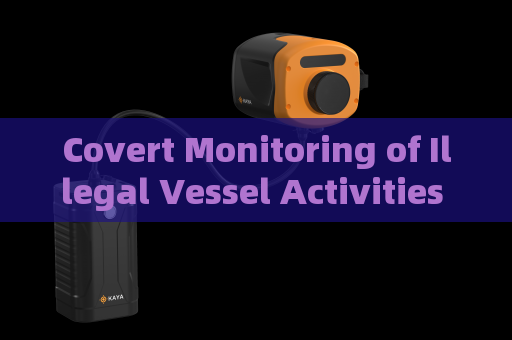
The penetration imager also excels in dynamic maritime surveillance where targets are moving at high speed. Its laser gating technology eliminates the motion-blur and strobe effect common to conventional illuminators. For example, a fast-moving interceptor suspected of smuggling can be tracked while the imager continuously adjusts its gate delay, maintaining sharp imagery of the cockpit or cabin windows. Officers can observe whether the suspect is steering evasively, jettisoning cargo overboard, or preparing weapons. This real-time situational awareness transforms a risky intercept into a controlled operation. The system’s compact design and rugged housing allow it to operate in salt-spray environments without performance degradation, and its active imaging nature means it is immune to the countermeasures that passive thermal imagers may suffer from, such as hot engine exhaust masking human bodies behind glass. By delivering covert, high-resolution visual access to the interior of suspect vessels, the penetration imager closes the critical intelligence gap that has long plagued maritime law enforcement.




