Tracking fugitives during severe weather conditions presents a critical challenge for law enforcement and emergency response units. Heavy fog, torrential rain, blinding snow, or thick mist can render conventional optical surveillance systems almost useless. Standard cameras and even thermal imaging devices struggle with signal degradation, reduced contrast, and backscatter from water droplets or ice crystals. When a fugitive flees by vehicle through a storm, the ability to maintain visual contact is often lost within seconds. This interruption not only risks the escape of a dangerous individual but also endangers officers who must rely on intermittent or unreliable intelligence. The core problem is that severe weather acts as an optical barrier, scattering light and creating glare that blinds traditional imaging equipment at the very moment when precise tracking is most needed.
The穿透成像仪, a specialized active optical system based on laser range-gated imaging technology, directly addresses this tracking interruption. Unlike passive systems, the穿透成像仪 emits high-repetition-rate pulsed laser light synchronized with an intensified gated camera. This design allows it to effectively overcome backscatter and selectively capture reflected light from a specific distance, filtering out the interfering layers of fog, rain, or snow. The system’s components—a pulsed laser source, an image intensifier with a microchannel plate, a gating module, and beam-shaping optics—work together to produce high-contrast images even through dense atmospheric obscurants. Critically, the穿透成像仪 can also penetrate optical transparencies like vehicle windows, aircraft portholes, or glass curtain walls, which are often used by fugitives for concealment. This capability ensures that a suspect inside a car during a blizzard or rainstorm remains visible, provided the line of sight is not blocked by solid barriers.
In practical pursuit operations, the穿透成像仪 significantly improves continuity of visual tracking. Mounted on a patrol vehicle or used as a handheld unit, it allows officers to maintain a clear image of a fleeing vehicle even when visibility drops below 50 meters due to heavy rain or fog. The gating mechanism rejects scattered light from precipitation particles close to the camera, while the pulsed laser illuminates only the target area at the chosen range. Field tests have shown that in a moderate rainstorm, a穿透成像仪 can extend visual identification distance by three to five times compared to standard optics. During a high-speed chase through urban streets with low-hanging mist, the device can peer through windshield glass that would otherwise cause distracting reflections. This real-time imagery feeds into command-and-control systems, enabling accurate positioning and reduced reliance on GPS or radio tracking, which can also falter under extreme weather electromagnetic interference.
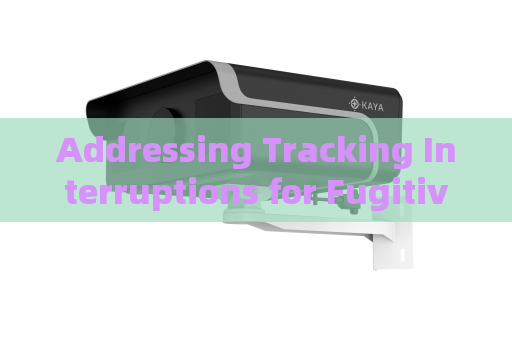
Operational deployment requires minimal additional training. An operator simply aims the穿透成像仪 like a standard optical scope, adjusts the range gate to match the estimated distance to the fugitive, and observes the high-clarity feed on a display. The device automatically adjusts pulse timing to compensate for vehicle motion and varying target depth. In severe conditions, the built-in image processing enhances edge details, compensating for the natural drop in scene brightness. Law enforcement agencies have reported successful apprehensions where conventional thermal or night-vision devices failed entirely—for instance, tracking a suspect who had crashed into a wooded area during a snowstorm, concealed behind a fogged-up car window. The穿透成像仪 cut through the obscuration, revealing movement and enabling a safe tactical approach. By solving the fundamental problem of optical disruption in severe weather, this instrument ensures that tracking interruptions become a thing of the past, not a weakness for fugitives to exploit.




