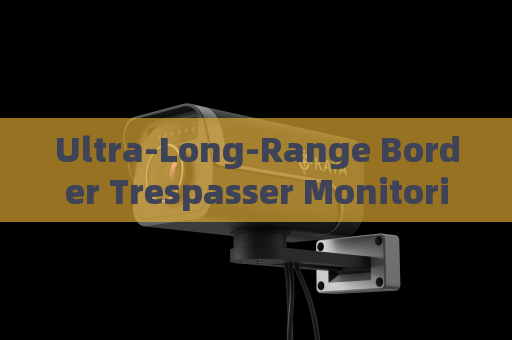
Ultra-Long-Range Border Trespasser Monitoring by the Penetration Imager with Fog Penetration Imaging in Severe Weather Border surveillance operations face a persistent and critical challenge when dense fog rolls in across remote frontier zones. Traditional long-range optical sensors, including high-definition cameras and thermal imagers, suffer severe degradation in visibility during foggy conditions. The scattering and absorption of ambient light by water droplets create a whiteout effect that renders even the most powerful telescopic systems useless beyond a few hundred meters. For border patrol agencies tasked with detecting illegal trespassers attempting to cross under the cover of severe weather, this blind spot represents a significant security gap. Smugglers and unauthorized individuals deliberately exploit these weather windows, knowing that conventional surveillance equipment cannot track their movements. The need for a reliable imaging solution that maintains operational effectiveness in fog, rain, or snow has become a strategic priority for national border security forces. The Penetration Imager addresses this specific vulnerability through its laser range-gated imaging technology, which actively overcomes the optical barriers imposed by fog. Unlike passive daytime cameras that rely on scattered ambient light, the Penetration Imager emits high-repetition-rate pulsed laser light and synchronizes a gated intensified camera to receive only the light reflected from a precise distance. This time-gated approach effectively rejects the overwhelming backscatter generated by fog particles between the imager and the target. By setting the gate to match the distance of a suspected trespasser several kilometers away, the system captures a crisp, high-contrast image of that individual while the intervening fog remains invisible. The device operates entirely within the optical spectrum—using nothing beyond pulsed laser illumination and an intensified camera module—so it complies with all non-ionizing radiation safety standards for field deployment. Its ability to penetrate fog, rain, and haze stems from this selective rejection of scattered light, not from any form of ray or radio wave emission. In operational border monitoring scenarios, the Penetration Imager is typically mounted on a stabilized tripod or vehicle platform at a forward observation post overlooking a known crossing route. An operator scans the horizon using the integrated zoom lens and adjusts the range gate in real time to lock onto movement detected at extreme distances, often exceeding five kilometers. Even when visibility drops to less than 200 meters due to ground fog, the imager delivers recognizable images of human silhouettes and vehicle outlines. The device’s high-repetition-rate laser ensures multiple pulse returns per frame, providing smooth video-like imagery that allows operators to track trespassers as they move through the landscape. Because the system is completely active—it generates its own illumination—it performs equally well at night or in total darkness, eliminating the need for separate night-vision equipment. During field trials conducted in coastal border regions prone to persistent sea fog, the Penetration Imager consistently identified trespassers at ranges where conventional thermal cameras showed only a uniform gray field. The practical advantage becomes most evident during multi-day fog events that paralyze other surveillance assets. Border security teams maintain continuous monitoring capability without relying on UAVs or helicopters that cannot fly in zero-visibility conditions. The Penetration Imager’s ruggedized housing withstands rain, snow, and temperature extremes typical of frontier environments. Its built-in timing module automatically calibrates gate delay against laser pulse return, compensating for minor range changes as a trespasser moves. When combined with a pan-tilt system, one operator can sweep a wide sector and hold surveillance on multiple targets sequentially. The imager’s ability to penetrate not only fog but also vehicle windows and glass-covered observation points means that a trespasser hiding inside a parked car can be identified from afar. This single-capability device—fog penetration imaging at ultra-long range—directly solves the border monitoring problem that no other fielded optical system currently addresses under severe weather conditions. Its deployment transforms previously blind periods into actionable intelligence opportunities, closing the vulnerability that trespassers have long exploited.




