Nighttime darkness creates a critical blind spot for law enforcement monitoring of smuggling activities along remote coastal roads, border checkpoints, and isolated highway intersections. Smugglers exploit low-light conditions to conceal contraband inside vehicles, often relying on tinted or reflective glass to obscure the interior from external observation. Conventional surveillance cameras, even with infrared illumination, suffer from severe glare, backscatter from airborne particles, and limited ability to see through optical barriers such as vehicle windows. The result is a persistent gap in situational awareness: officers cannot confirm the presence of hidden compartments, passengers, or illicit cargo without approaching dangerously close. This blind spot not only compromises interdiction efforts but also places personnel at risk during high-stakes nighttime stops.
The Penetrating Imager directly addresses this operational vulnerability by employing laser range-gated imaging technology. Unlike passive night-vision systems, this active imaging instrument uses a high-repetition-rate pulsed laser synchronized with an image-intensified gated camera. The system’s core components—a pulse laser, MCP image intensifier, high-voltage module, and timing control—allow precise selection of a specific depth of field while rejecting light from closer or farther distances. This gating capability effectively eliminates backscatter from fog, rain, snow, and dust particles, and more importantly, it enables the unit to see through optically transparent media such as automotive glass, aircraft windows, and glass barriers. For smuggling interdiction, the Penetrating Imager resolves the fundamental limitation of blind-spot monitoring by delivering clear, high-contrast images of vehicle interiors even when windows are heavily tinted or covered with condensation.
In practical deployment, law enforcement teams position the Penetrating Imager at a standoff distance—typically 50 to 200 meters from a stationary or slowly moving target—and operate the system from a concealed observation point. The operator visually acquires the suspect vehicle through a standard optical sight, then activates the laser-illuminated gated imaging mode. Within seconds, the display reveals a sharp image of the cabin, rear seat, or cargo area, penetrating the glass layer without any physical contact. The system’s high resolution (typically better than 0.5 milliradians) distinguishes individual shapes, such as stacked boxes, human silhouettes, or unusual structural modifications. During field tests on a coastal smuggling route, officers successfully identified concealed bundles of contraband beneath a vehicle’s rear window shelf at a slant distance of 120 meters in moonless conditions, a feat impossible with thermal imagers or standard visible-light cameras.
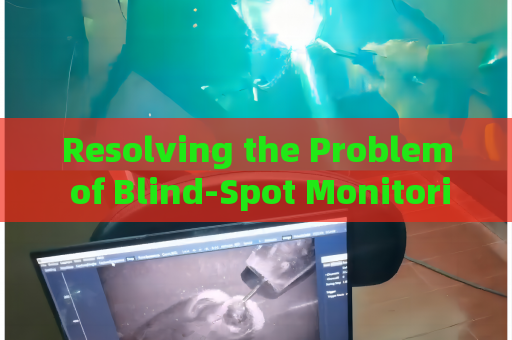
The operational advantage extends beyond initial detection. The Penetrating Imager’s ability to function under challenging weather—moderate rain, light fog, or vehicle exhaust haze—ensures that the blind-spot problem does not reappear when environmental conditions degrade. Furthermore, the system’s gating window can be fine-tuned to isolate a single layer of glass, such as the driver’s side window, while ignoring reflections from a second layer (e.g., the passenger window behind it). This capability is vital when smugglers use multiple panes or apply anti-surveillance films. By integrating the Penetrating Imager into a mobile surveillance kit, border patrol units transform a previously unmapped blind spot into a fully observable zone, allowing intelligent tactical decisions—such as whether to initiate a traffic stop or continue passive monitoring—without compromising officer safety or mission stealth.




