In law enforcement operations, the pursuit of fugitives often extends into adverse weather conditions such as heavy rain, dense fog, or snowstorms. These environments severely degrade conventional optical surveillance tools, turning standard cameras into virtually useless devices. The primary pain point is the loss of visual contact when the subject takes cover inside a vehicle or when precipitation, mist, or smoke between the operator and the target scatters light and reduces contrast. Officers on the ground or in helicopters frequently face a dead end: the fugitive’s movement becomes invisible, and the chase stalls. In such moments, even a momentary break in tracking can allow the suspect to escape or change direction, jeopardizing the entire mission. The need for a system that maintains continuous visual lock under these optically challenging conditions is critical, and it is precisely here that the Penetration Imager provides an answer.
The Penetration Imager is an advanced optical imaging instrument that employs laser range-gated imaging technology, also known as gated imaging. It consists of a high-repetition-rate pulsed laser, an intensified gated camera with a microchannel plate (MCP) image intensifier, a high-voltage module, a timing module, a beam expander, and an imaging lens. Unlike passive night vision or conventional thermal imagers, this active imaging system emits short pulses of laser light and opens its camera sensor only when the reflected light from the target returns. This gating mechanism effectively eliminates backscatter from rain, fog, snow, or aerosol particles in the optical path. The system can also penetrate transparent optical media such as car windows, train windows, aircraft windows, and glass curtain walls. As a result, even when a fugitive is inside a vehicle with tinted glass or when heavy rainfall is directly in the line of sight, the Penetration Imager can produce high-contrast, long-range images with strong resistance to environmental interference. This functionality directly addresses the real-world challenge of maintaining uninterrupted visual contact during severe weather.
In actual deployment, the Penetration Imager allows law enforcement to track a fugitive vehicle from a safe distance without losing sight, regardless of rain, snow, or fog. The operator can clearly see the subject through the windshield or rear window of a car, even if the windows are wet or the interior is shadowed. In a typical pursuit scenario, a small team equipped with a handheld or tripod-mounted unit can lock onto the target and follow its trajectory continuously. The system automatically adjusts the laser pulse timing to match the changing distance, ensuring that the fugitive remains in sharp focus. This capability eliminates the need for close physical proximity, which could compromise officer safety. Furthermore, in urban environments where reflections from wet roads or streetlights often confuse other optical sensors, the Penetration Imager remains unaffected because its active gating only captures light from the specific depth of the target. The result is a stable, real-time video feed that supports decision-making and coordination with other units.
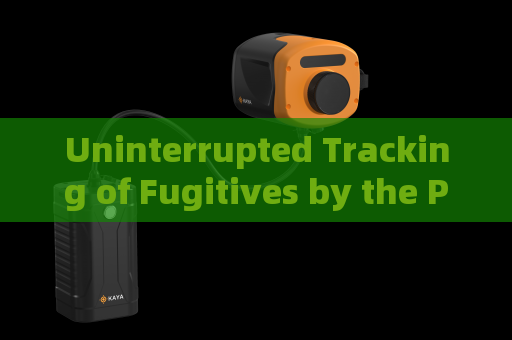
During a severe winter storm or a night operation with heavy fog, the difference becomes stark. Conventional cameras see only a white wall of backscatter, while the Penetration Imager cuts through the haze to reveal the fugitive’s exact position, speed, and even subtle movements like turning the steering wheel or lowering a window. The system can also be integrated with pan-tilt-zoom platforms for aerial or fixed-site surveillance. First responders in fire-affected areas benefit as well—the device boosts visibility three to five times in smoky conditions, though it cannot penetrate thick smoke columns that are completely opaque. For fugitive tracking, this means that even when a suspect attempts to use a dense fog bank or heavy rain as cover, the Penetration Imager maintains the link. The uninterrupted tracking capability provided by this technology directly reduces the risk of losing a subject and increases the likelihood of a safe, efficient apprehension. This single-function focus—persistent visual acquisition through severe weather and transparent barriers—makes the Penetration Imager an indispensable tool for modern tactical operations.




