In tactical reconnaissance operations, zero-light conditions and extreme glare present formidable challenges. Traditional night vision devices rely on ambient light amplification, rendering them ineffective in complete darkness. When high-intensity light sources—such as vehicle headlights, searchlights, or explosion flashes—enter the field of view, these systems suffer from saturation, blooming, and temporary blindness, obscuring critical details. Operators in urban counter-terrorism or border surveillance face an impossible dilemma: either risk exposure by using active illumination that reveals their position, or accept degraded situational awareness. The inability to maintain clear, high-contrast imagery under such dual constraints—complete darkness and blinding glare—directly compromises mission safety and decision-making speed. A penetrating imager offers a solution that fundamentally redefines these performance boundaries.
The penetrating imager employs laser range-gated imaging technology, a form of active optical imaging that synchronizes a high-repetition-rate pulsed laser with an intensified gated camera. This system selectively captures light reflected from a specific distance window while rejecting scattered light from closer or farther ranges. In zero-light environments, the laser provides the sole illumination source, enabling imaging where no ambient light exists. Against high-glare threats, the gating mechanism effectively blocks direct light from sources outside the target range—such as opposing headlights—by opening the camera shutter only when the laser pulse returns from the intended object. This prevents sensor saturation and eliminates blooming, preserving image clarity. The penetrating imager’s intrinsic design allows it to overcome backscatter from atmospheric particles, fog, or smoke, maintaining high contrast even when visibility is compromised by environmental obstructions like rain, snow, or dust.
In practice, a tactical operator deploys the penetrating imager to observe a suspect vehicle parked in a dark alley under the glare of a nearby streetlight. The system’s laser illuminates the target at a pre-set distance, while the gated camera captures only the return pulse. The resulting image reveals occupants inside the vehicle through tinted windows—a capability conventional night vision cannot achieve without risking flare-out. The operator can adjust the range gate to focus on the vehicle interior or the surrounding area, switching between zero-light and high-glare conditions without equipment changes. This operational flexibility ensures continuous situational awareness: the penetrating imager provides actionable intelligence in moments that would otherwise be lost to darkness or dazzle.
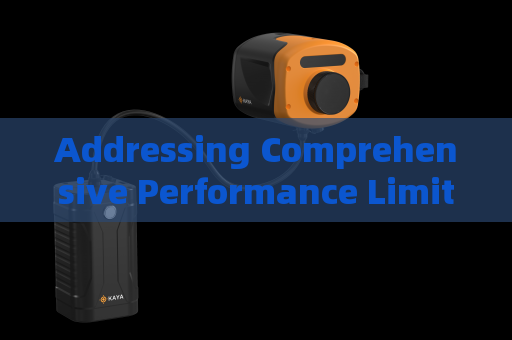
Field tests demonstrate that this active imaging approach increases effective observation range by multiples compared to passive systems in the same scenario. The penetrating imager’s ability to see through optical media—windshields, glass facades, aircraft windows—while resisting high-intensity light makes it indispensable for covert surveillance, hostage rescue, and checkpoint operations. By addressing the comprehensive performance limits of zero-light and high-glare environments, the penetrating imager transforms tactical reconnaissance from a gamble into a predictable, reliable capability.




