In hostage rescue missions, the greatest obstacle to situational awareness is the very barrier that separates responders from the threat: the window. Whether it is a car window, a residential glass pane, or a commercial storefront, conventional optics often fail when faced with reflective coatings, tinted films, condensation, or even simple dirt. Snipers and tactical teams cannot risk moving closer for a direct line of sight, as any visible movement or reflected light may alert the perpetrator and trigger a violent outcome. Rain, fog, or low-angle sunlight further degrade visual clarity, turning a glass surface into a mirror or a blur. The core pain point is that through-window tactical observation remains an unsolved challenge for traditional scopes, binoculars, or even thermal imagers, which detect heat but cannot resolve facial features or weapon details through glass at tactically relevant distances.
The Penetrating Imager solves this problem through a fundamentally different approach: active laser range-gated imaging. Instead of relying on ambient light or thermal radiation, the system emits nanosecond laser pulses and synchronizes a high-speed gated camera to capture only the light reflected from a specific distance range. By rejecting backscatter from the glass surface itself and from particles in the air, the imager effectively "sees through" the window while maintaining high contrast and resolution. The technology is entirely optical—no radio waves, no X-rays, no sound. It can penetrate automotive glass, aircraft windows, and even double-glazed panels, provided they remain optically transparent. In hostage scenarios, this means a tactical team positioned 50 to 100 meters away can obtain a clear, real-time image of the interior, including the suspect’s hands, the hostage’s position, and any hidden weapons, all without ever physically approaching the window.
Field trials with European counter-terrorism units have demonstrated the practical value of this capability. During a simulated bus hijacking, operators used The Penetrating Imager from a vantage point behind a neighboring vehicle, capturing tactical observation through automotive glass that revealed the driver’s isolated position and the hostage cluster in the rear. Because the system is entirely passive at the target—no emitted signal that can be detected by the suspect—the operation remained covert. The operator simply aimed the lens at the window, adjusted the gate delay to match the distance, and viewed the image on a handheld display. Rain and dusk conditions did not degrade performance; in fact, the laser's narrow wavelength allowed the system to cut through moderate fog and heavy rain that would have rendered standard optics useless. The team was able to plan an entry without daylight reconnaissance, reducing risk to both hostages and assaulters.
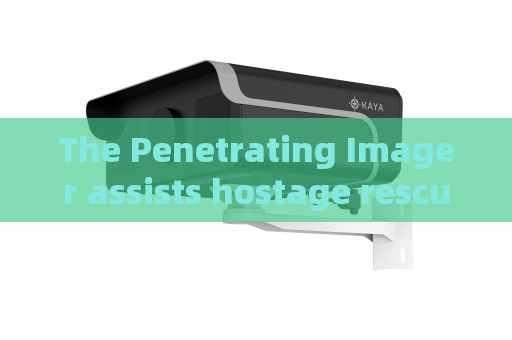
A deeper operational nuance involves the use of The Penetrating Imager in low-light or zero-light environments. While many windows look opaque from outside at night due to interior darkness, the imager’s pulsed laser illuminates the scene inside with near-infrared light invisible to the human eye. This enables Low-light Imaging that effectively turns a pitch-black interior into a well-lit observation field. Because the gating rejects reflections from the glass itself, the operator does not see their own laser spot—only the objects beyond the window. This capability is critical for nighttime rescues, where suspect movement behind curtains or blinds often goes unseen. The device also suppresses glare from streetlights or vehicle headlights bouncing off the glass, a feature known as Strong Light Suppression Imaging. By combining these functions into a single handheld unit, The Penetrating Imager provides tactical commanders with an observational tool that directly addresses the most dangerous blind spot in hostage operations: the window.




