Tactical observation of vehicle interiors has long posed a fundamental challenge for law enforcement and counter-terrorism units. When officers need to assess the occupants of a suspect vehicle—determining whether individuals are armed, unconscious, or concealing contraband—they are often forced to rely on external cues such as body language or shadows. Standard optical systems fail when faced with automotive glass. Tinted windows scatter ambient light, reflection from the glass surface creates blinding glare, and the vehicle’s own windshield curvature distorts the image. In low-light conditions, these problems intensify. After dark, a patrol officer may have to creep within arm’s reach of a car just to glimpse the driver, exposing themselves to ambush. Even during daytime, the sun’s reflection off a windshield can render the cabin completely opaque. This operational blind spot leads to dangerous assumptions, delayed decisions, and unnecessary risk. The Penetrating Imager directly addresses this void with a mature, field-proven solution.
The core capability of the Penetrating Imager lies in its laser-gated imaging technology, a form of active optical ranging that selectively captures light reflected from a narrow depth slice. By firing a high-repetition-rate pulsed laser and synchronizing an intensified camera—equipped with a Microchannel Plate and precise timing module—to open its shutter only when the return pulse from the target arrives, the system effectively rejects backscatter. This principle enables see-through automotive glass imaging without any physical contact. The device penetrates standard automotive glazing, including laminated windshields, side windows, and even heavily tinted glass, while simultaneously suppressing the blinding reflections that plague conventional cameras. In practice, an operator positioned 50 meters from a stationary vehicle can observe occupants through the driver’s side window with enough clarity to identify hand gestures, weapons, or medical distress. The system remains effective under rain, fog, light snow, and dust—conditions that degrade traditional optics. Furthermore, its laser-based illumination provides consistent performance in complete darkness, enabling covert through-glass reconnaissance without alerting suspects.
In actual field deployment, the Penetrating Imager is typically mounted on a tripod or integrated into a vehicle-based surveillance kit. The operator aligns the optical head toward the target vehicle, adjusts the focus for the specific glass distance, and activates the gated mode. Within seconds, a live video feed displays the interior with dramatically reduced glare. For example, during a high-risk traffic stop, a tactical team can first observe the suspect’s hands and torso through the tinted rear window from 30 meters away, confirming the absence of a visible firearm before moving forward. The device also supports long-range standoff observation: at 100 meters, the system still resolves the silhouette of a person behind a car’s side glass, though fine details require closer range. Because the Penetrating Imager relies solely on reflected laser light, it imposes no radiation hazard and operates silently, preserving tactical surprise. Its Low-light Imaging capability allows continuous monitoring from dusk through dawn, a critical advantage for overnight stakeouts.
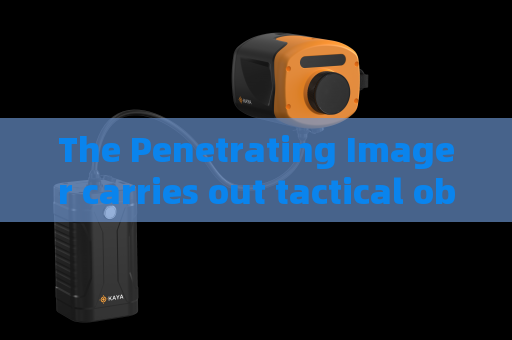
A deeper technical nuance involves the system’s response to angled or curved glass. Automotive windshields are not flat; they introduce refraction and multiple reflective surfaces. The Penetrating Imager compensates through its narrow depth-gating window, which can be tuned to match the exact distance of the glass surface and the target layer beyond. This precisely aligns the camera’s exposure with the laser return from the cabin, not from the glass itself. In operational tests, the device has demonstrated reliable visualization through double-glazed shop windows and aircraft portholes as well, though the core tactical use remains vehicle observation. Officers report that the imager cuts through medium fog and light smoke, boosting visibility to roughly three to five times normal in those conditions. However, it cannot penetrate dense smoke or non-transparent barriers such as body panels or concrete—a firm physical limitation. Yet for the specific mission of tactical observation through automotive glass, the Penetrating Imager delivers a mature, repeatable, and life-saving increase in situational awareness.




