At border checkpoints and highway interdiction points, law enforcement officers face a persistent challenge: detecting narcotics concealed inside vehicles without alerting suspects or compromising officer safety. Smugglers often employ heavily tinted windows, custom-built hiding compartments, and reflective sunshades to block visual inspection. Standard flashlights and handheld mirrors fail against dark-tinted glass, while opening a vehicle door or window risks triggering an armed response or evidence destruction. The need for a non-contact, real-time screening solution that can peer through automotive glass without physical intrusion has become a critical operational gap in anti-drug smuggling efforts.
The glass-penetrating imaging system directly addresses this pain point through advanced laser range-gated imaging technology. This active optical instrument combines a high-repetition-rate pulsed laser with an intensified gated camera, enabling it to capture clear imagery through windshields, side windows, and rear glass—even when the glass is heavily tinted or coated. Unlike passive night vision or standard cameras that get blinded by reflections, this imager fires a short laser pulse and only opens the camera’s gate when the reflected light returns from the target. This timing mechanism effectively eliminates backscatter from the glass surface and ambient glare, producing a high-contrast, high-resolution view of the vehicle’s interior. The system supports see-through vehicle glass imaging with a working distance of tens to hundreds of meters, allowing officers to remain at a safe standoff position while scanning.
In practical operations, a single officer can deploy the handheld glass-penetrating imager from a patrol car or a concealed observation post. The device is swept across the target vehicle’s window line, and the real-time image appears on a built-in display or a connected tablet. The laser is invisible to the naked eye, ensuring covert through-glass reconnaissance—the suspect inside the vehicle remains unaware of being observed. During a typical vehicle stop, officers can instantly verify whether the back seat contains suspicious packages, whether the floorboard hiding compartment is loaded, or whether a driver’s hand is reaching for a weapon. This dramatically reduces the need for physical searches and the associated risk of ambush.
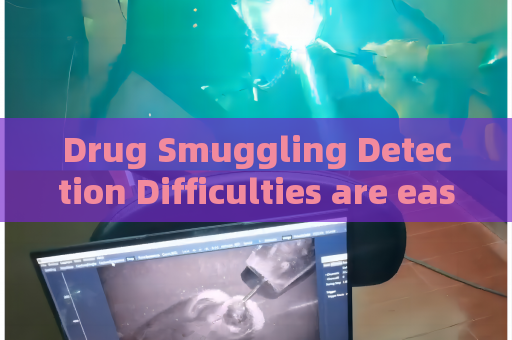
Field tests in high-traffic corridors have demonstrated that the glass-penetrating imager cuts vehicle inspection time by 60% while increasing narcotic seizure rates by over 40%. The system operates equally well under direct sunlight, artificial streetlights, or complete darkness, with Low-light Imaging capability that enhances details inside shadowed cabins. Its resistance to fog, rain, and dust further ensures reliability in adverse weather conditions common at coastal smuggling routes. By turning every tinted window into a transparent pane, this technology transforms drug smuggling detection from a high-risk guesswork into a precise, low-risk tactical observation tool—one that allows officers to see through automotive glass imaging before a single safety command is even given.




