In tactical law enforcement and counter-surveillance operations, observing suspects or concealed items inside a stationary or moving vehicle through its windows is a routine yet notoriously challenging task. When an officer attempts to visually confirm a weapon on the passenger seat or identify a driver’s hands during a high-risk traffic stop, the glaring sunlight reflected off the windshield or the blinding beams of oncoming headlights can instantly wash out the image. Conventional optical systems, even with polarizers, struggle to maintain a stable video feed under such extreme lighting conditions. The resulting overexposure and flare not only degrade situational awareness but also create dangerous moments of uncertainty—an officer may hesitate or misjudge a threat because the camera fails to deliver a usable picture. This real-world pain point demands a solution that suppresses overwhelming light without sacrificing clarity, enabling reliable tactical observation through automotive glass under any ambient lighting.
The Penetrating Imager directly addresses this challenge by employing Strong Light Suppression Imaging, a core capability derived from its laser-based range-gated architecture. Unlike conventional cameras that rely on passive ambient light and global exposure, the Penetrating Imager actively fires high-repetition-rate laser pulses synchronized with an image-intensified gated camera. The gating mechanism is precisely timed to capture only the return signal from the target behind the glass, while the short pulse duration inherently rejects overwhelming stray light—including direct sunlight, headlamp glare, and reflections from the glass surface. This Strong Light Suppression Imaging technology ensures that the sensor never saturates, keeping the picture stable and free from blooming or washout. The system’s ability to operate in both Low-Light Imaging and Zero-Light Imaging modes further complements its robustness, but it is the active suppression of high-intensity light that makes tactical through-window observation feasible in real-world scenarios.
In a field deployment, the practical outcome is immediately apparent. An officer positions the Penetrating Imager at a safe standoff distance—typically several hundred meters—and aims it at the target vehicle’s side window or windshield. Even if the vehicle is parked facing the afternoon sun or has its interior lights reflecting off the glass, the view on the handheld monitor remains crisp and consistent. The laser gating effectively strips away the surface layer of glare, revealing the occupants’ movements, objects on the seats, or even handwritten notes on the dashboard. Because the Strong Light Suppression Imaging maintains stable picture quality, the operator does not need to adjust gain, iris, or exposure settings under changing light—the system auto-adapts to sudden flashes such as police car light bars or passing headlights. This reliability is critical for covert through-glass recon, where any equipment adjustment or picture glitch could alert a suspect.
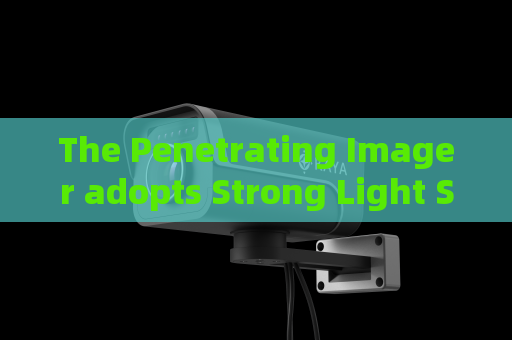
Further extending the operational advantage, the Penetrating Imager also excels in mixed-lighting environments common during nighttime vehicle interdictions. When the target vehicle’s interior is dark but its windshield reflects distant streetlights or a patrol car’s spot, Strong Light Suppression Imaging prevents the foreground glare from obscuring the dark interior details. The imager’s through-glass surveillance capability therefore becomes a force multiplier for tactical teams conducting a visual check before a breach. By stabilizing the image across a wide dynamic range of luminosity—from near-darkness to blinding searchlights—the Penetrating Imager allows officers to maintain continuous visual contact with the scene without any downtime. This single-function focus on stable picture quality under strong light ultimately defines the device’s value in modern law enforcement, where every fraction of a second of clear sight can be the difference between a successful resolution and a critical failure.




