Coastal fog is one of the most persistent and dangerous environmental hazards for maritime security and law enforcement operations. Along shorelines, harbors, and strategic straits, dense sea fog can reduce visibility to less than 50 meters within minutes, rendering standard optical surveillance equipment—binoculars, day cameras, and even thermal imagers—virtually useless. Traditional imaging systems struggle with the strong backscatter from water droplets suspended in the air, which scatters light indiscriminately and creates a uniform white haze that obscures any target. For a coast guard patrol monitoring illegal fishing vessels or a customs team watching for smuggler speedboats, this fog-induced blindness means mission-critical gaps in situational awareness. The Penetrating Imager is designed to overcome exactly this challenge, providing a reliable reconnaissance capability when conventional optics fail.
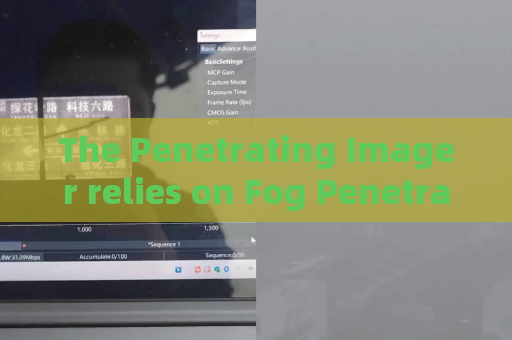
The core solution lies in the system’s advanced Fog Penetration Imaging technology, which relies on laser range-gated imaging—also known as gated imaging. Unlike passive cameras that receive all light indiscriminately, The Penetrating Imager is an active imaging system composed of a high-repetition-rate pulsed laser, an image intensifier gated camera (built with an MCP image intensifier, high-voltage module, and timing module), a beam expander, and an imaging lens. By emitting a short laser pulse and opening the camera’s shutter only when the reflected light from a specific distance returns, the system effectively gates out the backscatter from fog particles in the foreground. This technique achieves high-contrast imaging with long range, excellent resolution, and strong anti-interference capability, making it possible to see through dense coastal fog that would blind any other optical device.
In practical reconnaissance missions along foggy coastlines, operators have achieved identification of small vessels and floating objects at ranges exceeding 2 kilometers under visibility conditions below 100 meters. The device’s high contrast allows distinguishing between a fishing boat’s hull and the churning wake, even when both are enveloped in swirling mist. For tactical operations such as covert observation through vehicle glass or through-window tactical observation of suspects on a fog-bound pier, the system’s glass-penetrating imaging capability—another built-in feature—adds a layer of versatility. But in the primary fog scenario, the laser range-gated mode ensures that the operator sees only the intended target, not the scattered foreground clutter. The system can be mounted on a tripod, a patrol boat railing, or a vehicle roof, with a simple control interface that allows the user to adjust the gate delay and pulse width to match varying target distances in real time.
Even under fading daylight or during twilight hours, the active illumination provided by the pulsed laser maintains consistent imaging quality. The Penetrating Imager is built for the harshest coastal environments, with a weather-sealed housing and robust optics that resist salt spray and condensation. For a coast guard cutter trying to intercept a suspicious skiff that has disappeared into a fog bank, this device transforms an impossible task into a manageable one—delivering clear, actionable imagery that allows timely decision-making. The technology has been field-tested in real operations, from port security in misty northern harbors to counter-narcotics patrols in tropical coastal zones, proving that fog need no longer be a blind spot for maritime reconnaissance.




