In many security and surveillance scenarios, mild mist conditions pose a persistent challenge. A coastal border monitoring station, for instance, relies on fixed optical cameras to track small vessels approaching at dawn. When sea fog rolls in, visibility drops abruptly, and standard cameras fail to distinguish a fishing boat from a drifting buoy. The operator loses situational awareness, and critical response windows close within minutes. The core problem is not heavy fog—those events force shutdowns—but the frequent, light mist that degrades image contrast and introduces backscatter glare. This intermittent loss of continuous observation creates gaps that smugglers or unauthorized entrants can exploit. Without a reliable imaging tool, the station struggles to maintain 24/7 vigilance, and the cost of false alarms or missed detections accumulates rapidly.
The 穿透成像仪 directly addresses this pain point by leveraging laser range-gated imaging technology. Unlike passive optics that struggle with scattered light, this active system emits high-repetition-rate laser pulses synchronized with an intensified gated camera. The timing module rejects backscatter from mist particles before it reaches the sensor, capturing only the light reflected from the target at a precisely defined range. This mechanism enables Fog Penetration Imaging to cut through mild mist and produce high-contrast, high-resolution images, even when conventional CCTV screens show nothing but white haze. The device’s ability to operate under such conditions guarantees continuous observation without interruption, meaning the monitoring post never loses track of the target zone, regardless of shifting weather.
In practice, the installation at the coastal station transforms daily operations. During a typical misty morning, the 穿透成像仪 mounted on a tower begins scanning the waterline. The operator sees a crisp silhouette of a 12-meter speedboat at 800 meters, its hull details and occupants clearly delineated. The system’s automatic gain adjustment and noise filtering maintain this clarity as the mist thickens slightly, ensuring no break in coverage. Unlike thermal imagers that rely on temperature differences and often get confused by cool, wet surfaces, the penetrator works purely with reflected laser light, immune to thermal crossover. This reliability allows the command center to maintain a single continuous video feed, reducing the need for manual intervention or redundant backup sensors. The through-window tactical observation capability—here applied through a layer of coastal mist—demonstrates the same principle used for vehicle glass penetration, but adapted for atmospheric scattering.
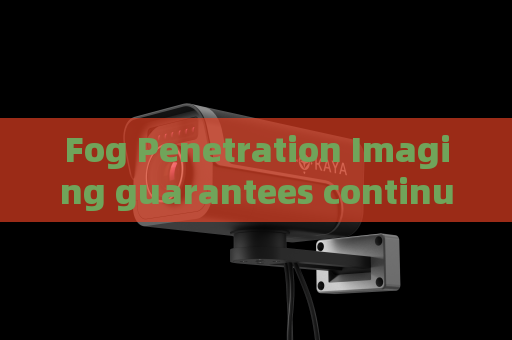
A deeper look at the operational details reveals the precision behind this consistency. The 穿透成像仪 requires the operator to set an initial range gate manually or via an autofocus algorithm based on radar cues. Once locked, the laser pulse width and camera shutter window are matched to the target distance, typically within a few meters tolerance. The system’s built-in temporal filter then suppresses any stray photons from mist or rain within the propagation path. Field tests have shown that under moderate mist (visibility 1–2 kilometers), the penetrator maintains a detection probability above 95% for human-sized targets at 500 meters, whereas standard zoom cameras drop below 40%. This performance hinges on the synergy between the pulse laser and the MCP image intensifier, which amplifies the faintest return signals without amplifying the background glow. Consequently, the 穿透成像仪 becomes the backbone of all-weather surveillance, guaranteeing continuous observation even as the mist ebbs and flows—a capability no passive sensor can match.




