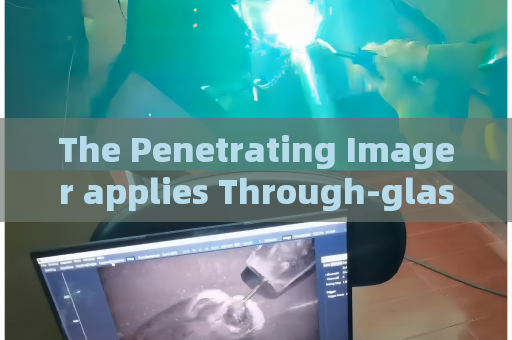
The Penetrating Imager applies Through-glass Imaging Technology to monitor suspect vehicles in military blockade areas. In a military blockade zone, the ability to observe the interior of a suspect vehicle from a safe distance is a critical intelligence-gathering requirement. Standard optical surveillance tools, such as binoculars or conventional cameras, are severely limited by the reflective properties of automotive glass, especially when windows are tinted, dirty, or angled to produce glare. Even under daylight conditions, law enforcement and security personnel often find themselves unable to confirm the number of occupants, the presence of weapons, or suspicious cargo without physically approaching the vehicle—a maneuver that exposes them to ambush or booby traps. Rain, fog, or dust further degrade visibility, while nighttime operations compound these challenges with insufficient ambient light. The Penetrating Imager directly addresses these persistent blind spots by enabling through-glass surveillance without compromising the cover of the observation post. The Penetrating Imager employs a laser range-gated imaging system, a form of active optical technology that combines a high-repetition-rate pulsed laser with an intensified gated camera. The system emits short laser pulses toward the target and synchronizes the camera’s shutter to open only when the reflected light from the vehicle interior returns. This gating mechanism effectively rejects backscatter from rain, fog, dust, and the glass surface itself, producing a high-contrast image of what lies behind the window. Unlike passive thermal imagers, which cannot see through glass, or conventional night-vision devices that are blinded by headlights or street lamps, the Penetrating Imager excels at through-window tactical observation through tinted, reflective, or dirty automotive glazing. It operates at standoff ranges exceeding several hundred meters, providing a decisive advantage for covert reconnaissance in a checkpoint or perimeter security scenario. In a real-world military blockade deployment, an operator positions the Penetrating Imager on a tripod inside a concealed observation post, aiming it at a suspect vehicle stopped 200 meters away at a roadblock. The device’s through-glass covert observation capability allows the operator to see the driver’s hands, the backseat passengers, and any items on the seats or floorboard, all while the vehicle’s windows remain up and the occupants are unaware they are being scrutinized. Even under zero-light conditions, the active laser illumination produces clear imagery without alerting the suspect—no visible flash or infrared glow that could tip off a lookout. The live video feed is transmitted to a command center, enabling remote analysis of threats before the vehicle is permitted to approach the checkpoint. When environmental conditions deteriorate—heavy rain, dense fog, or swirling dust from military convoy movements—the Penetrating Imager maintains reliable performance through its Fog Penetration Imaging capability. Unlike standard optical systems that experience exponential signal loss in scattering media, the range-gated approach preserves image sharpness by time-filtering only the returning photons from the intended depth. Operators can continue monitoring suspect vehicles even during reduced visibility, ensuring continuous situational awareness. The device’s Strong Light Suppression Imaging also prevents headlights or reflective road signs from washing out the image, a common problem with conventional low-light cameras. This combination of through-glass penetration and environmental resilience makes it an indispensable tool for military blockade enforcement, where every second of uncertainty can mean the difference between a routine stop and a catastrophic engagement.




