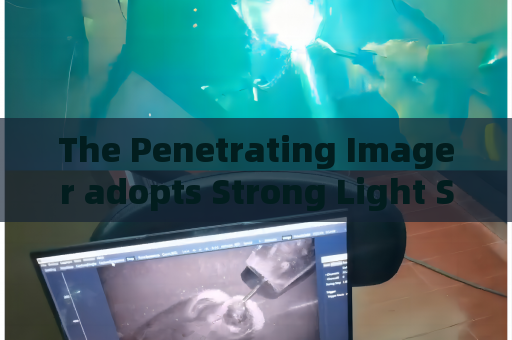
The Penetrating Imager adopts Strong Light Suppression Imaging to maintain sharp pictures under oncoming headlight light Nighttime vehicle interdiction operations present a persistent challenge for law enforcement officers. When a patrol car initiates a traffic stop on a dark highway, the suspect vehicle often slows down while oncoming traffic continues at high speed. The headlights of approaching cars—especially modern LED or high-beam systems—create intense glare that washes out conventional cameras. An officer attempting to visually inspect the interior of the stopped vehicle through its rear window or side glass is momentarily blinded by the sudden burst of light. Dashboard-mounted cameras or handheld observation devices suffer from overexposure, turning critical details like occupant movements, hand positions, or hidden objects into saturated white blobs. This optical vulnerability creates a dangerous tactical gap: the officer cannot confirm whether a driver is reaching for identification or a weapon, and the delay in recognition can escalate a routine stop into a lethal encounter. The core pain point is that standard imaging systems fail under these dynamic lighting conditions, compromising situational awareness at the very moment it is most needed. The Penetrating Imager directly addresses this problem through its through-glass surveillance capability combined with Strong Light Suppression Imaging. As an active imaging system built around laser range-gated technology, the device emits short, high-repetition-rate laser pulses and synchronizes the shutter of an intensified camera (with an MCP image intensifier, high-voltage module, and timing unit) to capture only the light reflected from the target at a specific distance. When oncoming headlights flood the scene with continuous, high-intensity illumination, the imager’s gating mechanism rejects that stray light entirely. The camera opens its electronic shutter for nanoseconds—timed precisely for the laser return from the vehicle being observed—so the headlight glare, which arrives at a different time delay or as ambient continuous light, falls outside the acceptance window. The resulting image remains crisp, with high contrast, free from blooming or washout. This is not a post-processing filter or digital gain adjustment; it is a physical, optical rejection of unwanted light at the sensor level, ensuring that the operator sees the occupants and objects inside the target vehicle as if the headlights did not exist. In practice, an officer positioned at the rear quarter of the stopped vehicle can deploy the Penetrating Imager through the side glass or rear windshield. The device works equally well against tinted windows, which absorb visible light but transmit the near-infrared laser pulse. Even with multiple oncoming vehicles passing by, each triggering a fresh burst of glare, the image on the handheld display remains stable and detailed. The operator can observe the driver’s hands, look for passengers in the back seat, or spot contraband on the floor—all while the surrounding traffic creates chaotic lighting. This capability transforms a vulnerability into a tactical advantage. The officer does not need to squint or reposition; the imager maintains a continuous, high-contrast view that supports quick decision-making. In training scenarios, agencies report that the time to assess threat level drops significantly when using this system compared to conventional observation tools, because the operator is never forced to wait for the glare to pass. The operational workflow is straightforward yet precise. After initiating a traffic stop, the officer steps out from the patrol car, raises the Penetrating Imager, and aims through the target vehicle’s window. The laser and camera automatically synchronize based on the range to the vehicle—typically 10 to 50 meters. A simple focus adjustment on the imaging lens ensures that the interior details are sharp. No manual suppression of bright lights is required; the system handles it autonomously through the gating timing. The officer can then relay the visual information to a partner via the built-in display or record the feed for later evidence. This seamless integration into existing stop procedures means no additional cognitive load during high-stress encounters. The imager also performs reliably in fog, rain, or snow—conditions common during night patrols—where backscatter from precipitation would otherwise degrade visibility. By eliminating the blinding effect of oncoming headlights, the Penetrating Imager gives law enforcement a persistent, clear window into the vehicle, turning a routine stop into a controlled, informed interaction from start to finish.




