Of course. "Low-Light" is a broad term that primarily refers to conditions with minimal available illumination. Its significance and applications span several fields, most notably photography/videography, computer vision, and biology.
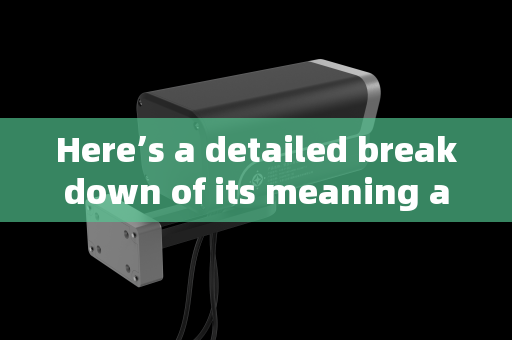
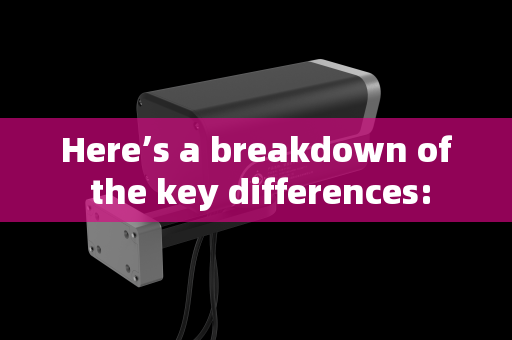
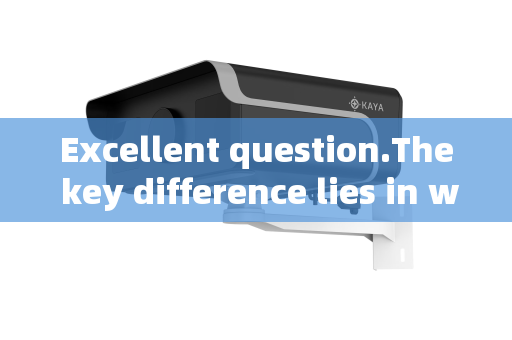
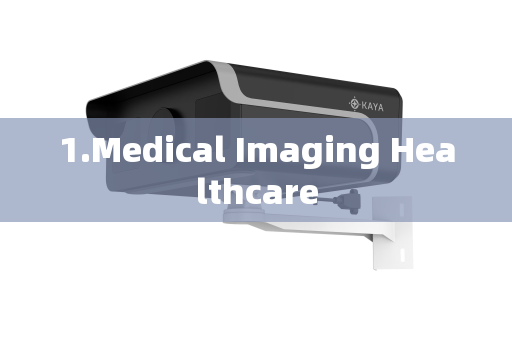
Penetration Imager Effect Images
In Photography & Videography
This is the most common everyday meaning. Low-light conditions challenge cameras because there isn't enough light for a proper exposure without introducing problems.
Key Challenges:
- Noise (Grain): Increasing the camera's ISO sensitivity amplifies the signal, making random noise more visible.
- Slow Shutter Speeds: Can cause motion blur from either subject movement or camera shake.
- Shallow Depth of Field: To gather more light, you use a wider aperture (e.g., f/1.4), which makes a very thin slice of the image sharp.
- Autofocus Failure: Autofocus systems struggle to find contrast in near darkness.
Solutions & Techniques:
Penetration Imager Effect Images
- Fast Lenses: Lenses with large maximum apertures (e.g., f/1.8, f/1.4) are called "fast" because they let in more light.
- Image Stabilization: In-body (IBIS) or in-lens stabilization allows for slower shutter speeds without camera shake.
- Shooting in RAW: Provides more data to recover shadows and reduce noise in post-processing.
- Tripods: Essential for long exposures in very dark scenes (e.g., astrophotography).
- Modern Technology: Larger sensors (full-frame, medium format) generally perform better. Computational photography (like Night Mode on smartphones) uses multiple frames and AI to dramatically improve results.
In Computer Vision & AI
For machines (robots, security systems, autonomous vehicles), "seeing" in low light is a critical technological hurdle.
The Problem: Standard vision algorithms fail when image signal-to-noise ratio (SNR) is very low. Details are lost, colors are muted, and noise is dominant.
Solutions & Active Research Areas:
Penetration Imager Effect Images
- Low-Light Image Enhancement (LLIE): Algorithms that brighten, denoise, and correct color in dark images. Techniques range from traditional histogram equalization to deep learning models (like LLNet, EnlightenGAN).
- Image Restoration: Recovering a clean, well-lit image from a noisy, dark input. Often uses convolutional neural networks (CNNs) or vision transformers trained on paired low-light/normal-light datasets.
- Thermal & Infrared Imaging: Instead of struggling with visible light, these systems "see" heat signatures, which are independent of visible light. Crucial for military, surveillance, and wildlife monitoring.
- Event Cameras: Bio-inspired sensors that respond to changes in per-pixel brightness, working effectively over a huge dynamic range and in very low light.
In Biology
Many organisms have evolved extraordinary adaptations to thrive in low-light environments.
Examples:
- Nocturnal Animals: Owls, cats, tarsiers. They often have large eyes, a high density of rod cells (sensitive to low light), and a reflective layer behind the retina called the tapetum lucidum (causes eye shine).
- Deep-Sea Creatures: In the aphotic zone (no sunlight), life uses bioluminescence to attract prey, communicate, or camouflage. Their eyes are often highly sensitive to the specific blue-green light of bioluminescence.
- Plants (Shade-Tolerant Species): Plants like ferns and certain understory plants have adapted to photosynthesize efficiently with very low levels of filtered sunlight in dense forests.
In Military & Surveillance
Operating under the cover of darkness provides a tactical advantage.
Technology Used:
- Night Vision Goggles (NVGs): Amplify available visible and near-infrared light.
- Thermal Imaging: Detects differences in heat radiation, seeing through smoke, fog, and camouflage. Works in total darkness.
- Low-Light CCD/CMOS Cameras: Specialized sensors used in surveillance with very high sensitivity.
Practical Summary by Field
| Field | Core Challenge | Primary Solutions |
|---|---|---|
| Photography | Getting a clean, sharp, well-exposed image. | Fast lenses, high ISO, tripods, computational "Night Mode". |
| Computer Vision | Enabling machines to perceive and understand scenes. | AI enhancement algorithms, thermal cameras, event cameras. |
| Biology | Surviving, hunting, and navigating. | Enhanced rod cells, tapetum lucidum, bioluminescence. |
| Military/Security | Gaining visibility for operational advantage. | Night vision (image intensification), thermal imaging. |
In essence, "Low-Light" refers to the frontier of visibility, pushing the limits of technology, biology, and art to perceive and capture information when the primary source of illumination—the sun—is absent or obscured.