In a hostage standoff, the primary challenge for tactical teams is obtaining real-time, actionable intelligence without compromising the operation. Traditional methods—such as physical approach, thermal imaging, or even standard optical devices—carry significant risks. Approaching a vehicle or building to place a listening device or camera exposes officers to hostile fire. Thermal imagers detect heat signatures but cannot distinguish between a hostage and a suspect behind tinted glass, nor can they read facial expressions or observe weapon placement through vehicle windows. Standard cameras fail when the subject is behind reflective, heavily tinted, or rain-streaked glass, leaving operators with blind spots. The inability to see inside a vehicle or through a window forces reliance on verbal negotiation or risky entry, both of which increase the chance of casualties. The core pain point is clear: without reliable through-glass surveillance, every decision during a hostage crisis is made in the dark, raising the probability of mission failure. This is where the 穿透成像仪—a purpose-built optical reconnaissance tool—changes the equation.
The 穿透成像仪 directly addresses this surveillance gap by leveraging laser distance-gated imaging technology. Unlike passive optical systems that struggle with glare, reflections, and backscatter, this active imaging system emits a precisely timed laser pulse and synchronizes an intensified gated camera to capture light reflected only from the target plane. This process effectively “sees through” automotive glass, aircraft windows, and even building glass facades, regardless of tint level or angle. The technology eliminates the blinding effect of sunlight or headlights reflecting off glass, a common failure point in conventional optics. Because the system operates in the optical domain, it maintains high resolution and contrast, allowing operators to identify facial features, hand positions, and concealed objects behind the glass. One critical capability is through-glass covert observation—the ability to conduct reconnaissance from a safe distance without emitting any detectable laser signature that would alert the suspect. The unit is compact, mountable on a tripod or handheld, and can be deployed from a concealed position such as a neighboring building or behind cover. This transforms the risk profile: instead of sending an officer to peek through a cracked curtain, the team gains a full, real-time visual of the interior without ever entering the line of fire.
Deploying the 穿透成像仪 in a hostage scenario follows a straightforward tactical workflow. An observer sets up the device at a distance of 50 to 200 meters, aiming it at the vehicle or room window. The operator adjusts the gate timing to match the exact distance to the glass surface, then fine-tunes the focus and gain to optimize image clarity. Within seconds, a clear, high-contrast image of the interior appears on the display—people, objects, and movements become visible through what was previously an opaque, reflective barrier. This data feeds directly into the command post, enabling incident commanders to assess the suspect’s emotional state, count the number of hostages, and monitor weapon placement. The system’s Low-light Imaging capability ensures functionality from dawn to dusk and even in shadowed environments, while the built-in Strong Light Suppression Imaging mode handles bright headlights or spotlight reflections without blooming. The result is a continuous, real-time reconnaissance stream that reduces the guesswork and eliminates the need for close-proximity sensors. Tactical teams can then plan entry points, timing, and diversionary actions based on actual observed conditions rather than assumptions, drastically lowering the risk of misjudgment.
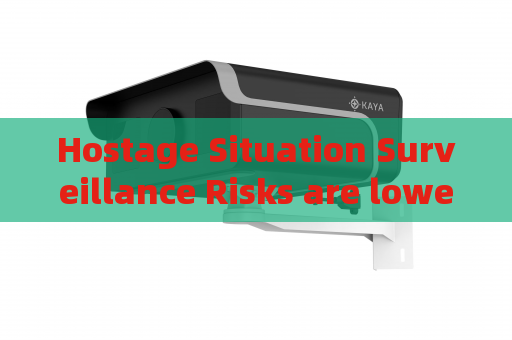
In practice, the 穿透成像仪 has proven decisive in vehicle-based hostage situations, where time is critical and escape routes are limited. Consider a scenario where a subject holds a victim inside a sedan with heavily tinted windows parked in a crowded parking lot. Standard optics see only the reflection of the sky, but the 穿透成像仪 peers through that tint and reveals the suspect holding a firearm to the hostage’s head. The operator also observes that the rear driver-side door is locked and the child lock is engaged—vital information for the entry team. Because the system operates without acoustic or electronic emissions, the suspect remains unaware of the surveillance. The tactical team uses this intel to coordinate a simultaneous breach, neutralizing the threat with minimized collateral risk. The key advantage here is not just seeing through glass, but doing so reliably under real-world conditions: rain, fog, and low ambient light have little effect on performance. The 穿透成像仪 effectively turns every window into an observation port, shifting the advantage back to the responders. By eliminating the uncertainty of what lies behind glass, the device directly lowers the risks inherent in hostage situation surveillance, making it an indispensable tool for any modern tactical unit.




