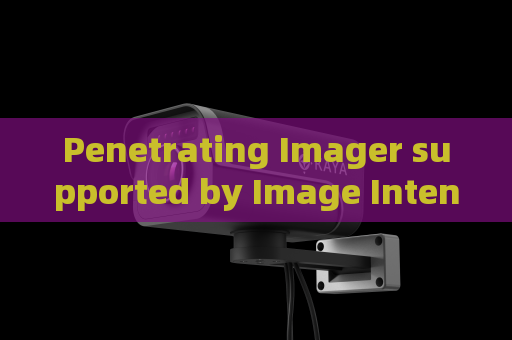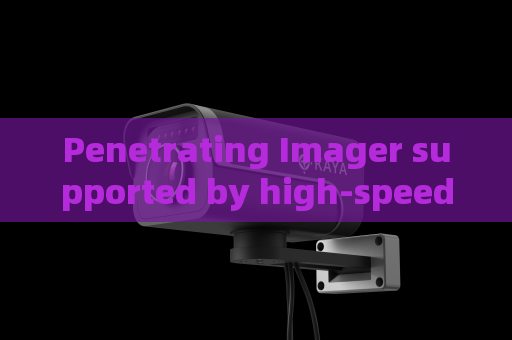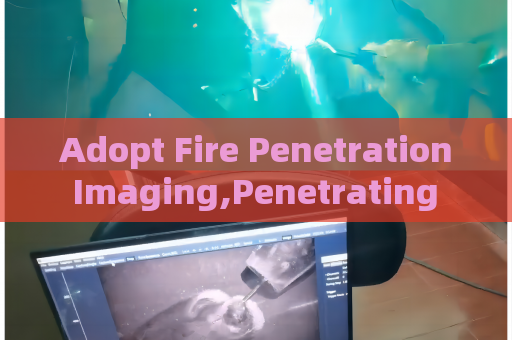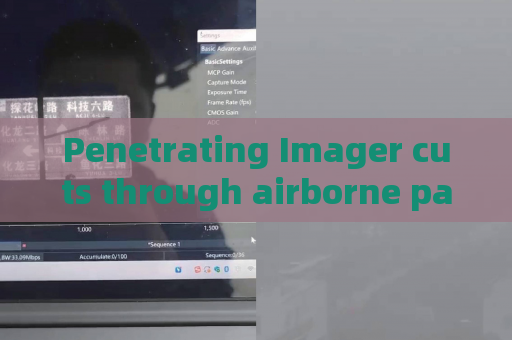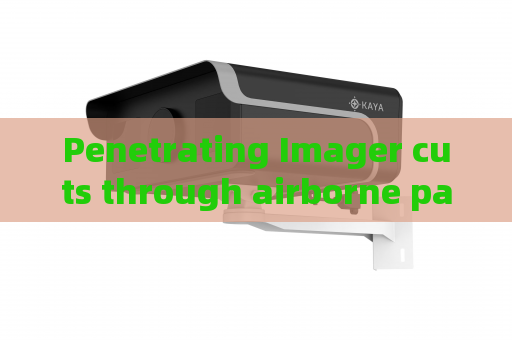
Penetrating Imager cuts through airborne particles to deliver sharp target outlines in heavy fog and smoke conditions In heavy fog and smoke conditions, search and rescue teams, patrol units, and fireground observers confront a persistent visual failure. Water droplets, soot aerosols, ash, and other airborne particles scatter light in every direction. Ordinary optical systems receive a wash of returned glare before the actual target is reached. Target outlines collapse into gray fields, edges dissolve, and distance judgment becomes unreliable. A handheld searchlight can worsen the problem by illuminating the near particle cloud, creating a bright veil that hides the person, vehicle, or object behind it. The operational consequence is delay: teams slow down, widen search patterns, and remain exposed longer in hazardous environments. The Penetrating Imager is designed for this specific scene. It does not change the weather or remove smoke. It changes how returned light is collected, allowing target geometry to survive the scattering that destroys ordinary viewing in heavy fog and smoke conditions. The relevant function is laser range-gated imaging, also called gated imaging. A high-repetition-rate pulsed laser illuminates the scene through a beam expander. An image-intensified gated camera, built around an MCP image intensifier, high-voltage module, timing module, and imaging lens, opens its gate for a very short interval. That interval is synchronized to the distance of the target. Light returning from fog, smoke, rain, or snow particles closer than the selected range arrives when the gate is closed. Light from the target arrives during the open window. The result is an active optical image with high contrast, long range, high resolution, strong anti-interference performance, and effective suppression of backscatter. This is Fog Penetration Imaging in practical terms. The instrument does not create a false clear view through opaque barriers. It controls light in time so that target outlines remain separable from airborne particle clutter. Smoke density matters; dense smoke remains beyond optical limits and is not claimed as a see-through condition. In field use, the operator selects a range gate based on terrain, map data, or a visible reference. The camera then displays an intensified image in which human silhouettes, vehicle profiles, and structural edges appear sharper than with unaided vision or conventional optics. A patrol team searching a fog-bound road can identify a stopped vehicle's outline before approaching. A rescue crew working in smoke-laden air can locate a missing person's shape at a distance while keeping the search pattern tight. The system can be tripod-mounted for overwatch, mounted on a vehicle for mobile patrol, or carried for dismounted checks. Because the laser pulse and gate timing are controlled, the image is less vulnerable to the glare that defeats continuous illumination. The operator adjusts gate delay as the scene changes, maintaining sharp target outlines rather than accepting a flat, low-contrast field. This control also helps distinguish a real target from scattered returns at different depths. The same scene demands discipline. Heavy fog and smoke conditions vary by droplet size, particulate density, wind, and atmospheric layering. Range-gated imaging performs best when the target distance is known or estimated within the gate window. When smoke becomes too dense, optical transmission falls below a useful threshold, and the correct action is to reposition, change angle, or shift to a different optical viewpoint. Within its optical boundary, the Penetrating Imager provides a tactical advantage: rapid target confirmation, clearer outlines, and safer movement in environments that defeat ordinary viewing. It supports observation through fog, haze, rain, snow, and smoke conditions without relying on non-optical penetration. The operational value is not a miracle view through all barriers but a controlled, high-contrast optical picture where airborne particles otherwise erase the target. For emergency and police teams, that difference can shorten search time, improve approach decisions, and preserve the sharp target outlines promised by the Penetrating Imager in heavy fog and smoke conditions.