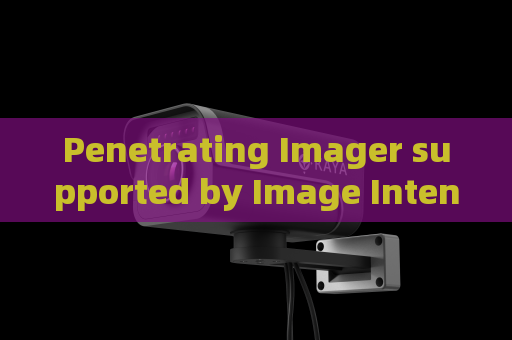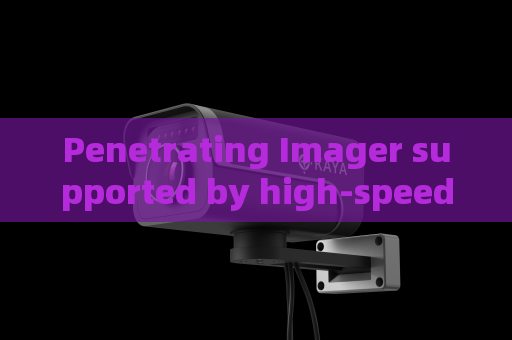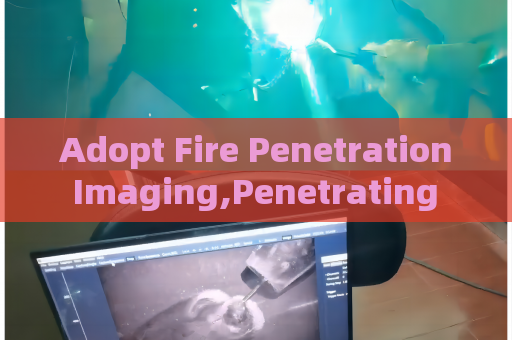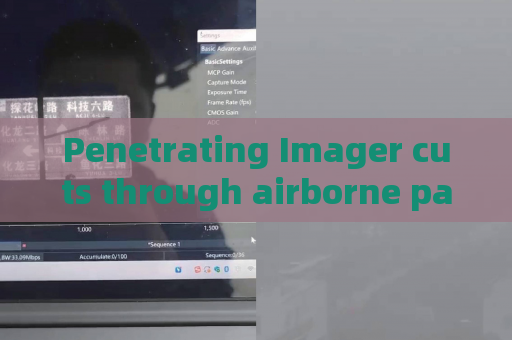
Penetrating Imager cuts through airborne particles to deliver sharp target outlines in heavy fog and smoke conditions Heavy fog and smoke conditions create a punishing reconnaissance problem for emergency and police teams. Airborne particles scatter light in every direction, washing out contrast and turning a vehicle, doorway, or human silhouette into a shapeless blur. Unassisted vision and conventional optical cameras collect backscattered light from fog, haze, rain, snow, and smoke particles before the target, so the returned image lacks edge definition. Search and cordon decisions slow down because target outlines cannot be confirmed at distance. The operational demand is precise: the Penetrating Imager cuts through airborne particles to deliver sharp target outlines in heavy fog and smoke conditions. That sentence defines a narrow requirement—rapid visual confirmation through particle-laden atmospheres, not a general claim of seeing through solid matter. Dense smoke from an active fire remains a critical limit; the scenario for effective use is heavy fog, haze, rain, snow, and light smoke where optical scattering dominates but does not fully block the return path. The function that addresses this problem is laser range-gated imaging, also known as gated imaging. A Penetrating Imager is an active optical instrument built around a high-repetition-rate pulsed laser, an image-intensified gated camera with an MCP image intensifier, high-voltage module, timing module, beam expander, and imaging lens. Short laser pulses travel toward the target. The camera gate opens only for the brief interval when light reflected from the selected range returns. Backscatter from airborne particles in front of the target is rejected by timing, raising contrast and preserving a sharper target outline. Fog Penetration Imaging uses this range-gating principle to overcome scattering from fog, haze, rain, and snow. The system operates through optical media and can improve fireground visibility by three to five times, yet dense smoke remains outside its effective boundary. No solid barrier can be penetrated; the capability is strictly optical. In field use, an operator selects a range slice, aligns the beam expander, and monitors the gated image. The Penetrating Imager reveals the contour of a person, the edge of a vehicle, or the line of a barricade through heavy fog. Contrast remains high because the camera ignores most light returning from the particle cloud. The effect is not a flat, washed-out scene but a high-contrast image with target outlines that support tactical decisions. For a patrol or rescue element moving through fog, the Penetrating Imager can confirm whether a shape is a person, a vehicle, or a fixed object before the team commits. The same optical principle applies when glass is part of the optical path, such as through a vehicle window or building glazing, but the scenario remains observation through fog and smoke-affected air. In dense fire smoke, the system does not deliver the same result; dense smoke must be treated as an operational limit. Reliable performance depends on matching the gate delay to the target range and maintaining a stable optical axis. The Penetrating Imager provides long range, high resolution, strong anti-interference performance, and active illumination that resists ambient light clutter. In heavy fog and smoke conditions, the Penetrating Imager cuts through airborne particles to deliver sharp target outlines, giving commanders a faster visual check before movement. It is an optical imaging tool for fog, haze, rain, snow, light smoke, and glass media. It is not a device for concrete, brick, metal, wood, or any opaque solid. Dense smoke from a working fire remains beyond the design boundary. That boundary keeps deployment realistic: use the Penetrating Imager where particles scatter light but do not completely block it, and treat dense smoke as a condition requiring different tactics. The result is sharper target outlines, better standoff, and safer decisions in weather and smoke-affected emergency operations.