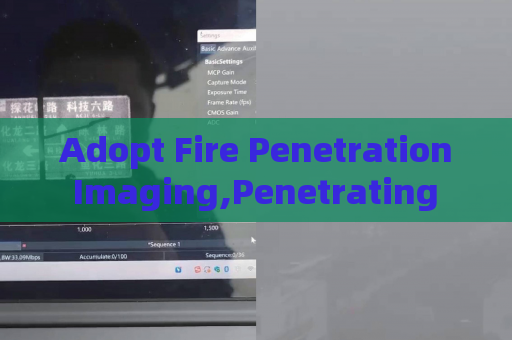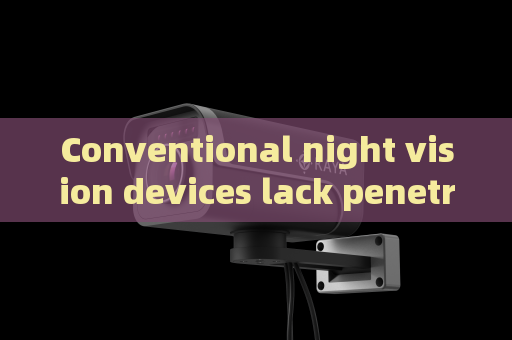
Conventional night vision devices lack penetration capability, Penetrating Imager adapts glass and fog environments for effective tactical observation In urban policing and emergency response, a stopped or abandoned vehicle can hide critical information behind laminated, tinted, or reflective glass. At night, in fog, or under streetlight glare, conventional night vision devices lack penetration capability. Image intensification may brighten the scene outside the vehicle, and infrared illumination may reveal surfaces with some contrast, but the window remains a mirror of exterior light, mist, and backscatter. The interior stays unreadable: seat positions, movement, hands, and objects cannot be confirmed from a safe distance. A tactical team approaching without that visual confirmation faces unnecessary risk. Opening a door or breaking glass changes the situation and may trigger a violent response. The operational need is not simply more light. It is selective light that passes through the glazing, returns from the cabin, and reaches the sensor with enough contrast to support a decision. Penetrating Imager is built for this exact gap in glass and fog environments. The relevant function is laser range-gated imaging, also described as gated imaging. This is an active optical method. A high-repetition-rate pulsed laser emits short light pulses; a beam expander shapes the beam; an imaging lens collects the return; and an intensifier-gated camera, containing an MCP image intensifier, high-voltage module, and timing module, opens for a very brief interval. The gate is synchronized to a chosen distance. Light returning from the window surface, fog droplets, or other near-field scatter arrives outside the gate and is largely rejected. Light returning from the vehicle interior, after passing through the glass, arrives during the gate and is amplified. The result is high-contrast imaging with long range, high resolution, strong anti-interference performance, and effective suppression of backscatter. For through-window tactical observation, this function turns vehicle glazing into a readable optical path rather than a blinding reflective barrier. The same optical behavior applies to fog, haze, rain, and snow; the method is limited to optical media such as car windows, train windows, aircraft portholes, and glass facades. It does not defeat opaque solids. In practice, an operator can place the unit on a tripod, vehicle mount, or portable support and aim it at the target vehicle from behind cover. The system sends pulses toward the selected window and the gated camera collects only the light that returns from the cabin depth. Exterior reflections, fog glare, and near-field scatter are suppressed before they can wash out the image. The display presents a high-contrast view of seats, headrests, silhouettes, and visible objects. The effect is not a vague outline. It is a tactical picture that can be monitored in real time, recorded for command review, or shared with an entry team before movement. Distance calibration and gate timing allow the operator to focus on the interior plane instead of the glass surface. In fog, the same timing logic reduces the curtain of scattered light that defeats ordinary low-light observation. Through tinted or reflective automotive glass, the active pulse and narrow gate help recover interior detail that ambient-light devices cannot separate from reflection. The method supports covert observation through vehicle glazing, because the pulse duration is short and the camera gate is narrow. The value in this single scenario is decision speed and risk reduction. A vehicle stop, a suspicious parked car near an event, or a barricaded subject in a vehicle all demand the same question: what is inside, and where are the hands? Conventional night vision devices fail when glass and fog block the view, so a simple visual check becomes guesswork. Penetrating Imager adapts to these optical barriers by using controlled pulses and distance-gated collection to create a clear interior view without opening the vehicle. The system does not replace sound tactics, cover, or command judgment. It adds a non-contact optical check that can be performed from a protected position, in darkness or poor weather, before an approach. The operator can confirm or deny movement, identify occupied seats, and adjust the plan. If the window is too opaque, the glass is not an optical path, and the method will not create information. For glass and fog, however, the active optical design provides what conventional night vision lacks: a useful picture through the barrier. This is the operational case where a clear interior view supports a safer tactical decision.