In law enforcement and security operations, severe weather conditions such as heavy rain, dense fog, or blinding snowstorms often create critical blind spots. When suspicious activities—like a hostage situation inside a vehicle or an illicit exchange behind a rain-lashed window—are deliberately concealed by these environmental factors, traditional optical surveillance systems fail. Cameras and binoculars struggle with light scattering, reduced contrast, and obstructed views through wet or fogged glass. The result is a dangerous gap in situational awareness: operators cannot confirm threats, identify individuals, or assess movement, leading to delayed responses or misjudgments. This is precisely where the Penetrating Imager steps in as a dedicated solution for overcoming atmospheric and optical barriers during target detection failures caused by severe weather.
The Penetrating Imager is an advanced active imaging system that employs laser range-gated imaging technology, also known as gated imaging. Its core components include a high-repetition-rate pulsed laser, an image-intensified gated camera (built with an MCP image intensifier, a high-voltage module, and a timing module), a beam expander, and an imaging lens. This configuration allows the Penetrating Imager to selectively capture light reflected from a specific distance while rejecting scattered light from rain, fog, snow, or mist. Unlike passive imagers, it actively illuminates the target with short laser pulses and synchronizes the camera’s shutter to open only when the returning signal arrives. This effectively eliminates backscatter and enhances contrast, enabling clear imaging through optical media such as vehicle windows, train windows, aircraft portholes, and glass curtain walls—even when those surfaces are covered by precipitation or condensation.
In a real-world scenario, consider a patrol team monitoring a suspicious sedan parked in a torrential downpour. The occupants are concealing an illegal transaction behind rain-streaked windows. Conventional optics yield nothing but blurred shapes and reflections. Deploying the Penetrating Imager from a distance of several hundred meters, the operator activates the laser and adjusts the gate delay to match the targeted vehicle. The imager instantly cuts through the rain curtain and the glass, delivering a crisp, high-resolution image of the subjects’ hand movements and facial features. The anti-interference capability ensures that falling raindrops do not degrade the image quality. This level of detail allows the team to verify the nature of the suspicious activity and decide on an appropriate tactical response without exposing themselves to risk.
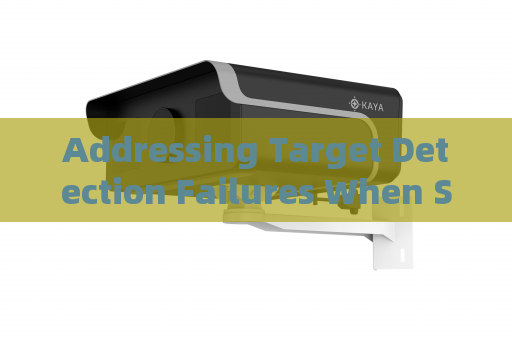
The operation of the Penetrating Imager is straightforward and field-proven. Its modular design requires minimal training: the operator simply aims the device, selects an appropriate laser intensity, and fine-tunes the gate timing based on the target distance. In heavy fog, the system maintains its effectiveness by rejecting scattered light from millions of suspended water droplets. It is important to note that while the Penetrating Imager can increase visibility in fire scenes by three to five times, it is not designed for dense smoke. Its primary strength lies in mitigating the detection failures caused by severe weather and transparent barriers. By providing reliable visual intelligence in conditions where other sensors are blind, the Penetrating Imager becomes an indispensable tool for first responders and security personnel who must act decisively when suspicious activities are concealed by nature’s worst.




