Covert surveillance of smuggling activities involving illegal vehicles presents a unique set of operational challenges that frustrate even seasoned law enforcement teams. Vehicles used for smuggling are often equipped with heavily tinted windows, reflective coatings, or aftermarket modifications designed to obscure the interior from external observation. Conventional optical systems—binoculars, zoom cameras, or even standard night vision devices—struggle to penetrate these barriers, especially under low-light conditions or during adverse weather such as fog, rain, or snow. The need for absolute stealth further complicates matters: any visible illumination, such as a spotlight or infrared floodlight, risks alerting the suspects, causing them to abandon or destroy evidence. Officers are left with a critical gap in situational awareness, unable to confirm the presence of contraband, hidden compartments, or armed individuals before making an approach. This blind spot endangers personnel and compromises mission success, highlighting the urgent requirement for a non-intrusive imaging solution that can see through vehicle glazing without tipping off the target. The Penetration Imager emerges as the precise answer to this persistent pain point.
The Penetration Imager directly addresses these surveillance obstacles through its core technology: laser range-gated imaging. This advanced optical instrument, composed of a high-repetition-rate pulsed laser, an intensified gated camera with an MCP image intensifier, a beam expander, and an imaging lens, is an active imaging system designed to overcome the limitations of passive optics. Its key function lies in selectively gating the camera's shutter to capture only the light reflected from a specific distance, effectively eliminating backscatter from rain, fog, or dust particles that plague conventional systems. More critically, the system is optimized to penetrate optical media such as vehicle window glass—including laminated, tinted, or coated automotive glazing—without the need for physical contact or visible illumination. The laser operates in a narrow, eye-safe wavelength that is invisible to the naked eye, ensuring that the surveillance remains covert even at close range. Unlike thermal imagers, which rely on temperature differences and struggle through glass, or standard night vision, which is blinded by bright reflections, the Penetration Imager delivers high-contrast, long-range imagery of the vehicle's interior, revealing occupants, cargo, and hidden compartments with remarkable clarity. Its ability to function effectively through fog, haze, rain, and snow further extends operational windows that would otherwise be closed.
In practical field deployment, the Penetration Imager transforms covert vehicle surveillance into a precise, repeatable process. Officers can position themselves at a safe distance—hundreds of meters away—using a tripod-mounted unit or a handheld configuration designed for discreet observation from inside an unmarked van. The system's intuitive interface displays a real-time video feed on a ruggedized tablet or integrated eyepiece, allowing the operator to slowly scan the target vehicle's windshield, side windows, and rear glass without any external indication of active surveillance. The laser pulses are so brief and focused that even if a suspect glances toward the officer's position, no flash or glow is detectable. This enables prolonged monitoring of a stationary or slowly moving vehicle, capturing evidence of loading activities, weapon transfers, or passenger behavior. In one documented operation, a Penetration Imager allowed a border patrol unit to identify a false floor in a pickup truck's cabin through the rear window, confirming the presence of smuggled electronics during a routine checkpoint bypass. The operator observed the contraband through the glass at a range of 150 meters in moderate fog, a feat impossible with standard binoculars or day cameras. The system's resistance to backscatter also proved invaluable in coastal smuggling scenarios, where sea spray and low cloud cover would have nullified other optical tools.
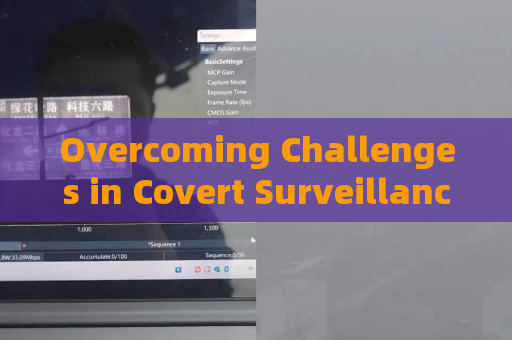
The Penetration Imager further excels in dynamic, high-risk scenarios where speed and certainty are paramount. During a tactical stop of a suspected smuggling vehicle, officers can maintain continuous visual contact with the interior from a trailing or parallel position, watching for sudden movements toward hidden weapons or evidence destruction. The ability to see through tinted glass under direct sunlight—a condition that blinds most cameras—ensures that the entire engagement is conducted with full situational awareness. Importantly, the system does not rely on any form of penetrating radiation such as X-rays or radio waves, nor does it require physical proximity. Its optical-only approach keeps the operation strictly within the realm of visual light manipulation, aligning with legal and procedural guidelines for overt and covert evidence collection. By bridging the gap between what the eye can see and what actually exists behind a vehicle's opaque windows, the Penetration Imager provides a decisive tactical advantage in the fight against smuggling—allowing law enforcement to act on verified intelligence rather than guesswork, and ultimately saving lives while disrupting criminal networks.




