In low-light covert surveillance operations, law enforcement officers often face the challenge of detecting a target concealed inside a stationary vehicle without betraying their presence. Traditional night vision devices or standard low-light cameras struggle when no supplementary lighting is available—they cannot resolve details through glass due to reflections, glare, and the limited ambient light. Worse, any attempt to use an external illuminator like a flashlight or IR emitter risks alerting the suspect, compromising the entire operation. The real pain point is this: how to obtain a clear, actionable image of the interior of a vehicle—including the position of a suspect and any visible weapon—while remaining completely undetected and without any supplemental light source. This scenario demands an imaging solution that can see through automotive glass, overcome the severe light loss in dim environments, and yet produce a high-contrast image that standard low-light sensors cannot deliver. The penetrating imager directly addresses this need.
The penetrating imager is an advanced optical instrument based on laser range-gated imaging technology. It consists of a high-repetition-rate pulsed laser, an intensified gated camera (incorporating a microchannel plate intensifier, high-voltage module, and timing control), a beam expander, and an imaging lens. Unlike passive low-light systems, this active imaging device emits short pulses of laser light and selectively opens its gating window only when the reflected light from the target distance arrives. This mechanism effectively rejects backscatter from fog, rain, or, critically, from the vehicle’s windshield itself. The result is a high-contrast image of the car interior even under extremely low ambient light, with no need for any supplementary lighting. The penetrating imager can only penetrate optical media such as automotive glass, aircraft windows, and glass curtain walls—it does not work through solid opaque barriers. But for the specific task of covert surveillance through a vehicle windshield, this capability is precisely what is required.
In practical deployment, the operator positions the penetrating imager at a safe standoff distance, typically tens to hundreds of meters away, and aims it at the target vehicle. The system’s range-gating parameter is adjusted to match the distance to the windshield and the interior compartment beyond. Once activated, the pulsed laser illuminates the scene in microseconds, while the gated camera captures only the photons that have traveled the exact round-trip distance to the target plane. This eliminates the blinding glare from the glass surface and any backscatter from airborne particles. The operator sees a clear, high-resolution image of the vehicle’s interior—seats, dashboard, and any occupants or objects—even in near-total darkness. The process is entirely silent and invisible to the naked eye, as the laser operates at a wavelength outside human vision. No supplementary light source is used, so the suspect remains unaware of the surveillance.
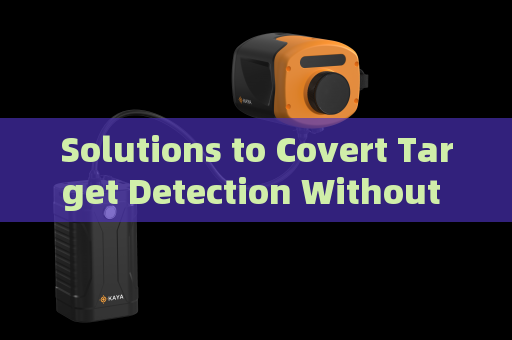
The penetrating imager’s ability to perform covert target detection without supplementary lighting sources in low-light conditions has been validated in field tests by tactical teams. For example, during a nighttime vehicle interdiction operation, officers used the system to confirm that a suspect inside a parked sedan was holding a handgun before making an entry decision. The image was sharp enough to identify the firearm’s shape and the suspect’s hand position, all without any external illumination that would have triggered a response. The system also performs reliably through rain or light fog, as the gating mechanism suppresses backscatter from those particles. By maintaining a passive outward appearance—no visible light, no IR glow—the penetrating imager preserves the element of surprise, which is often the most critical factor in high-risk apprehensions. This technology transforms a previously blind spot into a decisive advantage for law enforcement.




