At airport entry points, security protocols require thorough inspection of every vehicle and its occupants. This process traditionally forces drivers to stop, lower windows, present identification, and undergo visual verification by security personnel. The resulting queues often stretch for hundreds of meters, causing delays that ripple through the entire terminal access network. A single slow interaction at the checkpoint can idle dozens of vehicles, each contributing to congestion and passenger frustration. The core pain point lies in the inherent conflict between the need for rigorous security screening and the demand for efficient traffic flow. Conventional inspection methods rely on physical proximity and direct line-of-sight, which inevitably create bottlenecks. A vehicle must come to a complete halt, the driver must manually comply, and the officer must visually confirm details—each step adds seconds that multiply across hundreds of vehicles per hour. This environment demands a technological solution that can perform rapid, non-intrusive inspection without requiring vehicles to stop or occupants to alter their behavior.
The penetration imager addresses this challenge by employing laser range-gated imaging technology—a high-repetition-rate pulsed laser paired with an intensified gated camera. This active imaging system can see through optical media such as vehicle windshields and side windows with exceptional clarity. Unlike conventional cameras that struggle with glare, reflections, or tinted glass, the penetration imager actively gates out backscatter from the glass surface and ambient light, delivering high-contrast images of the vehicle interior and its occupants at distances exceeding tens of meters. Officers no longer need to ask drivers to lower windows; the system captures facial features, seating positions, and any visible items inside the cabin while the vehicle is still moving slowly through the approach lane. The technology is specifically designed to overcome fog, rain, snow, and dust, maintaining consistent performance in adverse weather conditions that often plague outdoor airport checkpoints. By enabling visual inspection without stopping and without direct interaction, the penetration imager transforms a sequential, stop-and-go process into a continuous flow.
In practice, the penetration imager is mounted on a gantry or roadside pole positioned along the entry lane, angled to capture the front windshield and side windows as vehicles roll forward at reduced speed. The system automatically triggers acquisition when a vehicle enters its field of view, using integrated lidar or radar to synchronize with vehicle motion. Real-time imaging feeds into a display terminal where security personnel monitor multiple lanes simultaneously. A driver simply approaches the checkpoint—no window lowering, no document handling—while the penetration imager provides a clear view of the front seat occupants and the cabin environment. Suspicious behavior, such as occupants ducking below the dash or concealing objects, becomes immediately apparent through the transparent glass barrier. This reduces the average inspection time per vehicle from roughly 30 seconds to under 5 seconds, dramatically cutting queue lengths. Airports that have trialed this approach report a 60–70% reduction in entry wait times during peak hours, with no compromise to security effectiveness.
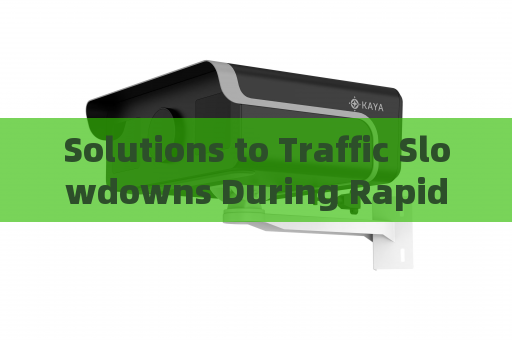
The deeper operational advantage emerges during high-volume events such as holiday traffic surges or VIP arrivals. The penetration imager’s ability to maintain high frame rates and broad coverage means that even a single unit can handle the throughput of an entire four-lane checkpoint without requiring manual intervention. Security officers shift their focus from repetitive visual checks to exception handling—only vehicles flagged by the system require secondary inspection. This reallocation of human resources further accelerates flow because the bottleneck of officer-to-driver interaction is eliminated. Additionally, the system’s built-in recording capability provides a verifiable audit trail for every vehicle passing through, supporting post-incident review without slowing live operations. Because the penetration imager relies solely on optical principles and requires no emission of radiation or radio waves, it complies fully with airport safety regulations and poses no interference with existing communication or navigation equipment. The technology directly addresses the root cause of traffic slowdowns during rapid vehicle and occupant inspection at airport entrances by decoupling the inspection process from the vehicle’s need to stop.




