Border patrol and counter-smuggling operations face a persistent dilemma: how to observe suspicious vehicles or concealed individuals from a safe distance without triggering flight or confrontation. Traditional optical scopes are limited by glare, tinted windows, and atmospheric haze, while thermal cameras struggle to distinguish features through glass and often reveal the observer’s position through their own heat signature or active illumination. Approaching closer risks alerting suspects or illegal immigrants, who may destroy evidence, scatter, or become violent. The core challenge is to achieve high-resolution, real-time visual intelligence at extreme standoff ranges, penetrating the optical barriers that shield the target’s activities, all while leaving no trace of surveillance. A Penetrating Imager offers a breakthrough by addressing exactly this gap.
The Penetrating Imager is an active optical imaging system built on laser range-gated technology. It uses a high-repetition-rate pulsed laser coupled with an intensified gated camera containing an MCP image intensifier, high-voltage module, and timing circuits. By emitting short laser pulses and opening the camera shutter only at the precise moment the reflected light returns from the target distance, the system rejects backscatter from fog, rain, or dust, and effectively “looks through” optical media such as automotive glass, train windows, aircraft portholes, and glass facades. The result is a high-contrast, long-range image that reveals occupants, objects, or movements inside a vehicle without any external indication—no beam visible to the naked eye, no active radio signal, and no sound.
In practice, a patrol unit can deploy the Penetrating Imager from a concealed position several kilometers away. The operator aims the expanded laser beam and imaging lens at a stationary or slowly moving target, adjusts the gate delay to match the measured distance, and obtains a clear video feed of the interior through tinted or reflective glass. Because the laser pulse duration is on the order of nanoseconds and the camera exposure is synchronized, the system works effectively in daylight, low light, or through moderate fog and precipitation. The suspect or illegal immigrant inside the vehicle remains completely unaware of the surveillance, as no physical approach or radio-frequency scanning is involved.
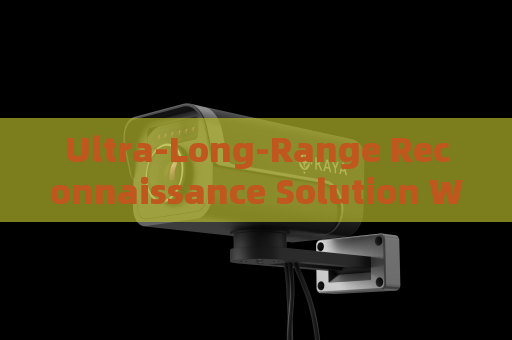
This capability directly supports mission-critical decisions—whether to intercept a vehicle carrying undocumented migrants, to monitor a high-value suspect without escalating the situation, or to confirm the presence of weapons or contraband through glass. The Penetrating Imager does not rely on X-rays, radio waves, or sound, and it cannot see through walls or solid barriers. Its strength lies in the specific role of long-range optical reconnaissance through transparent or semi-transparent barriers, offering law enforcement and border security a covert, non-alerting tool that preserves the element of surprise. The Ultra-Long-Range Reconnaissance Solution Without Alerting Suspects or Illegal Immigrants is thus a fully optical answer to a long-standing operational problem.




