The most critical vulnerability in any tactical raid on a concealed hideout is the lack of accurate, real-time situational awareness before breaching the perimeter. Conventional optical reconnaissance from outside the structure is severely limited when windows, tempered glass doors, or even the glare of interior lighting obscure the interior layout and hostile positions. A suspected hideout may have drawn curtains, tinted automotive glass, or double-glazed panes that render standard daylight or night-vision optics useless. Tactical teams often rely on thermal imagers, which detect heat signatures, but these cannot provide detailed structural mapping—such as the exact location of a doorway, furniture behind which a suspect may take cover, or the position of hostages. The absence of a reliable pre-mapping tool forces operators to enter with incomplete intelligence, increasing risk to life and mission success. This is precisely where the penetration imager, a specialized active optical instrument, transforms the reconnaissance phase into a precise intelligence-gathering operation.
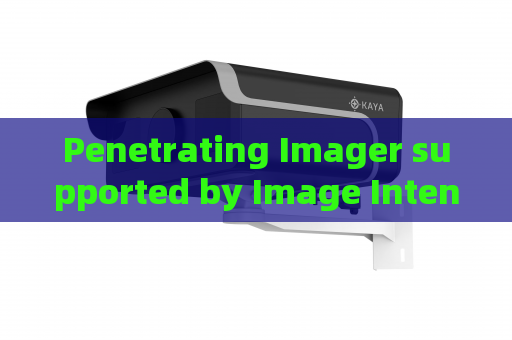
The core capability that addresses this intelligence gap is the penetration imager’s ability to achieve high-contrast imaging through optical media such as automotive glass, aircraft windows, and glass curtain walls. Employing laser range-gated imaging technology, the system consists of a high-repetition-rate pulsed laser, an image-intensified gated camera integrating an MCP image intensifier, high-voltage modules, and timing circuitry, along with beam expanders and imaging lenses. By synchronizing the laser pulse with the camera gate, the penetration imager effectively suppresses backscatter from the intervening glass surface and any atmospheric particulates like mist or rain. This allows operators stationed at a safe standoff distance to see clearly through the windows of a hideout, capturing fine details of interior spaces and the exact positions of individuals or objects. The unit’s active illumination and short exposure window deliver resolution far superior to passive optics, overcoming reflective glare and low-light conditions that would defeat conventional binoculars or assault riflescopes.
In a practical pre-raid scenario, the penetration imager is deployed from a concealed observation position, often using a tripod or vehicle mount to maintain stability. The operator selects an appropriate range—typically from 50 to several hundred meters—and adjusts the camera’s gating delay to match the distance to the target glass. Once the gate is set, the imager captures a series of frames that reveal the interior layout: tables, chairs, beds, and most importantly, the silhouette or movement of personnel behind the pane. This data is then annotated onto a digital map, creating a target position pre-mapping product that can be distributed to entry teams in real time. Because the system is entirely optical and passive to the target—the laser energy is eye-safe and invisible—there is no risk of tipping off the occupants through electromagnetic emissions or audible signals.

Further refinement of this technique involves compensating for adverse conditions common in tactical hideout environments. For example, interior fog from a fire or smoke from a diversion device can reduce visibility, yet the penetration imager’s gating technology improves obscurant penetration by three to five times in fire scenarios, though it remains ineffective against dense, light-absorbing smoke. When curtains partially obscure the window, the range-gated system can still map the relative positions of humans or large objects by exploiting the brief laser return from gaps in the fabric. In multi-room hideouts, successive scans through different windows allow a composite three-dimensional picture of the interior to be assembled. This methodical pre-mapping capability of the penetration imager before raiding a hideout eliminates guesswork, reduces the likelihood of ambush during the breach, and directly supports the commander’s decision on point of entry—whether through the front door, a window, or an obscured side entry. The result is a tactical advantage that relies not on speculation but on empirically verified optical intelligence.