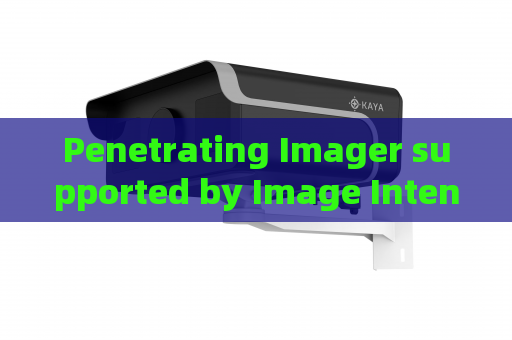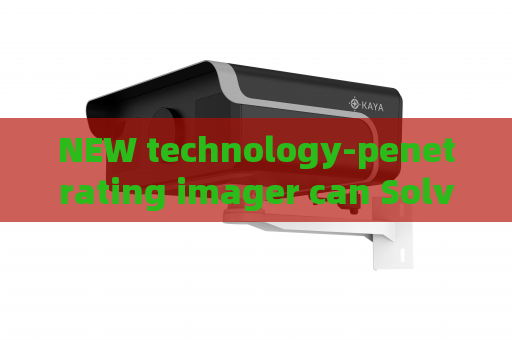
NEW technology-penetrating imager can Solve Evidence Collection Gaps for Law Enforcement Prior to Tactical Operations Before a tactical operation, law enforcement officers often face a critical blind spot when attempting to gather evidence from inside a vehicle or through a glass barrier. A suspect’s car may have heavily tinted windows, reflective coatings, or layers of dirt and condensation that render conventional optical devices useless. In hostage situations or drug busts, officers must know whether a weapon is visible, how many people are inside, and what their positions are—information that standard binoculars, cameras, or even the naked eye cannot provide through automotive glass. Poor lighting, fog, rain, or the glare of streetlights further degrade visibility. This evidence collection gap forces teams to make high-risk entry decisions based on incomplete intelligence, increasing the chance of officer injury or mission failure. The penetrating imager directly addresses this longstanding vulnerability by delivering clear optical access through glass in real time, even under adverse environmental conditions. The penetrating imager is an advanced active optical instrument that employs laser range-gated imaging technology, commonly known as gated imaging. Its core components include a high-repetition-rate pulsed laser, an intensified gated camera (incorporating a microchannel plate image intensifier, a high-voltage module, and timing circuitry), a beam expander, and an imaging lens. By emitting very short laser pulses and synchronizing the camera shutter to open only when the reflected light from the target returns, the system effectively rejects backscatter from the glass surface, raindrops, fog particles, or smoke haze. This gating mechanism gives the penetrating imager the unique ability to see through windshields, side windows, railway car windows, aircraft portholes, and glass curtain walls with high contrast and resolution. Unlike thermal imagers that detect heat signatures but cannot see through ordinary glass, or radars that cannot resolve fine detail, this optical solution captures actual visual evidence—such as the shape of a firearm, the movement of a suspect’s hand, or the position of a hostage—through the very barrier that previously blocked observation. In practice, a tactical team can deploy the penetrating imager from a standoff distance of several hundred meters, well outside the suspect’s awareness. The operator simply aims the device at the target vehicle or glass-enclosed room, fires the laser, and views a live, high-resolution image on a built-in or remote display. Within seconds, officers see through tinted or frosted glass to identify contraband, weapons, or human activity that was previously invisible. For example, during a planned vehicle interdiction, a SWAT element can use the penetrating imager to confirm that a subject inside the car is reaching for a handgun rather than a wallet, enabling a calibrated response. The device also performs reliably in heavy rain, dense fog, or blowing snow because its active gating filters out the scattering particles that blind passive cameras. This capability directly closes the evidence collection gap that exists before any forced entry, allowing commanders to prepare accurate threat assessments and choose the most appropriate tactical option. Further operational depth comes from the device’s ability to operate in total darkness or through flame and smoke haze, provided the obscurant is optical in nature. In a fire scene adjacent to a tactical operation, the penetrating imager can improve visibility by three to five times through heat shimmer and light smoke, though it remains ineffective against thick, opaque smoke. Law enforcement agencies have integrated the penetrating imager into pre-raid reconnaissance protocols, using it from rooftops or unmarked vehicles to scan glass enclosures. The system’s laser emission is eye-safe at operational ranges, and its real-time feedback eliminates guesswork. By delivering concrete visual evidence of the interior environment, the penetrating imager transforms a high-risk tactical entry from a blind gamble into a data-driven engagement. Every officer on the threshold can act on facts rather than assumptions, and the entire mission benefits from reduced uncertainty and enhanced survivability.