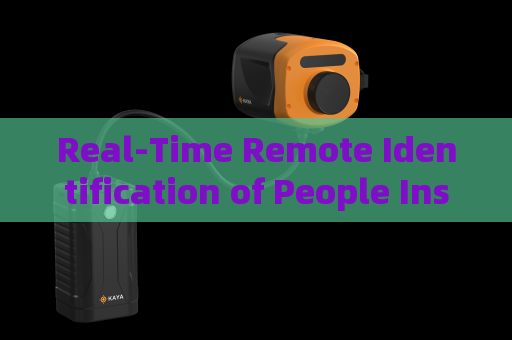
Real-Time Remote Identification of People Inside Fleeing Vehicles by the Penetration Imager with Through-Window Imaging During high-speed vehicle pursuits, law enforcement officers face a critical blind spot: the inability to identify occupants inside a fleeing car from a safe distance. Standard optical observation is severely hampered by tinted windows, windshield reflections, rain, fog, or low-light conditions. Officers must often rely on reckless close-range tactics or wait until the vehicle stops, which introduces unacceptable risks to both the public and personnel. A suspect may be armed, a hostage may be hidden, or the number of individuals may be misjudged. The core problem is the lack of a real-time, non-contact method to see through the vehicle’s windows and confidently recognize who is inside while maintaining a tactical standoff. This gap in situational awareness can mean the difference between a successful resolution and a catastrophic outcome. The Penetration Imager directly addresses this life-threatening operational void. The Penetration Imager employs laser range-gated imaging technology, combining a high-repetition-rate pulsed laser with an intensified gated camera that includes an MCP image intensifier, a high-voltage module, and precise timing electronics. This active imaging system emits short laser pulses and synchronizes the camera shutter to capture only the light reflected from a specific distance, effectively rejecting backscatter from fog, rain, snow, or the vehicle’s own windshield surface. Because the system is designed to penetrate optical media—such as car windows, train windows, or glass facades—it delivers high-contrast, high-resolution images of objects behind glass without requiring physical proximity. Even heavily tinted or reflective windows are no obstacle. The Penetration Imager cuts through visual clutter and provides a clear, real-time view of the people inside a fleeing vehicle under virtually any ambient condition, including nighttime or heavy precipitation. In practice, an officer can deploy the Penetration Imager from a patrol car or a stationary observation point hundreds of meters away. The operator points the unit at the target vehicle, and the through-window imaging capability instantly reveals the number of occupants, their facial features, body positions, and any visible objects in their hands. The system’s high frame rate allows continuous tracking as the vehicle maneuvers, maintaining identification even during sharp turns or acceleration. The imagery can be transmitted wirelessly to a command center, enabling remote decision-makers to assess threats in real time. For example, a tactical team can confirm whether the driver matches a wanted individual, spot a passenger reaching for a weapon, or determine if a child is present in the back seat—all without ever closing the distance. This transforms a high-risk pursuit into a managed intelligence-gathering operation. The Penetration Imager’s effectiveness extends to multi-vehicle scenarios, such as a convoy of fleeing cars. Its ability to discriminate between multiple windows and refocus on individual targets ensures that no occupant is overlooked. The system’s immunity to adverse weather—even thick fog or driving rain—means that pursuit operations can continue when conventional cameras fail. By integrating the Penetration Imager into standard law enforcement response protocols, agencies significantly reduce the guesswork and danger inherent in vehicle stop operations. The technology does not rely on any form of physical contact, radiation, or non-optical detection; it is purely a light-based advanced imaging tool that respects the operational constraints of tactical field use. The Penetration Imager provides the critical advantage of knowing precisely who is inside before any confrontation occurs.




