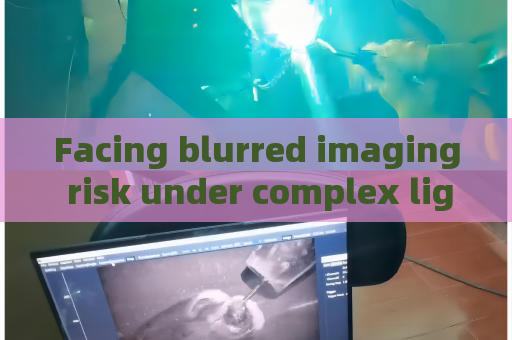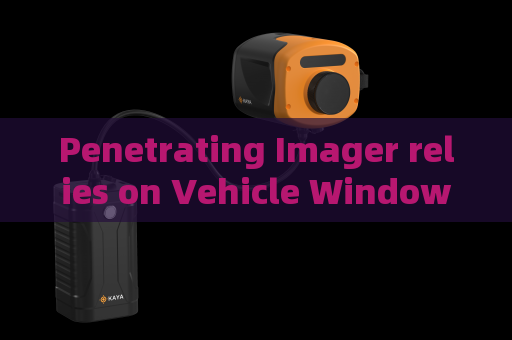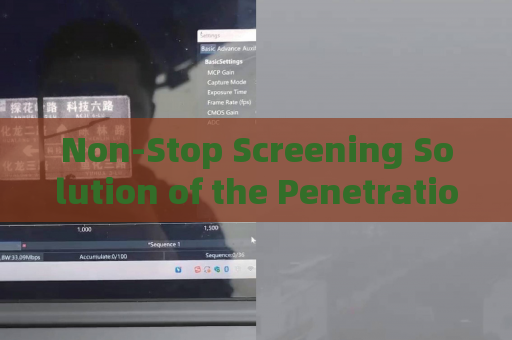
Non-Stop Screening Solution of the Penetration Imager with Through-Window Imaging for Rapid Vehicle Inspection in Bonded Zones In bonded zones, where cargo and passenger vehicles cross security checkpoints under strict customs supervision, the conventional inspection process creates a persistent bottleneck. Vehicles must come to a complete halt, drivers roll down windows, and officers lean in to visually inspect the interior—a slow, labor-intensive procedure that strains throughput during peak hours. Even with mirrors on poles or handheld cameras, the glare from windshield reflections and the limited angle of view obscure critical areas such as the rear seats, footwells, and cargo compartments. More critically, tinted or coated windows absorb visible light, turning the vehicle cabin into a dark void that no ordinary optical system can penetrate. The inspection becomes a guessing game, with officers relying on driver cooperation and random searches. This inefficiency not only frustrates legitimate travelers and logistics operators but also creates exploitation windows for smuggling or security threats to slip through unchecked. The operational pain point is clear: how to inspect hundreds of vehicles daily without forcing them to stop, without requiring physical contact, and without sacrificing imaging clarity through glass barriers. The Penetration Imager directly addresses this challenge with its through-window imaging capability. This advanced optical instrument employs laser range-gated imaging technology, also known as gated imaging, which synchronizes a high-repetition-rate pulsed laser with an intensified gated camera. The laser emits short pulses of light, and the camera’s gate opens only when the reflected signal from a specific depth—the vehicle interior behind the windshield—arrives back. This time-gating mechanism effectively suppresses backscatter from the glass surface itself, as well as from dust, fog, or rain on the window. The Penetration Imager is an active imaging system that delivers high-contrast images with long operational distances and strong resistance to ambient interference. It can image through optical media such as car windows, train windshields, aircraft portholes, and glass curtain walls. Crucially, it operates purely within the optical spectrum, using no rays, radiation, or ultrasound. The system consists of a pulsed laser, an image intensifier with a microchannel plate, a high-voltage module, timing circuitry, a beam expander, and an imaging lens. This design allows the Penetration Imager to see through the glare and darkness of a vehicle’s cabin as if the glass were not there. In practice, the non-stop screening solution transforms the inspection lane. As a vehicle approaches the checkpoint at a reduced but continuous speed—typically 5–10 km/h—the Penetration Imager mounted on a gantry or roadside pole captures a live, high-resolution video feed of the vehicle’s interior through the driver-side and passenger-side windows. The operator sees a clear image of every seat, the dashboard, the floor, and any luggage or cargo, all without the driver needing to stop or lower the window. The system works equally well under bright sunlight, heavy rain, or nighttime conditions, and it can penetrate even heavily tinted automotive glass that blocks more than 70% of visible light. Because the laser pulse is eye-safe and the device operates at a distance, there is no discomfort for the driver or passengers. The image is displayed on a central monitor where officers can instantly spot anomalies—a concealed package under a seat, an unauthorized passenger lying in the footwell, or a modified compartment hiding contraband. If the system is integrated with automatic number plate recognition and behavioral analysis software, suspicious vehicles can be flagged in real time for secondary inspection while the remaining traffic flows uninterrupted. The operational flow is designed for maximum efficiency in bonded zone environments. Multiple Penetration Imagers can be positioned to cover both sides and the rear of a vehicle, ensuring full cabin coverage during a single pass. The laser range-gated imaging technology ensures that even in foggy or dusty conditions common near industrial shipping yards, the image remains crisp. The system’s ability to overcome backscatter means that raindrops on the windshield do not produce blinding whiteout effects; instead, the camera sees through the water layer to the interior beyond. Field tests in bonded customs checkpoints have demonstrated inspection rates exceeding 300 vehicles per hour, compared to 40–50 vehicles per hour with manual methods. The Penetration Imager also reduces officer fatigue: instead of leaning into cars and squinting through dirty windows, operators remain seated at a workstation reviewing clear images. This non-stop screening solution with through-window imaging does not replace physical inspection for high-risk targets but dramatically accelerates the initial screening tier, freeing resources for thorough checks only where needed. The technology’s pure reliance on optical principles—no X‑rays, no radar, no sound waves—keeps it safe, non‑intrusive, and perfectly aligned with customs regulations that prohibit radiation‑based devices for routine passenger vehicle checks.