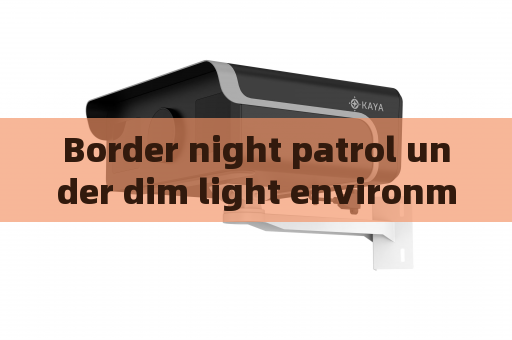
In low-light imaging environments, particularly during nocturnal surveillance or covert reconnaissance, the challenge of acquiring high-definition data is compounded by multiple optical obstacles. A typical operational pain point occurs when law enforcement or security personnel attempt to observe subjects inside a vehicle through its windshield or side windows at night. Ambient lighting is minimal, and the vehicle’s glass surface reflects stray light from street lamps or building lights, creating severe glare and backscatter. Conventional cameras either produce grainy, low-contrast images or fail to penetrate the combination of darkness and reflective glass. Even with infrared illuminators, the return signal is overwhelmed by scattered light from the glass and atmospheric particles, rendering the target indistinguishable. The core dilemma is that high-definition data acquisition requires both sufficient illumination and the ability to reject the optical noise inherent to low-light, through-glass imaging. The Penetrating Imager addresses this specific gap by leveraging laser range-gated technology to isolate only the reflected light from the target depth, effectively eliminating backscatter from the glass surface and the intervening atmosphere.
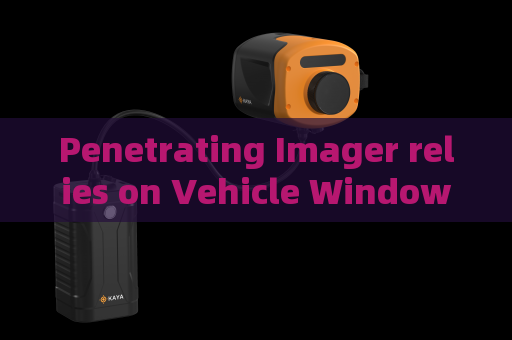
The Penetrating Imager is an active imaging system that integrates a high-repetition-rate pulsed laser, an image-intensified gated camera with a microchannel plate (MCP), and precision timing modules. Its fundamental capability is to synchronize the laser pulse emission with the camera’s shutter opening so that only light returning from a specific distance—such as the interior of a vehicle—is captured. Light scattered by the windshield or fog particles arrives earlier or later than the desired signal and is gated out. This process yields high-contrast, high-resolution images even under extreme low-light conditions. In practice, the Penetrating Imager can penetrate optical media like automotive glass, high-speed train windows, and aircraft portholes without degradation. It also operates effectively through fire, haze, rain, snow, and dust, though heavy smoke remains a limitation. For fireground scenarios, the device enhances visibility three to five times, but for solid obscurants like dense smoke, performance drops. The key advantage is that high-definition data acquisition becomes feasible where conventional optics fail—enabling operators to distinguish facial features, objects, or movements inside a vehicle at distances exceeding 100 meters in near-total darkness.
Operationally, the Penetrating Imager is deployed as a handheld or tripod-mounted unit by tactical teams during vehicle interdictions or hostage situations. The operator selects the target range using the integrated rangefinder or manual setting, and the device automatically adjusts the gate delay to match the distance to the vehicle interior. Once locked, the system provides a real-time video feed with HD resolution, free from the glare that typically blinds standard night-vision or thermal imagers. Thermal imagers, for instance, cannot see through glass because the glass blocks infrared signatures; they only detect heat from the glass itself. The Penetrating Imager bypasses this limitation entirely, capturing visible and near-infrared light reflected from the target through the same glass. In a typical nighttime checkpoint scenario, officers can identify a driver’s hand movements, concealed objects on the seat, or facial expressions without requiring the subject to roll down the window—a critical advantage for officer safety and evidence collection.

The true depth of the Penetrating Imager’s utility in high-definition data acquisition under low-light conditions is realized when considering its resistance to countermeasures. Smoked or tinted windows, which further reduce light transmission, do not impair the device because the pulsed laser provides its own illumination. The system’s narrow gate window also rejects flashlights, headlights, or other external light sources that would otherwise wash out the image. This makes the Penetrating Imager indispensable for forensic imaging at night, where every detail—a license plate number, a weapon’s outline, or a suspect’s clothing—must be recorded with crystal clarity. By combining active laser illumination with precise temporal filtering, the Penetrating Imager ensures that even in the most challenging low-light, through-glass scenarios, high-definition data acquisition is not only possible but reliable, repeatable, and actionable for critical decision-making.