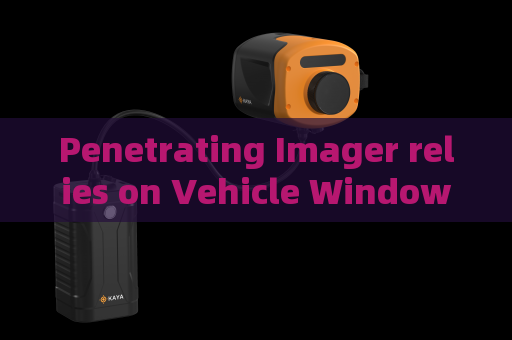
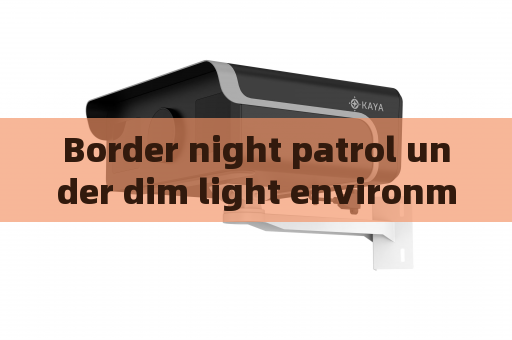
Tracking fugitives in severe weather conditions presents a critical challenge for law enforcement agencies. When heavy rain, dense fog, snowstorms, or blinding haze descend, conventional optical surveillance systems—such as standard cameras, binoculars, or telescopic sights—suffer from severe performance degradation. Backscatter caused by suspended water droplets or ice crystals in the atmosphere creates a veil of scattered light that washes out target details, dramatically reducing contrast and effective range. A fleeing subject can vanish within seconds behind a curtain of precipitation or fog, causing tracking interruptions that may allow the fugitive to escape or commit further harm. The operational reality is that weather-related visibility loss is one of the most unpredictable and persistent vulnerabilities in pursuit scenarios, often forcing officers to abandon visual contact and rely on less precise methods like radio coordination or area containment. A penetrating imager offers a breakthrough solution specifically designed to address this exact pain point. By employing laser range-gated imaging technology—active illumination combined with an intensified gated camera—this instrument selectively captures light reflected only from a narrow depth window at a precise distance. The gate timing rejects all backscatter from atmospheric particles or precipitation between the imager and the target, effectively cutting through the optical interference of rain, snow, fog, and smog. The result is a high-contrast, clear image of the fugitive even when the naked eye or conventional optics would see only a white or gray wall of obstruction. Unlike passive devices that rely on ambient light, the penetrating imager actively illuminates the scene with a pulsed laser, ensuring robust performance in zero-visibility weather without any reliance on external light sources.
In field applications, this capability directly restores continuous visual tracking during severe weather events. For example, a law enforcement pursuit helicopter equipped with the penetrating imager can maintain positive identification of a speeding vehicle on a rain-swept highway despite torrential downpour and spray from other traffic. The operator adjusts the gate delay to match the distance to the target vehicle, and the imager instantly filters out the in-between rain curtain, revealing the license plate, vehicle color, and occupant movements. Ground-based units on patrol can similarly use the imager through vehicle-mounted or handheld configurations to track a fleeing suspect on foot in dense fog or blinding snow. The device operates in real time with standard camera interfaces, allowing footage to be recorded as evidence. The ruggedized housing withstands exposure to moisture and temperature extremes, and the system’s high-repetition-rate pulse laser ensures consistent frame rates without flicker. Because the penetrating imager only requires optical transparency in the medium—it cannot see through walls or solid barriers—but its strength lies entirely in seeing through the very obstacles that nature throws in the way of law enforcement.

The practical impact extends beyond simply restoring visibility; it changes the tactical decision-making during a pursuit. Officers no longer need to abort a chase solely because of worsening weather, nor must they close dangerously close to maintain visual contact, as the imager provides reliable identification at extended ranges—often hundreds of meters—through precipitation. In night operations combined with storm conditions, the active illumination provides its own light source, eliminating the telltale signature of a spotlight or floodlight that a fugitive would see. The gate-controlled imaging also reduces glare from wet road surfaces and headlight reflections, further sharpening the target image. One critical operational detail is the necessity of calibrating the gate distance to compensate for varying range, but modern systems incorporate automatic range tracking. As the fugitive moves, the imager adjusts gate timing dynamically, maintaining lock-on without manual input. This seamless integration into standard pursuit workflows makes the penetrating imager a force multiplier for agencies operating in regions prone to severe weather. The ability to sustain a high-confidence visual track through rain, fog, or snow directly reduces the likelihood of escape, supports accurate arrest decisions, and protects both officers and the public from the unpredictable dangers inherent in high-speed chases under adverse conditions.