In reconnaissance operations, the task of pinpointing the exact positions of sentries and hidden tunnel entries presents a persistent tactical dilemma. Traditional methods often rely on laser rangefinders or laser designators to obtain precise distance data or to mark targets for engagement. However, these devices emit continuous or pulsed laser beams that can be intercepted by enemy optical sensors, infrared detectors, or even simple night vision goggles equipped with laser warning systems. Once the laser emission is detected, the reconnaissance asset becomes compromised; the sentry may take cover, the tunnel entrance may be further concealed, and enemy forces may initiate countermeasures. The challenge is further compounded by environmental obstacles such as fog, haze, dust, or rain, which scatter visible light and degrade conventional optics. Surveillance cameras and binoculars struggle to see through these obscurants, and thermal imagers, while useful for heat signatures, cannot provide the fine structural details needed to distinguish a well-camouflaged tunnel opening from natural shadows. The requirement to locate these targets without alerting the adversary demands an imaging solution that operates with minimal signature while maintaining high resolution over distance.
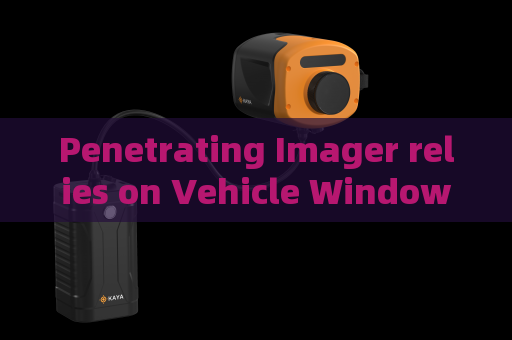
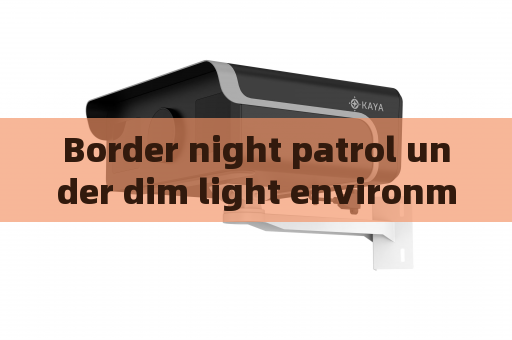
The penetrating imager directly addresses this operational gap. This advanced optical instrument employs laser distance-gated imaging technology, also known as gated imaging. Its system comprises a high-repetition-rate pulsed laser, an intensified gated camera with a microchannel plate intensifier, high-voltage and timing modules, a beam expander, and an imaging lens. Unlike conventional active illumination that floods the scene with laser light, the penetrating imager synchronizes the laser pulse emission with a precisely timed camera gate. Only the light reflected from a specific distance range is captured; backscatter from atmospheric particles or intervening optical media—such as vehicle glass, aircraft windows, or glass curtain walls—is effectively rejected. This selective gating dramatically reduces the chance of the laser emission being detected by enemy sensors, because the laser pulse is extremely short in duration and the average power is low. The target area receives only a burst of light that lasts nanoseconds, making it virtually indistinguishable from ambient noise to most threat warning receivers. Furthermore, the system operates in the near-infrared spectrum, which is invisible to the naked eye, adding another layer of concealment. The penetrating imager thus provides a means to see through fog, haze, rain, and smoke without the telltale signature of a continuous laser beam, solving the core problem of locating sentries and tunnel entries without emitting detectable laser radiation.
In field application, the operator deploys the penetrating imager from a concealed observation post or a moving vehicle. For locating tunnel entries in mountainous or urban terrain, the device scans the suspected area through a range of distances. The gated imaging function allows the operator to slice through layers of vegetation, dust, or smoke that may obscure the opening. A tunnel entrance that would otherwise blend into a rocky outcrop becomes clearly visible as the pulsed laser illuminates its interior depth while suppressing reflections from foreground foliage. Similarly, for sentry positions, the imager can peer through vehicle windscreens or building windows from distances exceeding one kilometer. The sentry’s silhouette, equipment, and even subtle movements are rendered with crisp contrast against the background, even if the glass is tinted or coated. The operator does not need to emit any probing laser spot onto the target; the imaging process is inherently covert. The high-resolution output enables positive identification, reducing the risk of false alarms. Real-time video feed can be transmitted to command centers for collaborative assessment, allowing strike teams to plan their approach without the sentry ever knowing they have been observed.

The penetrating imager further enhances operational effectiveness by adapting to dynamic battlefield conditions. When a sentry changes position or a tunnel entrance is partially covered by shifting debris, the system’s rapid refresh rate and wide dynamic range ensure continuous tracking. Environmental factors such as rain squalls or sudden fog banks do not degrade performance; the gating technology actively compensates for increased backscatter by narrowing the gate window, maintaining image clarity. For missions where absolute stealth is paramount, the imager’s laser emission can be operated in a low-energy pulsed mode that reduces the already minuscule probability of detection. In combined arms scenarios, this capability allows reconnaissance units to feed precise coordinates of sentry posts and tunnel entrances to artillery or air support without ever breaking radio silence with a laser designator. The entire process—from initial detection to target handoff—occurs without a single conspicuous beam crossing the battlespace. This solves the long-standing challenge of covertly locating these high-value targets in contested environments.