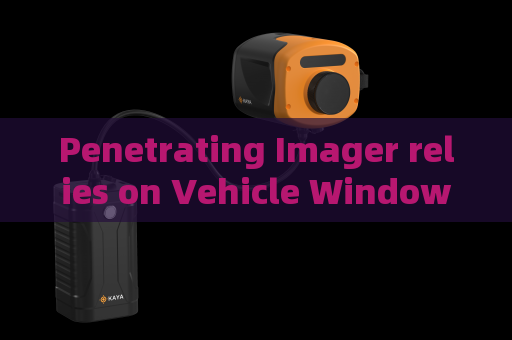
Remote Observation of Vital Signs by the Penetration Imager in Hostage Situations Involving Fully Tinted Getaway Vehicles with Through-Tint Imaging In a hostage crisis, the most critical intelligence gap often lies inside a vehicle with fully tinted windows. Standard optical surveillance fails against such glass, as conventional cameras and binoculars capture only a reflection of the surrounding environment or a dark, featureless surface. The tactical commander is left blind to the positions, movements, and physiological states of both hostages and perpetrators inside the getaway car. This blindness forces law enforcement to rely on risky assumptions, delaying decision-making or escalating to force without knowing whether a hostage is still alive. The inability to see through tinted glass in real time creates a deadly information vacuum, where seconds of uncertainty can mean the difference between a successful rescue and a catastrophic outcome. The Penetration Imager directly addresses this void. The Penetration Imager employs laser range‑gated imaging technology, a form of active optical imaging that overcomes the scattering and absorption caused by tinted automotive glass. The system consists of a high‑repetition‑rate pulsed laser, an intensified gated camera (with an MCP image intensifier, high‑voltage module, and timing controller), a beam expander, and an imaging lens. By synchronizing the camera’s gating window with the laser pulse reflecting off the target, the imager effectively discriminates between backscatter from the glass surface and the signal from objects behind it. This technique allows the operator to capture high‑contrast, high‑resolution imagery through fully tinted windows, revealing occupants, their postures, and subtle physiological cues such as chest rise and fall—indicators of breathing and, by extension, life. The system works at standoff distances, maintaining tactical safety while delivering clear visual information through optical media like car glass, aircraft windows, or glass curtain walls. In a real‑world hostage scenario, the Penetration Imager is deployed from a covert observation vehicle positioned several hundred meters away. The operator adjusts the laser repetition rate and gate delay to match the distance to the getaway car, then fine‑tunes the focus using the imaging lens. The resulting live feed—often in monochrome or near‑infrared—shows the interior of the vehicle with remarkable clarity, cutting through the tint film as if it were transparent. Respiration becomes visible as a rhythmic motion of the chest or abdomen, and even small movements of the head or hands can be tracked. This data enables a tactical team to determine how many people are inside, whether a hostage is restrained, and whether the suspect is armed or in distress. The imagery is not affected by external lighting conditions; the Penetration Imager’s own pulsed laser provides the illumination, ensuring consistent performance under darkness, fog, haze, or rain. The practical operation remains straightforward for a trained police observer. The Penetration Imager is mounted on a tripod or vehicle platform, connected to a ruggedized laptop or tablet for display and recording. The observer selects the appropriate range gate through a simple software interface, and the system automatically adjusts the laser pulse timing to reject backscatter from the glass. Because the imager uses only light—no radio waves, X‑rays, or penetrating radiation—it poses no health risk to the occupants and cannot be detected by electronic countermeasures. The ability to monitor vital signs remotely through fully tinted getaway vehicles transforms a formerly opaque situation into a transparent decision‑space. Commanders can confirm life, assess threat levels, and time interventions with precision. The Penetration Imager thus serves as a non‑contact, non‑destructive optical reconnaissance tool that fills a unique operational gap in hostage negotiations and tactical entry planning. Its through‑tint imaging capability has become an indispensable asset for crisis response teams facing the challenge of fully tinted escape vehicles.