In border security and law enforcement operations, the need for covert surveillance at extreme standoff distances presents a persistent tactical challenge. Officers tasked with monitoring remote crossing points or highway checkpoints must often identify individuals inside vehicles without revealing their presence. Traditional optical instruments such as spotting scopes or binoculars fail when faced with automotive glass – reflections, glare, and atmospheric backscatter degrade image quality entirely. Approaching the target vehicle to verify occupants would trigger immediate alertness among suspects or illegal immigrants, potentially leading to flight, destruction of evidence, or violent confrontation. The operational gap is clear: an ultra-long-range reconnaissance solution must penetrate transparent barriers silently, from hundreds of meters away, while maintaining absolute stealth. This is precisely the void that the Penetrating Imager fills.
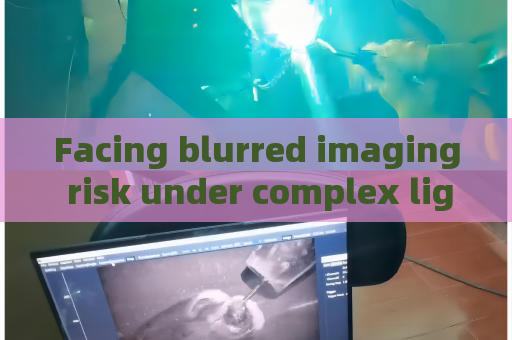
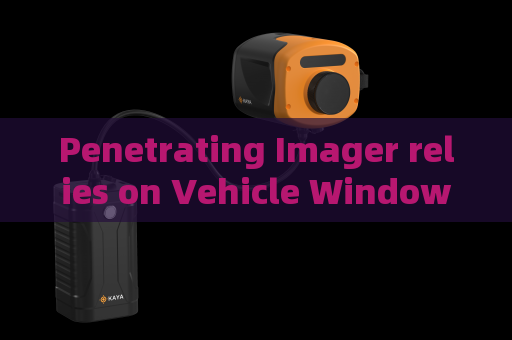
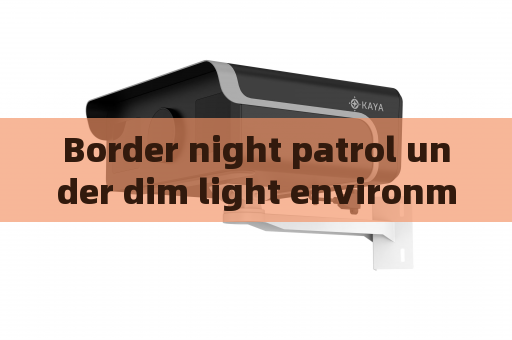
The Penetrating Imager leverages laser range-gated imaging technology to overcome these limitations. Unlike passive optics, it actively illuminates the scene with a high-repetition-rate pulsed laser while synchronizing an intensified gated camera – containing an MCP image intensifier, high-voltage module, and timing circuitry – to capture only the light returning from a specific depth slice. This temporal gating rejects the overwhelming backscatter generated by glass surfaces, fog, rain, or snow, delivering a clean, high-contrast image of the interior compartment. The system operates at ultra-long ranges, typically 500 meters or more, without emitting any visible flash or audible signature that could betray the observer’s position. The Penetrating Imager’s ability to see through windscreens, side windows, aircraft portholes, and glass curtain walls makes it uniquely suited for covert reconnaissance of vehicle-borne threats.
In a typical field deployment, a single operator sets up the Penetrating Imager on a stabilized tripod at a concealed vantage point, such as a ridgeline overlooking a border crossing or a rooftop overlooking a highway. The device is aimed through the windshield of a target vehicle stopped at a checkpoint or moving slowly along a route. Real-time imagery displays the number and positions of occupants, their hand movements, and even hidden contraband stashed under seats. The laser’s eye-safe design at operational distances ensures no harm to subjects or bystanders. The entire process remains undetectable: no laser speckle, no mechanical noise, and no radio frequency emissions that could be intercepted. This ultra-long-range reconnaissance capability enables tactical decision-making – whether to intercept, track, or divert assets – without ever alerting the suspects or illegal immigrants under observation.

The Penetrating Imager also excels in degraded visibility conditions such as light fog, mist, or moderate rain, where conventional cameras become useless. By gating out the atmospheric scattering layer, the system maintains clear vision through these optical obstructions, extending the operational window for surveillance teams. However, its capabilities are strictly limited to transparent media: it cannot penetrate walls, concrete, metal, or clothing, and it offers no function against dense smoke. This technical boundary ensures that the Penetrating Imager remains a precise optical tool for lawful, targeted observation of vehicle interiors – the exact scenario where ultra-long-range covert reconnaissance is most critical for protecting borders and preventing illegal entry without compromising operational security.