Before a tactical team breaches a concealed hideout, the most critical intelligence gap is the unknown interior layout and the precise location of armed adversaries or hostages. Standard optical surveillance, such as binoculars or handheld cameras, is rendered useless when the hideout’s windows are tinted, covered by curtains, or obscured by fog, rain, or even smoke from a deliberate fire. Commanders are forced to rely on limited acoustic clues or risky close reconnaissance, which exposes operators to ambush. The inability to pre-map target positions through common optical barriers creates a dangerous information vacuum, often leading to delayed entry, misjudged angles, or catastrophic casualties. This problem is particularly acute in urban raids where hideouts are inside vehicles, apartments with glass facades, or industrial sites with heavy window grilles that still allow light transmission. Without a reliable means to see through these optical obstructions, the assault plan remains a gamble.
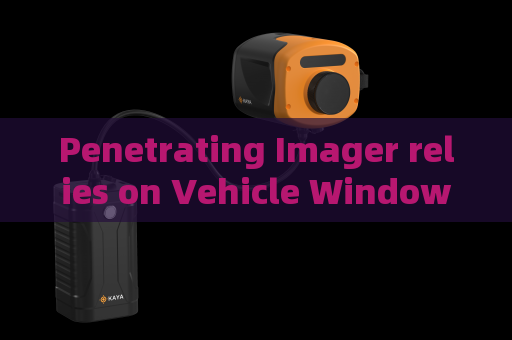
The penetration imager, built on laser range-gated imaging technology, directly addresses this reconnaissance pain point. Unlike passive night vision that fails against glare or backscatter, the penetration imager emits high-repetition-rate laser pulses and synchronizes an intensified gated camera to capture reflected light from a specific distance window. By adjusting the gate delay, operators can selectively image a plane inside the hideout—for example, the area just behind a car window or a glass door—while rejecting light scattered from the glass surface itself. This capability enables high-contrast, real-time images through windscreens, train windows, aircraft portholes, and building glass curtain walls. Furthermore, the system is immune to fog, moderate rain, snow, and even flames, boosting visibility through fire by a factor of 3 to 5. During pre-raid mapping, the operator scans the hideout from a safe standoff distance, capturing layered images of the interior at different depths. Each image reveals furniture, partitions, and most importantly, the silhouettes or heat signatures (through glass) of human targets, all without requiring physical entry or emitting any detectable radiation beyond the visible-near-infrared spectrum.
In practice, this pre-mapping capability transforms an assault from a blind entry into a precisely choreographed operation. Take a scenario where a barricaded suspect holds a hostage inside a parked armored van with heavily tinted windows. A standard thermal imager cannot see through the glass because the van’s metal body blocks heat, and the tinting reflects ambient heat. The penetration imager, positioned 50 meters away behind cover, uses its range-gated mode to focus on a depth plane 1.5 meters inside the van. The resulting image shows the suspect crouched near the driver seat and the hostage lying on the floor toward the rear. The tactical leader now knows the exact angles for flashbang deployment and breaching points. The system’s high resolution—down to centimetre-level detail—allows differentiation between a weapon barrel and a tool handle. By repeatedly adjusting the gate delay across multiple distances, a full 3D mental map of the hideout’s interior is built without alerting the suspect. This process takes only seconds per frame, ensuring minimal delay before the raid.

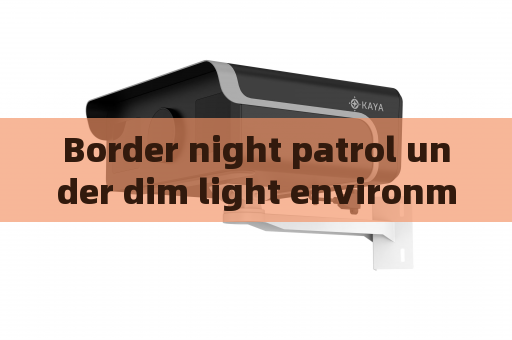
The final layer of effectiveness lies in the system’s integration with standard tactical workflows. The penetration imager is compact enough to be mounted on a tripod or a vehicle mast, and its real-time video feed can be transmitted to a command post or a helmet-mounted display for the assault team. Because the technology relies solely on light—not on radio waves, X-rays, or sound—it operates silently and with zero electromagnetic signature, preserving stealth. The pre-mapping data directly informs the entry order: which window to breach, where to deploy smoke, and which corner to clear first. In hostage rescues, this can mean the difference between a clean recovery and a fatal crossfire. The penetration imager’s ability to pre-map target positions through glass and adverse weather—while never claiming to see through walls or solid barriers—makes it an indispensable tool for any high-risk hideout raiding operation where the first look can save the last breath.