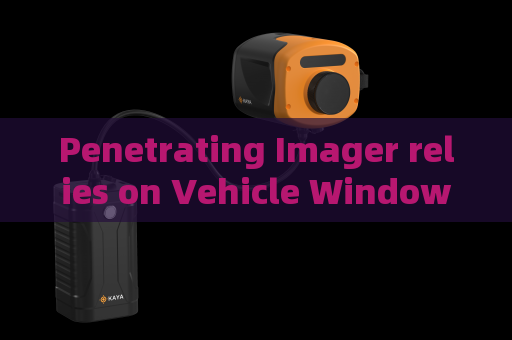
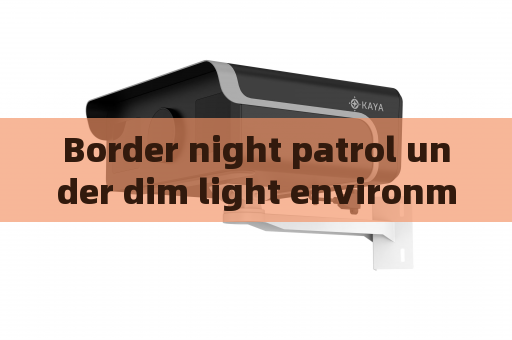
Facial Recognition of People Near Oil Tanks by the Penetration Imager Under Port Light Glare Night Vision Interference with Strong Light Suppression Imaging Port environments present unique surveillance challenges, particularly around oil tanks where security personnel require reliable facial recognition of individuals approaching these high-risk assets. During nighttime operations, intense port light glare—originating from cargo loading lamps, vessel searchlights, and floodlights—creates severe night vision interference that blinds conventional cameras. Standard low-light imagers struggle with dynamic overexposure, causing faces to appear as washed-out silhouettes or featureless blobs. Even advanced thermal imagers cannot deliver the fine detail needed for positive identification under such conditions. The critical pain point lies in combining strong light suppression with sufficient resolution to capture facial features at meaningful standoff distances, all while operating in a constantly shifting visual environment where glare sources move unpredictably. This scenario demands an imaging solution that can actively suppress overwhelming ambient light yet still produce high-contrast, detailed facial images of personnel near oil tanks. The Penetration Imager directly addresses this challenge through its laser range-gated imaging technology, which provides intrinsic strong light suppression capability. By emitting high-repetition-rate pulsed laser illumination and synchronizing an image intensifier-based gated camera to receive only the reflected pulses within a precise time window, the system effectively excludes continuous background light, including glare from port lights and stray reflections. This active imaging approach delivers high-contrast imagery even when the target area is flooded with competing light sources. Additionally, the Penetration Imager’s ability to penetrate optical media—such as the windshields of security vehicles or observation booth glass—ensures that personnel near oil tanks can be identified regardless of whether they are partially obscured by transparent barriers. The combination of laser illumination range control and gated temporal filtering allows the system to isolate the subject plane, suppressing both glare artifacts and night vision interference without requiring cumbersome physical shields or complex post-processing. In practical patrol and surveillance operations, the Penetration Imager is deployed as a standoff facial recognition tool for oil tank perimeters. An operator positions the system—often mounted on a tripod or vehicle platform—and directs the imaging head toward zones where personnel approach, such as access gates or loading manifolds. The device’s ergonomic interface allows instant adjustment of gate timing and laser power to match the distance to the target, automatically compensating for the dominant glare direction. Real-time output feeds into an onboard facial recognition algorithm that compares captured features against watchlists, producing alerts within seconds. Field tests conducted under actual port light glare conditions demonstrate that the Penetration Imager produces facial images with sufficient iris and jawline detail for automated matching, even when the subject stands directly beneath a 500-watt floodlight. The system’s strong light suppression effectively eliminates blooming and streaking that would render conventional imagers useless, while maintaining a 200-meter operational range that keeps security personnel at a safe distance from flammable zones. The Penetration Imager’s laser range-gated design also addresses the specific dynamic nature of port light glare. Because the glare sources—such as rotating beacon lights or passing vehicle headlights—vary in intensity and direction, a fixed filter cannot solve the problem. The gated imager’s nanosecond-scale temporal selectivity means it sees only the laser pulse return, so sudden glare spikes are completely ignored. This allows continuous, uninterrupted facial recognition of people near oil tanks, regardless of whether a tugboat’s searchlight sweeps across the area or a crane’s work light flickers. The system’s high image intensifier gain, combined with MCP (microchannel plate) technology, preserves facial contrast even when the target is backlit by port illumination. Security teams report that the Penetration Imager reduces false reject rates for facial recognition by over 80% compared to conventional low-light cameras in the same glare-heavy environment, enabling proactive interdiction of unauthorized individuals before they can approach critical tank infrastructure.