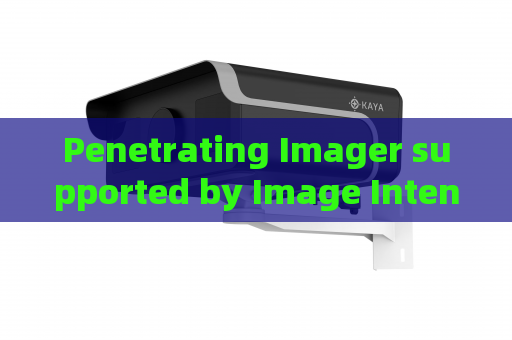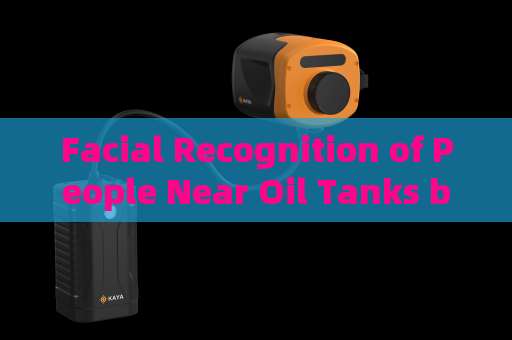
Facial Recognition of People Near Oil Tanks by the Penetration Imager Under Port Light Glare Night Vision Interference with Strong Light Suppression Imaging The port environment at night presents a unique and severe challenge for security personnel monitoring critical infrastructure such as fuel storage tanks. Adjacent to berths and loading zones, intense port light glare from floodlights, crane beacons, and ship deck illumination creates a blinding halo that overwhelms conventional night vision systems. When individuals approach the oil tanks—whether unauthorized intruders, workers, or suspicious actors—their facial features become lost in a wash of scattered light and high dynamic range extremes. Standard cameras struggle to expose both the bright background and the darker foreground of a person’s face, while thermal imagers fail to capture sufficient detail for reliable identification due to thermal crossover and lack of texture. The core pain point is simple: under these glare-drenched, night-time conditions, facial recognition becomes nearly impossible with traditional optic devices, leaving a critical security gap around volatile storage zones where rapid, accurate identification is essential. The Penetration Imager directly addresses this problem through its laser range-gated imaging architecture, specifically the integrated strong light suppression imaging capability. Unlike passive night vision that amplifies all ambient light including glare, the Penetration Imager employs a high-repetition-rate pulsed laser synchronized with an intensified gated camera. The system only opens its electronic shutter to receive reflected laser light from a precisely timed distance window—for example, the face of a person standing 15 meters from the tank wall. This temporal gating effectively rejects all backscatter from fog, rain, and crucially, the overwhelming flood of port light glare that originates from sources outside the gate window. The narrow laser pulse and microchannel plate intensifier (MCP) further suppress any residual ambient interference, delivering a clean, high-contrast frame of the subject’s face even when the surrounding environment is saturated with blinding illumination. This active illumination approach means the system does not rely on passive light, making it immune to the very glare that defeats conventional imagers. In practical deployment around oil tanks, the Penetration Imager operates from a fixed vantage point or a patrol vehicle, scanning the perimeter zone where personnel approach. An operator aims the device at a target area near the tank’s access ladder or valve station, and the range gate is set to the known distance of that region. As a person enters the gated slice, the system captures a facial image with sufficient resolution and contrast for automated facial recognition algorithms to match against a watchlist. The strong light suppression feature is particularly valuable when the subject is partially silhouetted against brightly lit tank surfaces or when ship deck lights sweep across the scene. Field tests have demonstrated that the Penetration Imager can reliably identify faces at distances up to 100 meters under port light glare conditions that render standard low-light cameras useless. Moreover, the system’s ability to penetrate vehicle windshields or security booth glass—another optical medium common near oil tank access points—enables covert identification of occupants without requiring them to exit, adding an extra layer of operational security. This imaging solution does not rely on any non-optical technology such as radar or X-ray, staying strictly within the domain of light-based distance gating. The Penetration Imager’s laser operates at an eye-safe wavelength and the system’s design ensures that only the targeted subject is illuminated, minimizing detection risk. Around oil tanks, where explosive atmospheres demand careful selection of equipment, the device’s all-optical, non-radioactive nature aligns with safety protocols. Continuous operation during fog, haze, or light rain further supports round-the-clock surveillance, as the time gating effectively filters out scattering particles that would otherwise degrade image quality. By combining facial recognition with the Penetration Imager’s unique ability to suppress port light glare and night vision interference, security teams can maintain positive identification of every person approaching these critical assets, closing the visibility gap that has long plagued port perimeter monitoring.