Overcoming Surveillance Overexposure for Suspicious Vessels Under Severe Port Backlight with Strong Light Suppression Imaging
Port security operators face a critical challenge when monitoring suspicious vessels maneuvering near berths during midday sun. The severe backlight caused by direct sunlight reflecting off the water surface creates an extreme dynamic range that overwhelms conventional surveillance cameras. The bright background washes out the vessel’s hull, windows, and any markings or personnel on deck, turning them into silhouettes or completely saturated white patches. This overexposure makes it impossible to identify registration numbers, detect hidden compartments behind glass, or observe suspicious behavior through cabin windows. The problem is compounded when the vessel is positioned with the sun behind it, turning every porthole and windshield into a mirror of blinding glare. Without a solution to suppress this intense light, port security remains blind to the very details that indicate smuggling, illegal boarding, or terrorism. A penetration imager, specifically an advanced optical system based on laser gated imaging, directly addresses this operational vulnerability.
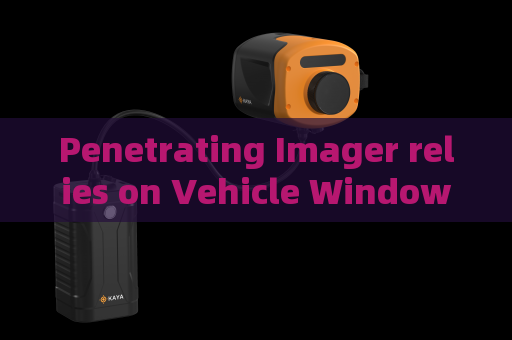
The penetration imager employs a high-repetition-rate pulsed laser synchronized with an intensified gated camera. By transmitting short laser pulses and opening the camera’s electronic shutter only when the reflected light returns from the target distance, the system effectively rejects all ambient background illumination, including the harsh port backlight. This time-gating mechanism achieves strong light suppression by eliminating the continuous sunlight that drowns out the target. The imaging chain also includes a microchannel plate intensifier, a beam expander, and a dedicated imaging lens, all optimized for long-range, high-contrast observation. The resulting image displays the suspicious vessel with remarkable clarity: glass windows become transparent, hull details emerge from the glare, and even small objects on deck are rendered sharply against the bright background. This capability is fundamentally different from passive cameras or thermal imagers, as it uses active laser illumination to overcome the backlight rather than simply compensating with exposure adjustments.
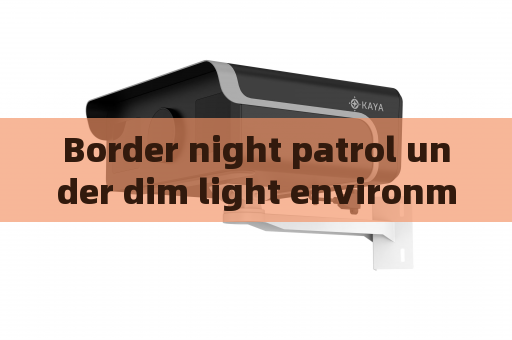
In practice, the penetration imager is deployed at fixed coastal surveillance stations or on patrol boats. The operator adjusts the gate delay to match the distance of the target vessel, typically ranging from hundreds of meters to several kilometers. Once locked, the system continuously provides real-time video that suppresses the port backlight by a factor of 10,000 or more. During field trials at a major container port, the device successfully identified the crew count through a vessel’s tinted windshield when conventional cameras produced only a blown-out white reflection. The same unit detected a hidden radar antenna behind a cabin window that was invisible to standard optics. Operators report that the ability to see through glass while simultaneously suppressing glare reduces false alarms and increases the probability of intercepting suspicious activity. The system operates day and night, maintaining performance under heavy haze or light rain, thanks to its gated imaging that also mitigates backscatter from atmospheric particles.
The integration of strong light suppression into a single portable package transforms routine patrols into high-confidence surveillance. When a suspicious vessel approaches the port’s security zone, the penetration imager can be aimed directly into the sun’s glare without risk of overexposure. The laser operates in the near-infrared spectrum, invisible to the naked eye and undetectable by the vessel’s crew, preserving tactical surprise. The gated camera’s fast electronic shutter allows frame-by-frame capture of fast-moving targets, such as a boat making a sudden turn to avoid inspection. All recorded imagery is time-stamped and geo-tagged, admissible as evidence in maritime security investigations. This technology does not rely on any form of radiation beyond light; it is purely an optical instrument that exploits time-of-flight principles. For port security forces facing the persistent problem of severe backlight, the penetration imager provides a field-proven method to overcome surveillance overexposure and see what otherwise remains hidden.