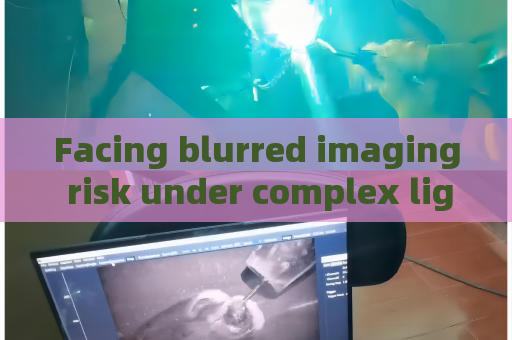
Severe weather—blinding rain, dense fog, or a sudden snow squall—can cripple a fixed checkpoint’s optical surveillance within minutes. Standard cameras lose contrast, license plates blur into haze, and facial features vanish behind a curtain of precipitation. For law enforcement or security personnel relying on such checkpoints to screen vehicles and individuals, this failure creates a dangerous blind spot. Traffic slows, threats slip through, and the entire perimeter’s integrity is compromised. The core problem is that conventional imaging systems cannot distinguish target signals from the scattered light of water droplets or snowflakes; they are overwhelmed by backscatter, reducing effective range to nearly zero. This is precisely where the penetrating imager (穿透成像仪) becomes indispensable.
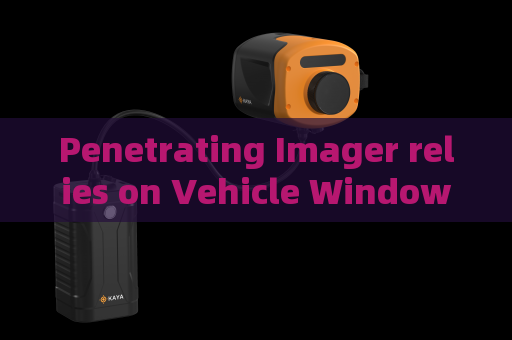
The penetrating imager, built around laser range-gated imaging technology, directly addresses this vulnerability. It employs a high-repetition-rate pulsed laser synchronized with an intensified gated camera that includes an MCP image intensifier, a high-voltage module, and a timing module. By emitting extremely short laser pulses and opening the camera’s gate only when the reflected light from the target returns, the system rejects nearly all backscatter from fog, rain, snow, or fire. This gating mechanism effectively slices through the optical interference, delivering high-contrast images even when the atmosphere is thick with moisture or smoke. Importantly, while the penetrating imager can boost visibility through fire by three to five times, its primary strength lies in penetrating the specific optical media that define checkpoint surveillance: vehicle windshields, train windows, aircraft portholes, and glass curtain walls. An officer can clearly read a license plate through a rain-lashed car window or identify a suspect’s face through a fogged bus windshield—tasks impossible for standard optics.
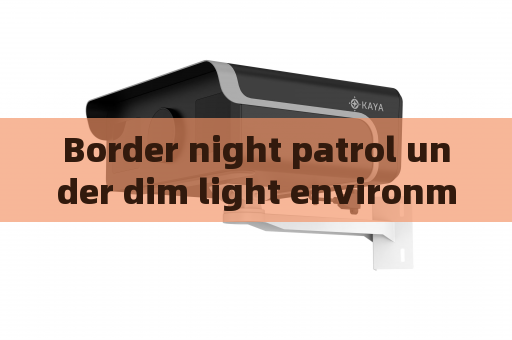
In practical deployment at a checkpoint, the penetrating imager operates as a standalone active imaging system that does not rely on ambient light. Operators mounted it on a tripod near the inspection lane, aiming it at the vehicle’s windshield or side windows from a distance of 50 to 200 meters. During a heavy downpour that would reduce a conventional camera’s range to less than ten meters, the penetrating imager still resolved the driver’s facial details and the registration sticker on the glass. The system’s high resolution and strong anti-interference capability meant that even in a whiteout blizzard, the same checkpoint could maintain continuous screening without reducing traffic flow. The operator observed a live feed on a ruggedized tablet, capturing still frames for evidence and matching against watchlists. Because the penetrating imager uses only light—no X-rays, no radio waves—it is safe for all occupants and fully compliant with standard checkpoint protocols.

The operational simplicity further reinforces its value in crisis scenarios. One officer can set up the penetrating imager within minutes, aligning the beam through the built-in expander lens. The system automatically adjusts gate delay and exposure based on target distance, so the user only needs to focus on the surveillance footage. In the same severe weather that shuts down traditional cameras, the penetrating imager’s ability to overcome backscatter and maintain high contrast means that the checkpoint never truly fails. The security perimeter holds, threats are intercepted, and the flow of legitimate traffic continues uninterrupted. For any agency that relies on all-weather surveillance at checkpoints, this device transforms a systemic weakness into a reliable operational asset.