Sea fog presents one of the most persistent and dangerous challenges for maritime monitoring operations. In coastal waters, harbors, and busy shipping lanes, dense fog can reduce visibility to near zero, crippling the effectiveness of conventional optical surveillance systems. Standard daylight cameras and thermal imagers struggle: visible-light sensors are completely blinded by scattering, while thermal devices suffer from severe attenuation and contrast loss due to water droplets suspended in the atmosphere. Radar, though less affected, cannot provide the high-resolution, visual confirmation needed for vessel identification, collision avoidance, or search-and-rescue coordination. A drifting container, a small fishing boat, or a person in the water can remain invisible until it is too late. This operational blackout forces authorities to shut down port activities, delay emergency responses, and accept heightened risks. The core problem is the inability to see through the fog itself—a physical barrier that no conventional imaging solution can reliably penetrate. In this specific scenario, a penetration imager emerges as the only practical tool to restore reliable visual awareness.
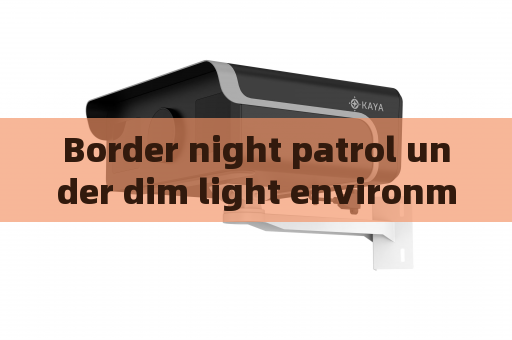
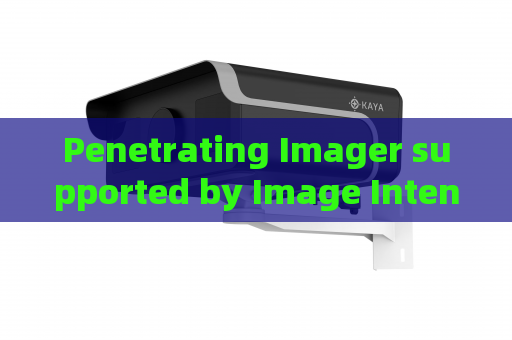
The penetration imager directly addresses the sea fog challenge through its unique laser range-gated imaging architecture. Unlike passive cameras that rely on ambient light, this active system emits short, high-repetition-rate laser pulses and synchronizes the opening of an image intensifier gated camera with the return of reflected light. By precisely timing the gate to open only when light from the target distance arrives, the imager effectively rejects the overwhelming backscatter generated by fog particles between the sensor and the target. This technique, known as laser range-gated imaging, allows the system to see through dense fog as if the obscurant were barely present. The device’s built-in microchannel plate (MCP) intensifier amplifies the faint signal, while the high-power pulsed laser ensures enough photons reach the target and return. The result is a high-contrast, high-resolution image that reveals vessels, buoys, and obstacles even when human eyes and conventional optics see nothing but white haze. The system operates in the visible-to-near-infrared spectrum and is designed specifically to overcome optical scattering—exactly the mechanism that makes sea fog so problematic.
In practical maritime monitoring deployments, the penetration imager enables continuous surveillance that would otherwise be impossible. Mounted on a harbor security tower, a coastal watch station, or a patrol vessel mast, the unit can be operated remotely to scan key approach corridors during fog events. Operators see real-time imagery on a display, showing the precise shape and movement of contacts at ranges exceeding several kilometers—far beyond the reach of standard cameras in fog. For example, at a major container port where fog typically halts inbound traffic for hours, a fixed penetration imager allows the vessel traffic service to confirm a ship’s position and heading through a kilometer of sea fog, enabling safe pilot boarding without delay. In law enforcement missions, a boat-based system can track suspect craft attempting to exploit low visibility for smuggling or illegal fishing. The system’s active illumination is eye-safe at operational distances and operates covertly, as the pulsed laser is invisible to the naked eye. Calibration is straightforward: setting the gate delay to match the target range ensures the fog layer remains invisible while the object of interest is sharply resolved.
Beyond immediate detection, the penetration imager supports critical decision-making in search-and-rescue scenarios. When a distress call comes in from a fishing vessel lost in thick sea fog, the imager’s ability to scan a wide sector and then lock onto a small target at long range drastically reduces search time. The high resolution allows identification of debris, life rafts, or even a person in the water—details that radar cannot provide. The system’s robustness against fog means it can be used as the primary optical sensor during the entire incident, without waiting for fog to lift. Integration with a pan-tilt-zoom mount and a simple interface allows one operator to control the unit from a command center. The imager also pairs well with radar cueing: radar detects a contact, and the penetration imager slews to that bearing, validates the target visually, and tracks it through the fog. This synergy creates a comprehensive maritime monitoring capability that remains fully operational under conditions that defeat all other optical sensors, ensuring that sea fog no longer means an operational blind spot.