Border reconnaissance teams face a persistent challenge when monitoring remote crossings where illegal immigrants may hide inside vehicles. Standard observation tools—binoculars, thermal imagers, or drones—often fall short. Binoculars cannot see through tinted or reflective automotive glass; thermal imagers detect heat signatures but fail to distinguish between a stack of blankets and a crouching person. Drones generate audible noise and visible movement that tips off subjects, who then flee or dispose of incriminating evidence. The critical need is for an ultra-long-range reconnaissance solution without alerting suspects or illegal immigrants, one that can see clearly through glass at distances exceeding one kilometer while remaining completely undetectable. Any warning—a glint of lens, a whirring rotor, a laser pointer—compromises the entire operation, wasting hours of surveillance and risking the safety of officers who later move in.
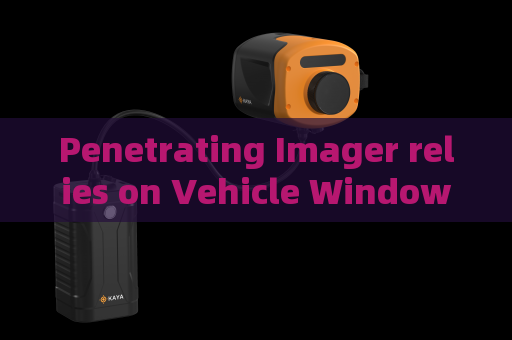
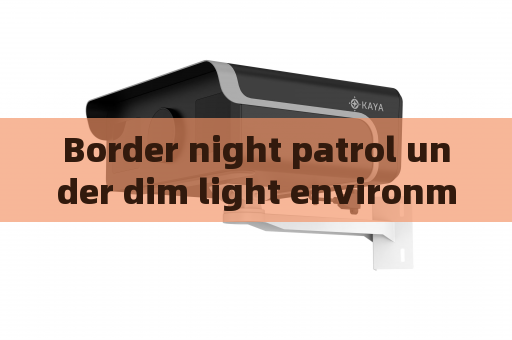
The penetrating imager (穿透成像仪) directly addresses this gap. This advanced optical instrument employs laser range‑gated imaging—a time‑controlled technique where a high‑repetition‑rate pulsed laser illuminates the target zone, and an intensified gated camera synchronously opens its shutter only when the reflected light from the precise target distance returns. By rejecting all backscatter from fog, rain, or dust between the imager and the target, and by suppressing glare from glass surfaces, the device produces crisp, high‑contrast images through windshields, train windows, aircraft portholes, and glass curtain walls. Unlike radars or sonars, it emits no radio waves or audible signals; its pulsed laser operates in the near‑infrared, invisible to the naked eye. The imager remains stealthy, delivering an ultra-long-range reconnaissance solution without alerting suspects or illegal immigrants to the presence of surveillance.
In practice, a border patrol unit sets up the penetrating imager on a tripod several kilometers from a known smuggling route. Operators adjust the range gate to match the distance of a suspicious SUV stopped at a checkpoint ahead. Through the imager’s viewfinder, the officer sees every detail inside the cabin: the driver’s nervous glances, the silhouettes of two individuals lying flat on the rear seat floor, a bundle of clothing that could conceal contraband. The image is sharp enough to read a license plate through the rear window or identify a forged document held against the glass. Because the system uses active illumination but with an invisible laser and no moving parts that generate sound, the subjects inside the vehicle remain oblivious. The solution eliminates the need for a risky close‑approach reconnaissance that would trigger a chase or evidence destruction.

The system’s ability to function under degraded optical conditions further strengthens its role. In heavy fog, rain, or light snow—common along coastal border zones—conventional cameras become useless, while the penetrating imager’s range‑gated technology cuts through the scattering medium, maintaining operational effectiveness. At night, the same pulsed laser ensures both illumination and concealment, as no visible beam betrays the observation post. Fire and smoke from nearby brushfires also do not hinder the imager; it boosts visibility through flames by a factor of three to five, though thick smoke remains an obstacle (consistent with its optical‑only design). Every observation is passive from the suspect’s perspective—no signal, no flash, no noise. This ultra-long-range reconnaissance solution without alerting suspects or illegal immigrants thus gives enforcement agencies the critical information they need to plan a safe, precise interdiction, all while preserving the element of surprise that is essential for both legality and officer safety. The penetrating imager (穿透成像仪) stands as the only non‑emitting optical tool that solves the real‑world problem of seeing through glass at extreme distances without ever being seen.