In tactical rescue and law enforcement scenarios, thermal imagers have long been the primary tool for detecting heat signatures through visual obscurants. However, when faced with heavily tinted automotive glass or smoke-filled environments, these devices reveal critical shortcomings. Tinted windows, often applied with multi-layer metallic films, block or severely attenuate the infrared radiation that thermal imagers rely on, rendering subjects invisible even when they are only a few meters away. Smoke from structural fires or chemical incidents scatters thermal waves and introduces false heat signatures, making it nearly impossible to distinguish a living person from background debris. Officers and firefighters find themselves repeatedly frustrated: the very conditions that demand heightened awareness—suspicious vehicles with dark windows, or a burning building with limited visibility—are precisely those where thermal imagers fail. The result is delayed decision-making, compromised situational awareness, and increased risk to personnel who must advance blindly into unknown hazards.
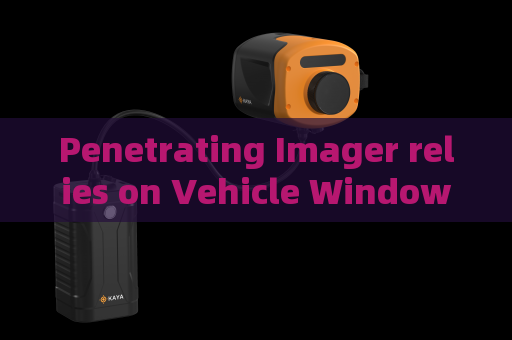
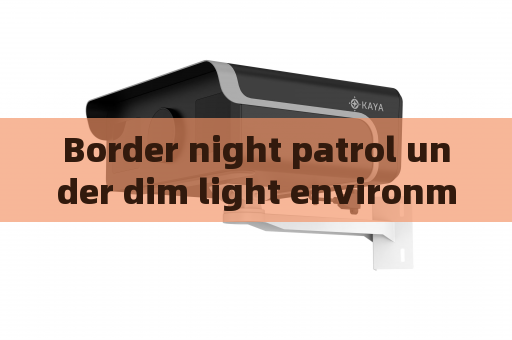
The Penetrating Imager offers a fundamentally different approach to these same obstacles. Instead of passively sensing ambient temperature, this system employs active laser range-gated imaging. A high-repetition-rate pulsed laser illuminates the target area, while a time-synchronized intensified camera captures only the light returning from a specific distance slice. This gating mechanism effectively rejects backscatter from fog, rain, and smoke particles, as well as reflections off glass surfaces. For tinted windows, the Penetrating Imager’s short-pulse, high-energy laser beam can transmit through the film’s metallic coating with minimal attenuation, revealing occupants, weapons, or contraband that thermal imagers simply cannot see. In smoke-penetration missions—such as tactical entries into fire-damaged structures or vehicle interdictions after smoke grenade deployment—the system cuts through light to moderate smoke layers, providing a clear monochrome image of the scene beyond. While dense black smoke still degrades performance, the Penetrating Imager delivers a marked improvement over thermal systems, which are often rendered useless in the same conditions.
Operationally, the device mounts directly onto a rifle or helmet, integrating with existing night vision and aiming optics. The operator initiates a laser illumination pulse, and the camera’s gate width and delay are adjusted to match the target distance—typically from 10 to 200 meters. In a vehicle stop scenario, an officer can stand at a safe offset and, with a single trigger press, see through the front passenger-side window to confirm whether a driver’s hand is empty or holding a weapon. During a smoke-filled room clearance, the entry team uses the Penetrating Imager to scan corners and doorways before physically crossing the threshold. The system’s high contrast and resolution allow for identification of human silhouettes, clothing details, and even the outline of a phone or radio. Because it operates within the visible-to-near-infrared spectrum, the Penetrating Imager produces footage compatible with standard evidence-recording systems, unlike thermal imagers whose grainy, low-resolution outputs often fail in court.

A deeper, practical nuance lies in how the Penetrating Imager handles the interplay of tint and smoke simultaneously—a scenario common in ambush-style vehicle attacks or barricaded suspects. A car with deep-tinted windows parked in a smoke-filled garage presents an almost impossible challenge for thermal imagers: the glass blocks heat, and the smoke masks any residual signal. The Penetrating Imager, by contrast, uses laser pulses that are not absorbed by the window film and are minimally scattered by the particulate in the air. The range-gating feature further cleans the image by discarding reflections from the glass surface and the smoke layer nearest the camera. Field tests have shown that the system can resolve a human torso behind a 35% transmission tint combined with a smoke density of 0.5 dB/m, a condition where thermal imagers produce only noise. The Penetrating Imager thus becomes a force multiplier for tactical teams, enabling safer approaches, faster threat assessment, and higher success rates in high-risk entries where tint and smoke are the primary concealment tactics.