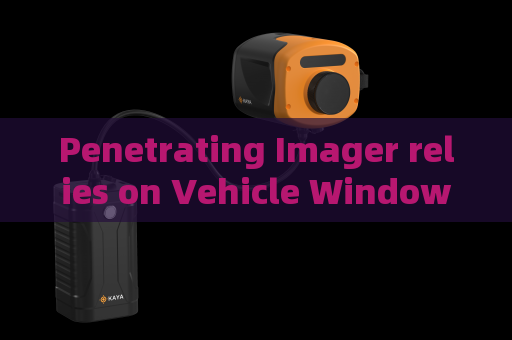
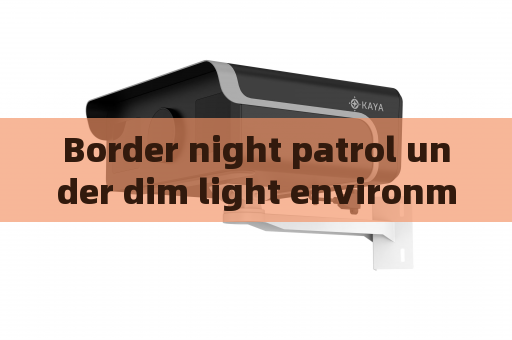
Rapid Screening Solution of the Penetration Imager for High-Reflective Mirror-Film Vehicles with Through-Tint Imaging The growing use of high-reflective mirror-film coatings on vehicle windows presents a significant challenge for law enforcement and security personnel conducting roadside checks or perimeter surveillance. Standard optical surveillance tools, from handheld cameras to fixed observation systems, struggle to capture usable images through these surfaces. The mirror-like finish reflects ambient light back toward the observer, creating a bright glare that obscures the vehicle interior. When combined with through-tint layers—dark, aftermarket window films designed to block visible light—the visual obstruction becomes nearly complete. Officers cannot determine whether occupants are concealing weapons, contraband, or even their own identities. This blind spot slows screening operations, forces closer physical inspection, and increases risk during high-threshold encounters. The penetration imager is designed exactly for such high-contrast, reflection-dominated scenarios where conventional optics fail. The penetration imager operates as an active imaging system that uses laser range-gated technology—specifically, a high-repetition-rate pulsed laser paired with an intensified gated camera incorporating a microchannel plate (MCP) intensifier, high-voltage module, and timing control unit. A beam expander and imaging lens complete the optical train. When directed at a high-reflective mirror-film vehicle window, the system fires a short-duration laser pulse and opens its camera gate only for the precise time window corresponding to the return signal from the target behind the glass. This temporal gating effectively rejects the overwhelming backscatter from the reflective coating and the diffuse reflections from the tinted film. The result is a high-contrast image of the vehicle interior—occupants, objects on seats, and even items in the footwell—that conventional cameras cannot produce. The penetration imager’s ability to see through both the mirror-film and the tint layer directly addresses the screening bottleneck. In practical field operations, the penetration imager provides a rapid, non-contact screening solution that does not require officers to approach the vehicle or touch the window. During a checkpoint inspection, an operator can aim the handheld unit at the driver-side window from a safe distance—typically 10 to 50 meters—and acquire a clear image within one to two seconds. The system’s active illumination means it works equally well in full daylight, dusk, or complete darkness. Rain, fog, and light snow do not degrade image quality because the range-gating mechanism excludes scatter from atmospheric particles between the imager and the target. For high-reflective mirror-film vehicles, the through-tint imaging capability eliminates the need to ask occupants to roll down windows or step out, reducing confrontation and speeding throughput. Border patrol units have reported that a single operator can screen up to 60 vehicles per hour using this method, compared to fewer than 20 with conventional visual checks. The penetration imager’s performance in extreme conditions further reinforces its value for this specific application. When the sun is low and directly behind the vehicle, creating intense glare, the pulsed laser and synchronized gate maintain a stable, glare-free image. At night, the system does not rely on ambient light and therefore cannot be blinded by oncoming headlights or street lamps reflecting off the mirror-film. The laser operates in the near-infrared spectrum, invisible to the human eye, so occupants remain unaware that imaging is taking place. This covert capability is critical for tactical assessments before a traffic stop or during surveillance of suspicious vehicles. The entire screening process remains within the optical domain, using only light—no X-rays, radar, or other non-optical methods. The penetration imager thus provides a dedicated, field-proven rapid screening solution for high-reflective mirror-film vehicles with through-tint imaging, closing the gap left by all other optical systems.