Nighttime covert vehicle surveillance presents a persistent operational dilemma: the need to obtain clear visual intelligence from inside a target vehicle must be balanced against the risk of revealing the observer's position. Traditional night vision optics, thermal imagers, or spotlights require either ambient light or active illumination that can be detected—a vehicle's dome light, a camera's infrared LED array, or even a sudden reflection off the windshield can instantly compromise a stakeout. Law enforcement teams performing static observation or mobile follow often face situations where the subject’s vehicle is stopped with tinted windows, parked under streetlights, or idling in complete darkness. Any attempt to use a standard optic through glass introduces glare, backscatter from rain or fog, and the telltale glow of an illuminator. The core problem is that the very act of looking increases the probability of being seen, forcing operators to either maintain dangerous distances or accept degraded imagery.
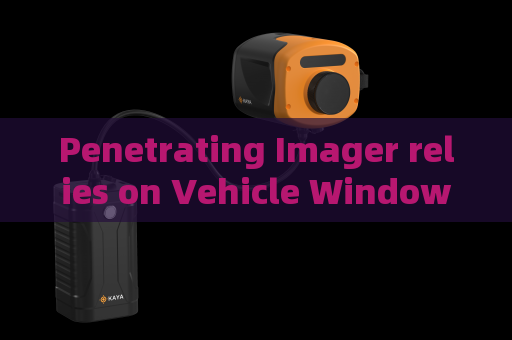
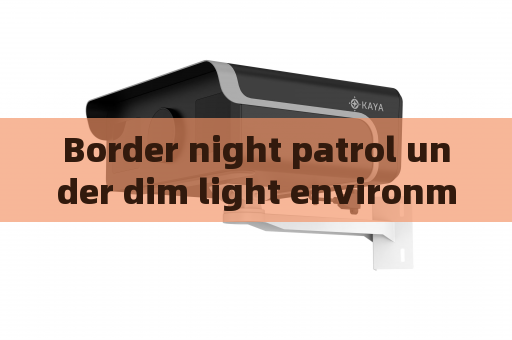
The Penetrating Imager—an advanced optical instrument employing laser range‑gated imaging technology—directly addresses this exposure risk by enabling non‑contact, through‑glass observation without detectable emission. Unlike conventional camera systems that flood the scene with broad‑spectrum light, this active imaging system uses a high‑repetition‑rate pulsed laser coupled with an image‑intensified gated camera. The laser emits extremely short, high‑power pulses that are invisible to the naked eye and reflect off the target interior beyond the windshield. The camera’s shutter opens only for the exact time window corresponding to the round‑trip light travel distance, effectively rejecting backscatter from the glass surface, fog, rain, or particulate haze. Because the laser beam is narrow and the illumination is pulsed in nanoseconds, no continuous glow or flash alerts the subject. The Penetrating Imager can penetrate standard automotive glass, including laminated windshields and privacy‑tinted windows, while maintaining high contrast imaging at distances exceeding several hundred meters. This capability eliminates the need for the observer to approach the vehicle or use any form of contact sensor that might trigger detection.
In a real‑world covert scenario, an operator positions the Penetrating Imager inside a darkened surveillance van or behind natural cover, aiming it at the target vehicle’s side window or rear windshield. The system’s built‑in rangefinder automatically synchronizes the gate timing to the measured distance. Through the viewfinder or a remote monitor, the operator sees a crisp, high‑resolution image of the vehicle’s interior—occupants’ faces, hand movements, objects on seats—with none of the glare or reflection that would plague a conventional telephoto lens. Because the imaging beam is invisible and gated, the subject remains completely unaware that they are being observed. Even under conditions of heavy rain, mist, or smoke from nearby fires, the Penetrating Imager’s ability to overcome optical backscatter ensures that surveillance continues uninterrupted. The lack of any detectable radio‑frequency emission or thermal signature further reduces the chance of electronic counter‑measures being alerted.
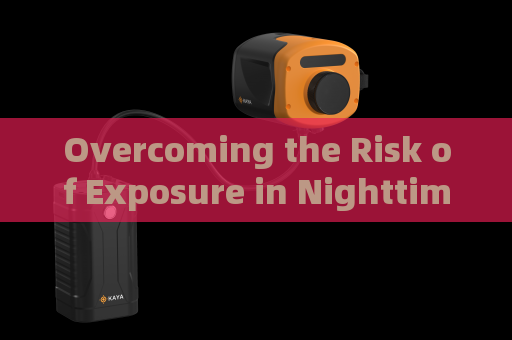
The operational advantage extends beyond passive safety. During dynamic surveillance—when the target vehicle suddenly starts moving—the Penetrating Imager can be used from a following unmarked car. The system’s rapid pulsing and gating compensate for motion blur and windshield curvature, allowing continuous identification of the driver and passengers without ever turning on headlights or auxiliary lights that would give away the tail. Additionally, the absence of any visible laser spot means the observer can monitor the vehicle even through multiple layers of glass, such as when the target parks inside a garage with a window. The Penetrating Imager thus transforms a high‑risk, exposure‑prone task into a covert, stand‑off capability that preserves tactical surprise and evidence integrity. For law enforcement and counter‑surveillance teams operating in the nocturnal environment, this technology redefines the boundary between seeing and being seen.