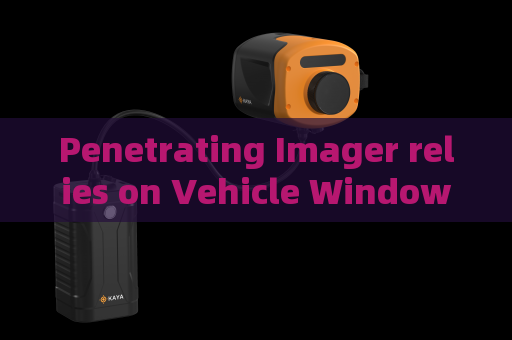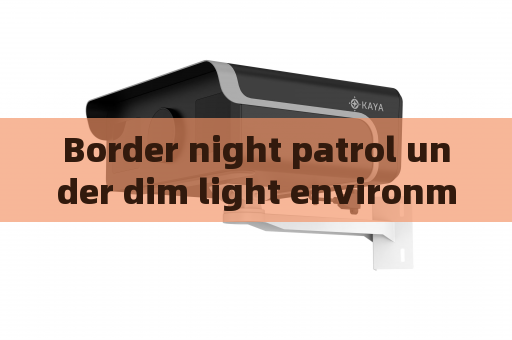
Non-Stop Screening Solution of the Penetration Imager with Through-Window Imaging for Rapid Vehicle Inspection in Bonded Zones In bonded zones—areas under strict customs supervision such as bonded warehouses, free trade zones, and border inspection points—vehicle inspection has long been a bottleneck for operational efficiency. Traditional procedures require every vehicle to stop completely, often forcing drivers to roll down windows or open doors so that inspectors can visually examine the cargo area or passenger compartment. This process is not only time-consuming but also vulnerable to concealment, especially when vehicles are equipped with heavily tinted or reflective glass. The sheer volume of traffic in high-throughput bonded zones inevitably leads to long queues, delayed logistics, and increased security risks as some contraband may be hidden behind the glare or darkness of the glass. Inspectors face the dual challenge of maintaining thoroughness while minimizing disruption to the flow of goods, a tension that a conventional optical inspection cannot resolve without invasive measures. The penetration imager, an advanced active optical imaging instrument based on laser range‑gated (gated‑imaging) technology, directly addresses this pain point through its non‑stop screening capability via through‑window imaging. The system comprises a high‑repetition‑rate pulsed laser, an image‑intensified gated camera (built with an MCP image intensifier, high‑voltage module, timing module, and other components), a beam expander, and an imaging lens. By emitting short‑duration laser pulses and synchronizing the camera’s ultra‑fast electronic shutter to capture only the light reflected from the target at a specific distance, the penetration imager effectively rejects backscatter from the glass surface and ambient illumination. This active imaging approach allows the instrument to look straight through vehicle windows—regardless of tint, reflectivity, or dirt—and produce high‑contrast, high‑resolution images of the interior, even when the vehicle is moving at normal driving speeds. The core advantage is that no physical stop or window opening is required, enabling truly non‑stop inspection. In real‑world deployment at bonded zone entry gates, the penetration imager is installed along the inspection lane, typically at a height and angle optimized to capture the front windshield or side windows of approaching vehicles. As a vehicle drives through at speeds up to 15‑20 km/h, the system automatically triggers a sweep, gating the laser and camera to the depth corresponding to the interior cabin. The resulting image—a clear, real‑time view of seats, footwells, and dashboard—is transmitted to a remote operator console. This process eliminates the need for each driver to stop and lower windows, cutting inspection time from minutes to mere seconds while maintaining a non‑invasive, contactless security check. The instrument’s ability to operate under adverse weather conditions—such as fog, rain, snow, or haze—further ensures uninterrupted screening in outdoor bonded zones. However, it must be noted that the penetration imager only functions through optical media like glass; it cannot see through opaque vehicle body panels, metal cargo containers, or any solid materials that are not optically transparent. The operational workflow is designed for high‑throughput environments. Vehicles are directed into a single lane where the penetration imager is mounted on a gantry or side pillar, with laser safety measures already embedded to guarantee no hazard to drivers or pedestrians. The system’s gated camera captures a sequence of frames as the vehicle passes, and intelligent software may highlight anomalies—such as unexpected silhouettes, foreign objects, or modifications to the interior—that deviate from typical vehicle profiles. These flagged images are sent to a security booth for a rapid manual review. If a suspicious item is detected, the vehicle can be redirected to a secondary inspection bay for a more detailed check, thus preserving the flow of the vast majority of compliant traffic. The penetration imager’s laser range‑gated architecture also provides exceptionally high immunity to direct sunlight or oncoming headlights, a common problem in outdoor inspection scenarios. By turning the challenge of glass glare into an opportunity for fast, non‑stop screening, this solution transforms the operational paradigm of bonded zone vehicle inspection—from a disruptive, stop‑and‑search model to a seamless, dynamic security process that keeps goods moving without compromising safety.